‘28 Years Later: The Bone Temple’ Offers a Captivating Parable Set in a World Gone Mad
Two roads diverged, and I took the one without the satanists.

We’ve entered a bizarre period in human history of massive technological advancement paired with regressive values and chaos. We have devices in our pockets that would seem like magic to people less than 100 years ago, and then we use them to read and say things so unhinged we may as well be living in a prior century. This can make the world feel like it’s coming apart at the seams, and that the madness we felt through rapid technological advancement was then compounded by the pandemic. How do we reclaim our shared humanity when it feels like everything around us is rapidly unraveling? 28 Years Later: The Bone Temple provides a useful parable about the two roads available to us, building on the engrossing universe of the previous movie and its two key characters to tell a story of how we can cope with a scary, uncertain world. And yet, rather than resorting to pedantic homily, Nia DaCosta’s movie is cheerfully strange and darkly comic, never sacrificing its personality to preach at the audience. Instead, it chooses to gleefully shout at the devil.
Picking up where the first movie left off, our young hero Spike (Alfie Williams) has unfortunately fallen in with satanist Sir Jimmy Crystal (Jack O’Connell) and his acolytes, who are also named variations of “Jimmy.” Spike, as a matter of self-defense, manages to become a member of the group, but is more their prisoner than their cohort, and he earns the sympathy of fellow member Jimmy Ink (Erin Kellyman). Meanwhile, Dr. Ian Kelson (Ralph Fiennes) forms an unusual bond with “alpha” infected Samson (Chi Lewis-Parry), giving the rage-zombie a morphine cocktail that soothes his violent nature. As the two get high and listen to music, Sir Jimmy’s group heads on a collision course towards the good doctor and his unusual patient.
While 28 Years Later was a sharp critique of modern Britain through a coming-of-age tale, The Bone Templenarrows its focus down to the philosophical by contrasting Sir Jimmy against Kelson. In his own way, Sir Jimmy is a cautionary tale: a kid who saw the world go mad and chose violence as the only way to make sense of it. However, because time basically stopped for him when he was only eight, his emotional development is also deeply stunted. He preaches Satanism not as something rebellious, but as the only way to understand the world. And yet he’s also a slick huckster, arguing that he is the true son of “Old Nick,” that Jimmy’s followers are “fingers” in his fist, and the infected are demons let loose upon the Earth.
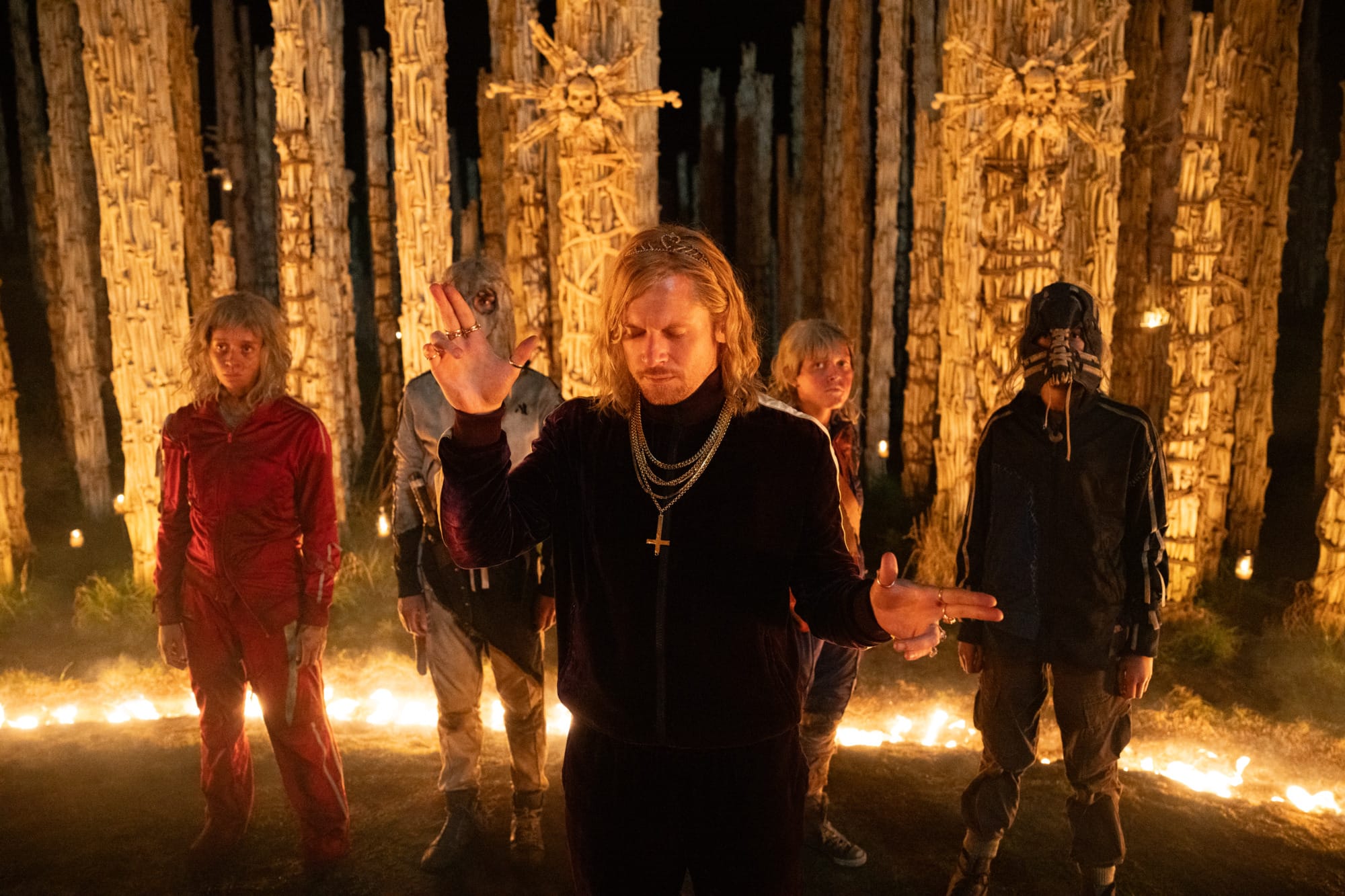
Sir Jimmy is an instantly recognizable figure, and not just because of his blonde hair and tracksuit that are meant to recall the once-beloved entertainer Jimmy Savile, who was later found to have sexually assaulted over 400 people, most of them children. He’s the greasy, yet oddly charismatic cult leader spouting nonsense for his own glorification, but gains a following because he orders the world through a useful story. Jack O’Connell played a bloodthirsty vampire in Sinners, and yet Sir Jimmy feels even more evil. There’s a forlorn loneliness lingering over Remmick, but Jimmy is a man and an avatar for the worst humanity has to offer because there’s nothing redeeming in his character. You could say “Well, he never had a chance,” but Spike serves as a useful reminder that a world gone mad is no excuse for perpetuating madness.
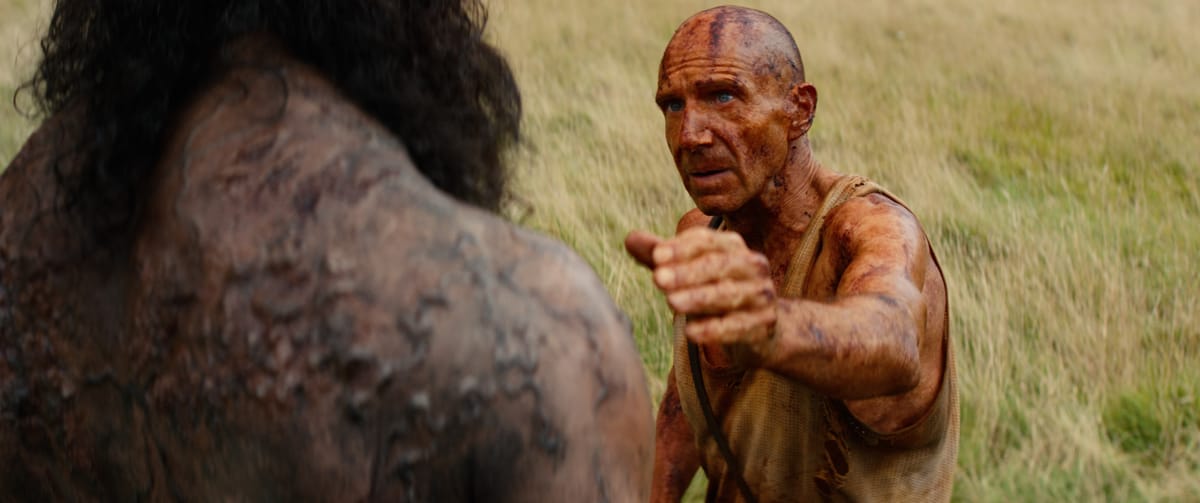
Where The Bone Temple gets far stranger (and that’s not to diminish the strangeness of a roving band of marauders who all wear track suits, blonde wigs, and call themselves “Jimmy”) is everything between Kelson and Samson. While Fiennes partly built his stardom on playing unnerving villains like Amon Göth in Schindler’s List and Voldemort in the Harry Potter movies, he’s crafted even greater characters with kind, compassionate figures like Kelson. His contrast—orange-tinted skin because he’s covered in iodine to ward off infection, living in an ossuary—makes him appear strange, but The Bone Temple asks that we reappraise appearances. Jimmy Savile looked like everyone’s mate, but even in interviews, you could tell he was a creep with his constant references to being a playboy who liked to date younger women. The inversion is clear—the devil is never going to announce himself, and if we judge people solely by the color of their skin, we’ll likely miss the content of their character.
But despite his radical appearance, what makes Kelson’s story captivating is how normal it is, despite his exterior. How does he connect with Samson? They get high and listen to music. It’s one of those elements where, if you haven’t seen 28 Years Later, the tone may be jarring, but it feels of a piece with the surreal elements of Boyle’s picture, with DaCosta carrying those ideas forward and deepening their humanity. It’s never strange for the sake of strangeness. Rather, these moments emphasize that a return to common values has nothing to do with religious dogma, violent subjugation, or conformity. If Samson represents the world gone mad in all his brutal, dong-swinging glory, then Kelson’s heroism is not in trying to dominate that world but in bringing it back to sanity through empathy and fellowship. For all of The Bone Temple’s bloody violence, the film is ultimately a plea for human connection and compassion as the true way to conquer the horrors around us.
A third movie is in the works, but even if the story were to end here, you’d have a thoughtful trilogy of movies with 28 Days Later and these two 28 Years Later movies (28 Weeks Later doesn’t add anything to the mix). They’re movies about what civilization means and our role within it when it looks like the world is falling apart. As The Bone Temple demonstrates, we have an obligation to honor life rather than death. That doesn’t mean becoming a soldier for righteousness. It means hanging out with friends and listening to some good tunes.
28 Years Later: The Bone Temple opens in theaters on January 16th.