'A Big Bold Beautiful Journey' Removes the Texture from Intimacy
Kogonada's movie feels like a love story by Instagram influencers.
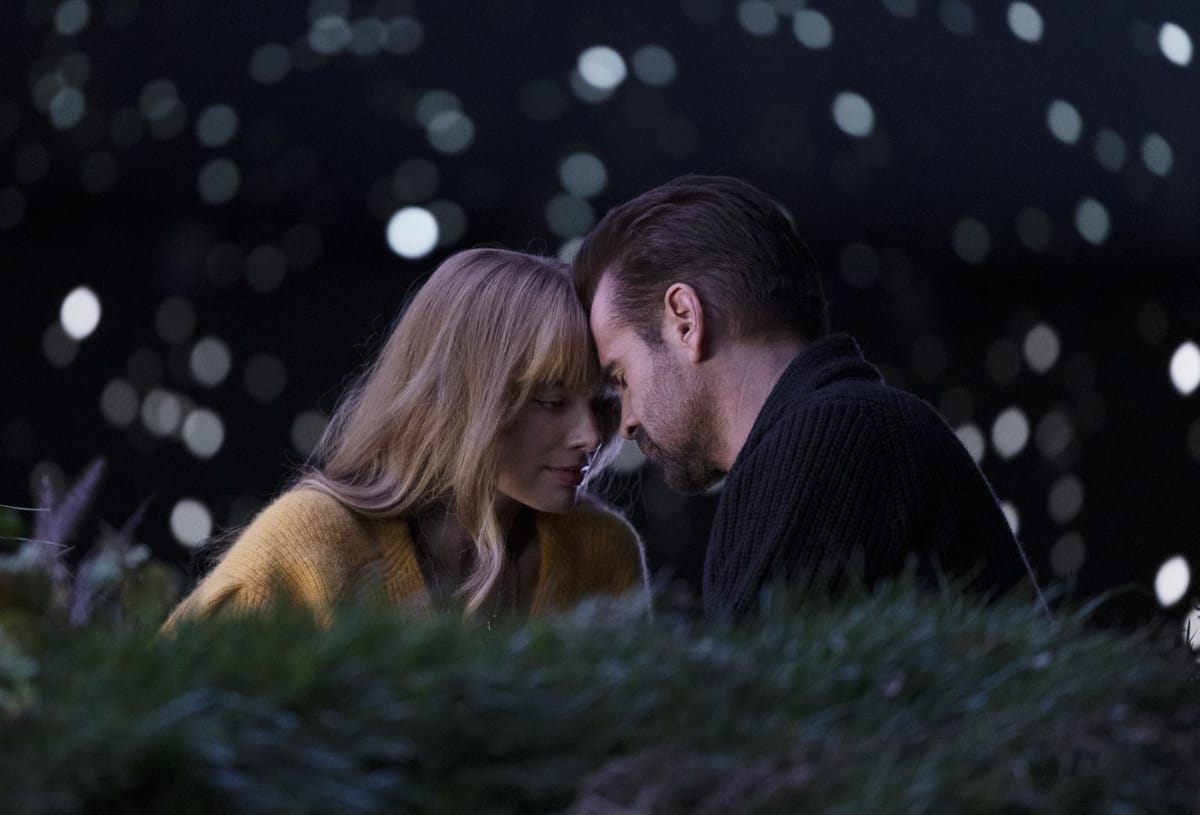
I was single for almost all of my twenties, but when I finally found the woman I love, what scared me even more than being alone was the fear that it would work out and someone would see all my faults and imperfections. Of course, that’s love and intimacy. We have to make ourselves known and take a risk that we could get hurt. Kogonada’s new movie, A Big Bold Beautiful Journey, understands the stakes of intimacy, but renders them in such a flat, monotone approach as to drain all the romance from his love story. Love isn’t beautiful all the time. Sometimes it’s painful and ugly and weird and inexplicable. Love is the grand gesture, but it’s also seeing someone floss their teeth before they go to bed. For all the craftsmanship Kogonada invests into the movie’s visuals, he misses the texture that makes love feel real, and instead leaves A Big Bold Beautiful Journey feeling like catharsis by way of an Instagram reel.
David (Colin Farrell) is on his way to a wedding, but his car gets booted. He sees a flyer for a rental car agency, and that’s where the film’s magical realism begins. Entering a gigantic warehouse, he meets two oddballs (Phoebe Waller-Bridge and Kevin Kline) who will only rent him a 1994 Saturn and then convince him to take their GPS “in case his phone craps out.” David takes the car and goes to the wedding, where he meets Sarah (Margot Robbie). The two have a couple of awkward conversations, but on his drive home, David’s GPS asks if he would like to go “on a big, bold, beautiful journey?” He agrees, and it quickly becomes clear that Sarah, driving the same car with the same GPS, has also answered yes. They meet and begin a trip through a series of doors into their respective pasts. Each setting explains why they’re still single and what they have to overcome if they want to be together.
I suppose it’s nice that Beautiful Journey ditches any sci-fi conceit to go straight to magical realism since you don’t have to get hung up on “how” or “why” any of this is happening, and can simply operate on the level of metaphor. When people start to fall in love, they slowly uncover each other’s baggage and learn about their pasts. We’re going to share the events that shaped us and hope that we’re not rejected for exposing the moments from our lives we tend to keep tucked away.
It all makes sense what the plot is doing, and yet it all feels strangely rote and aggressively sterile. For a love story, everything is rendered in clean, straight lines with one-to-one traumas and answers. Why are David and Sarah still single? Well, it has something to do with their parents. Even if you allow that the “beautiful journey” represents a new coming-of-age for our lead characters, and that’s why the movie is so hung up on their childhoods, it still makes David and Sarah little more than exquisitely crafted paper dolls, adorning their love lives by seeking catharsis in their individual pasts. We’re never watching two people bond as much as we’re witnessing a joint therapy session.

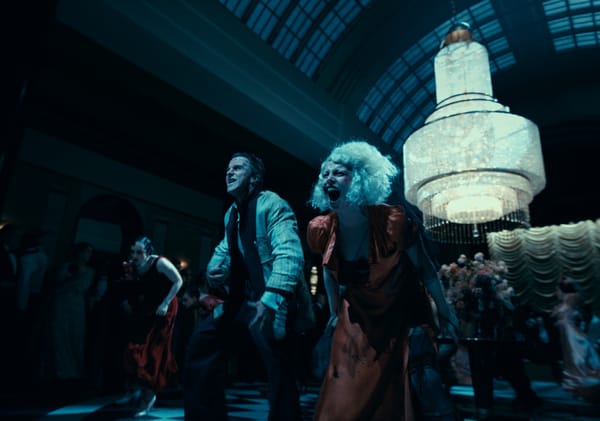
Kogonada compounds the problem by trying to render every single shot as beautifully as possible. Perhaps he wants to show, as he did in his previous movies, that connection itself is always beautiful. However, it rings false here as we’re supposed to be diving into the messiness of the psyche, and it’s as beautiful inside as the world outside. There is not a single shot here that feels weird, disjointed, or anything less than pristine. Watching A Big Bold Beautiful Journey, I was reminded of Eternal Sunshine of the Spotless Mind, another love story that travels through memory, and yet in that case, director Michel Gondry had no problem getting strange. In Eternal Sunshine, going into someone’s mind means seeing them bathed in a kitchen sink. In Beautiful Journey, going into David’s past means watching the most well-funded and gloriously staged high school production of How to Succeed in Business without Really Trying. Even when Sarah is working to confront the pain of her mother’s death, the framing feels pleasant and inviting.
This all gives the film a feeling of phoniness, as if instead of David and Sarah truly seeing each other and themselves, they’re only seeing these moments in the prettiest light possible. Moreover, rather than bonding by seeing these moments, it sets their stories in parallel rather than having them genuinely fall for each other on this journey. At no point does it seem like David and Sarah love one another anywhere half as much as the film loves its own style and premise. You can’t make a movie about intimacy—about people literally going into each other’s psyches—and come out feeling like there’s no connection. Otherwise, it’s just mutual navelgazing.
I respect that Kogonada wants to find a twist on a love story and how people choose to open themselves up to pain and rejection. I agree that it’s difficult to love someone else until you understand your own baggage. But the moment when we start to share ourselves with another is when we stop performing. It’s when we look a little less beautiful that we can be something more than our idealized selves. It’s the antithesis of something like Instagram, where we’re always trying to look our best. When we open ourselves up, we lose the filters, the perfect lighting, and the thoughtful composition. For A Big Bold Beautiful Journey, love is never less than smelling the sweetest rose. In reality, love is finally feeling comfortable enough to fart in front of another person.
Commentary Track is a reader-supported publication. To receive new posts and support my work, consider becoming a free or paid subscriber.
Matt Goldberg Elsewhere
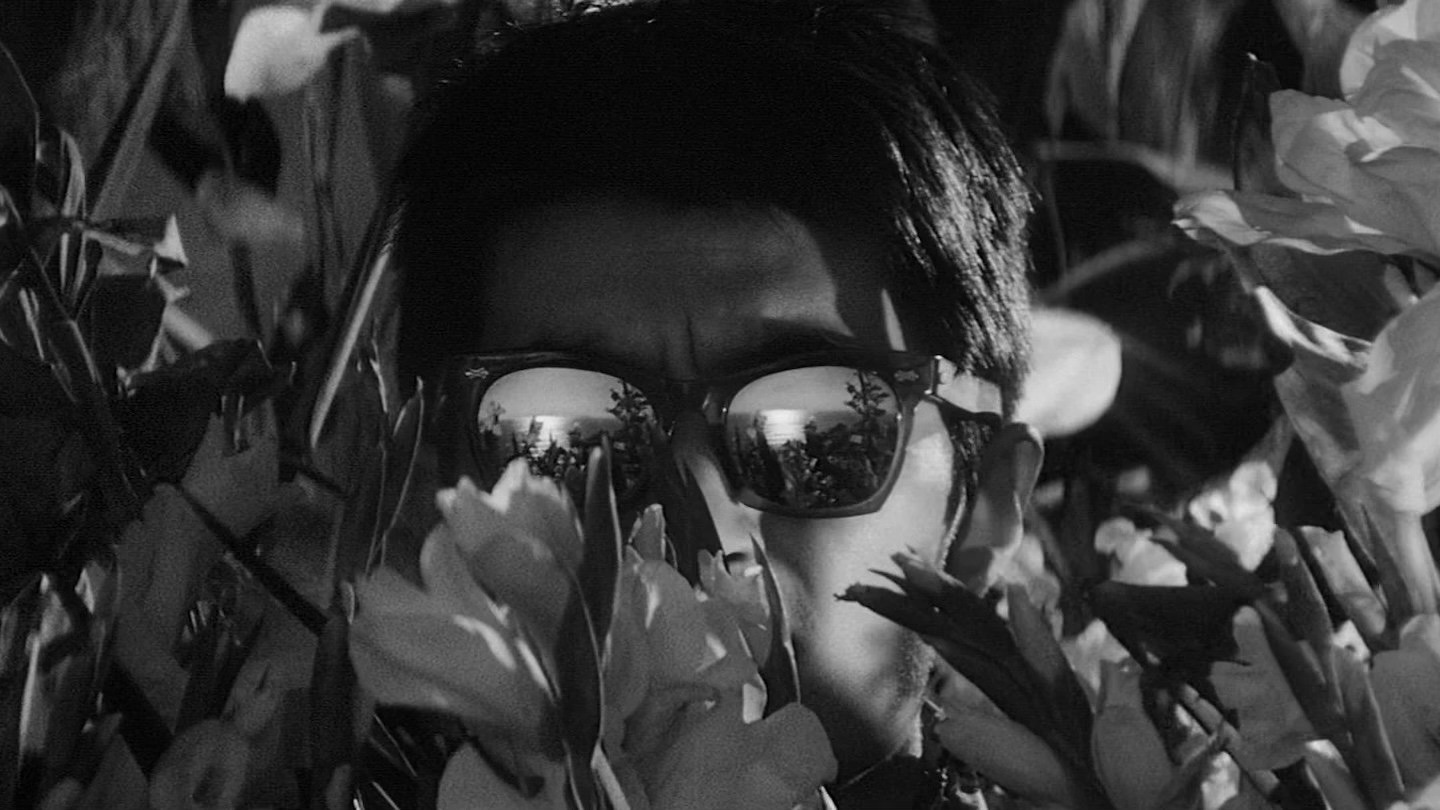
- Throughout July, I watched the movies of the legendary director Akira Kurosawa to write about his twenty best movies for Letterboxd. With Spike Lee’s Highest 2 Lowest, an adaptation of Kurosawa’s High and Low, now available on AppleTV+, I figured some may be curious to start digging into Kurosawa’s movies, and I hope that this article is a useful guide to his filmography.
- My wife and I have watched Downton Abbey multiple times, so I was grateful that TheWrap let me write about the new and final movie, Downton Abbey: The Grand Finale, which is the best of the three films and feels most in tune with the series.
- Finally, I’ve been reviewing individual episodes of Alien: Earth over at Decoding TV, and I’ve found it to be an intriguing take on the franchise thus far.