Completing the List: 'The Gleaners and I'
Trash becomes treasure in Agnès Varda's brilliant, playful documentary.
Last week’s film, Yi Yi, I knew about since its U.S. release in 2000. But another movie released in 2000, Agnès Varda’s documentary The Gleaners and I, was completely unknown to me until I marked it as one of the four movies I hadn’t seen on The New York Times’ Best Films of the Century list. That’s the beauty of these lists when they work properly: they expose you to movies you wouldn’t think to look for on your own, and once you watch them, you understand the acclaim and adoration.
A movie made at the turn of the century, Varda starts The Gleaners and I with the simple idea of going back to gleaning—the communal activity of picking up the scraps after the harvest. But on the other side of the Industrial Revolution, “gleaning” looks very different—it looks like being a bum. The Gleaners and I leaps into the middle of one of the glaring contradictions of post-industrial society, which is that we now have machines to produce plenty and decrease the need for human labor. Yet, countless people in the developed world go hungry, not to mention those in developing countries.
And yet rather than quickly move her movie into a polemic, Varda trusts her audience enough to know that they’ll pick up on this disparity. Instead, she challenges them to reevaluate what gleaning means in a modern context, and why we should shame anyone who hunts for food and picks up the discards of a wasteful society. By putting the activity of scavenging for food within the larger historical context of gleaning, the notion of “being a bum”—someone who scrounges for discarded food items—starts to dissipate as Varda respects the gleaners as true workers who exist outside capitalist definitions. She understands the image changes once you add more context.
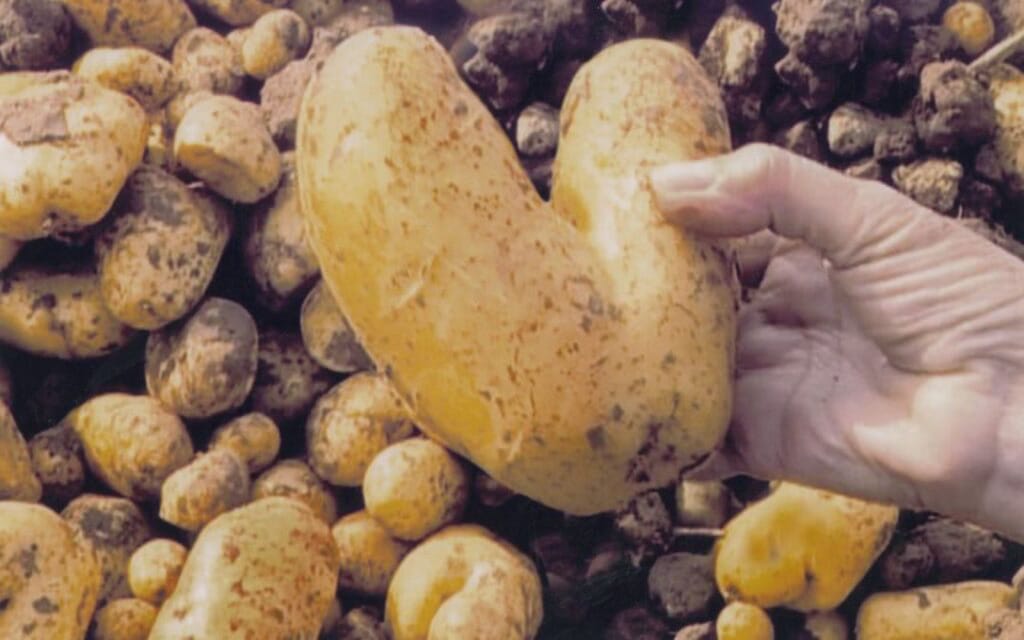
For example, we see a man scrounging in a field for potatoes. Except those potatoes are perfectly good to eat; they just don’t fit the definition of what supermarkets want to sell based on size and appearance. Varda finds a heart-shaped potato and finds it lovely, but that’s not a potato that will sell next to the uniform potatoes at market, so now it is “trash,” despite being healthy, edible, and attractive in its own way. The faceless agrarian business has tossed the potato out because they feel like they can’t sell it, but for a hungry guy, it’s sustenance.
Varda then continues to expand the understanding of gleaning beyond sustenance to look at why others would forage for scraps. If a person is financially well-off, or at the very least, has options on where they could eat, are they no longer a bum? Or is their desire a bourgeoisie mockery of those who actually need to forage? Generosity is always present in The Gleaners and I, and one interview subject notes that such foraging by those not in dire financial circumstances may still be trying to fill a deficit in their lives. It may not be hunger they’re trying to sate, but a sense of purpose or even enjoyment. If someone takes joy from the act of gleaning, why is that shameful? Surely, no one outside the gleaner is harmed by their foraging, and as the film points out early on, there seems to be more than enough discarded food to go around. When we call something “trash,” we’re saying it no longer exists in useful boundaries, but who gets to define those boundaries?