Guillermo del Toro’s ‘Frankenstein’ Shambles Like a Shadow of His Better Creations
The scariest aspect of his adaptation is that one of our best directors may have run out of things to say.

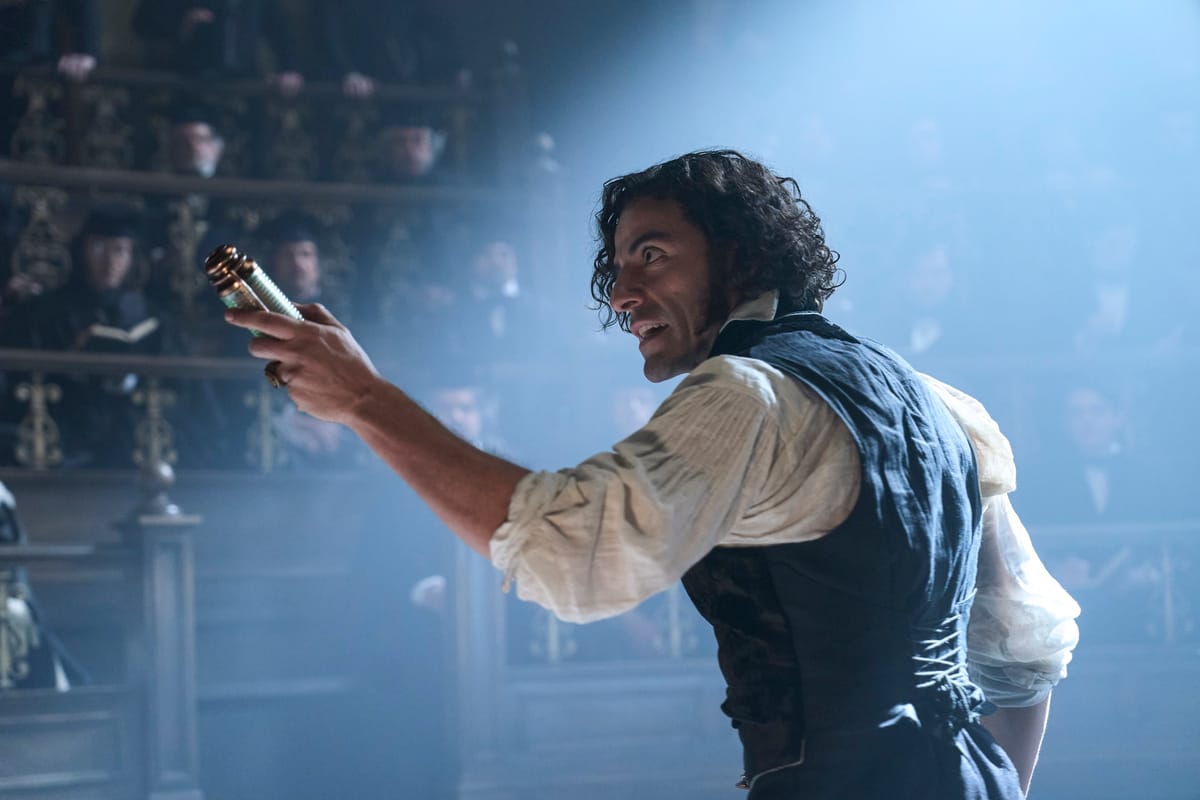
Guillermo del Toro is one of my favorite filmmakers, and his adaptation of Frankenstein was my most-anticipated movie of 2025. It’s a project he’s been chasing since 2007, and since then, he’s gone from the curious place of both arthouse favorite and unabashed genre filmmaker to a real force in Hollywood, especially after winning Best Picture and Best Director in 2017 for The Shape of Water. Given the resources now at his disposal, I had high hopes for Frankenstein, and yet the film speaks not to grand ambitions, but familiar themes in the director’s filmography. The production is as lavish as it gets, but this too detracts from the hand-made elements that made features like Pan’s Labyrinth and The Devil’s Backbone sing. The movie is a monster, and one that can be spectacular, especially thanks to lead performances from Oscar Isaac and Jacob Elordi, but too often, the ideas here feel overly familiar and undercooked; a creature made flesh but barely possessing the spark of life.
Del Toro uses the framing device of Mary Shelley’s novel, with a ship stuck on an expedition to the North Pole coming across a delirious Victor Frankenstein (Isaac). They also encounter a hulking figure that’s impossibly strong and cannot be killed by their weapons. They manage to send the creature beneath the ice, but Victor promises the captain (Lars Mikkelsen) that it will return, and they should let him have his revenge. Victor then relates that he is the creator of The Creature (Jacob Elordi) and how it resulted from trying to play God by conquering death. When the Creature does make its way back to the ship, he picks up where Victor left off, telling how he came to consciousness and why he will not stop tormenting his creator.
What promises to be a faithful adaptation quickly veers into del Toro’s reinvention, going from what he claimed was his favorite novel in the world to one that quickly departs from the text to change character relationships and motivations. While the overall structure is somewhat familiar, especially in changing perspectives from Frankenstein to the Creature, del Toro has remade the story into one that strips the subtlety and moral complexity from Shelley’s novel. Readers have always known that Frankenstein, in his hubris and duplicity, is a monster, and that the Creature, despite his monstrous appearance and actions, has elements of tragic humanity within him. Del Toro removes almost all the shading, making Frankenstein clearly villainous, and if you somehow still missed it, a character tells him point-blank, “You are the monster.” Conversely, this is the softest, most loving render of the Creature I can think of, one who can kill, but never does so out of malice or cruelty.
These renderings become far less interesting in del Toro’s larger filmography because we’ve seen them so often. The director is coming right up to the line of self-parody here as a beautiful human is possessed of a monstrous soul, while the supernatural creature is the one who truly embodies what’s beautiful and complex about humanity and the world at large. This dynamic provided a nice underdog quality to del Toro’s work as he clearly sided not just with outsiders but felt an innate suspicion towards those with power. But we’ve seen this dynamic so many times now, and it rings a little hollow to cast a wary eye towards the superficial within the bounds of an expensive Netflix movie that’s aggressively glossy even in its goriest moments.
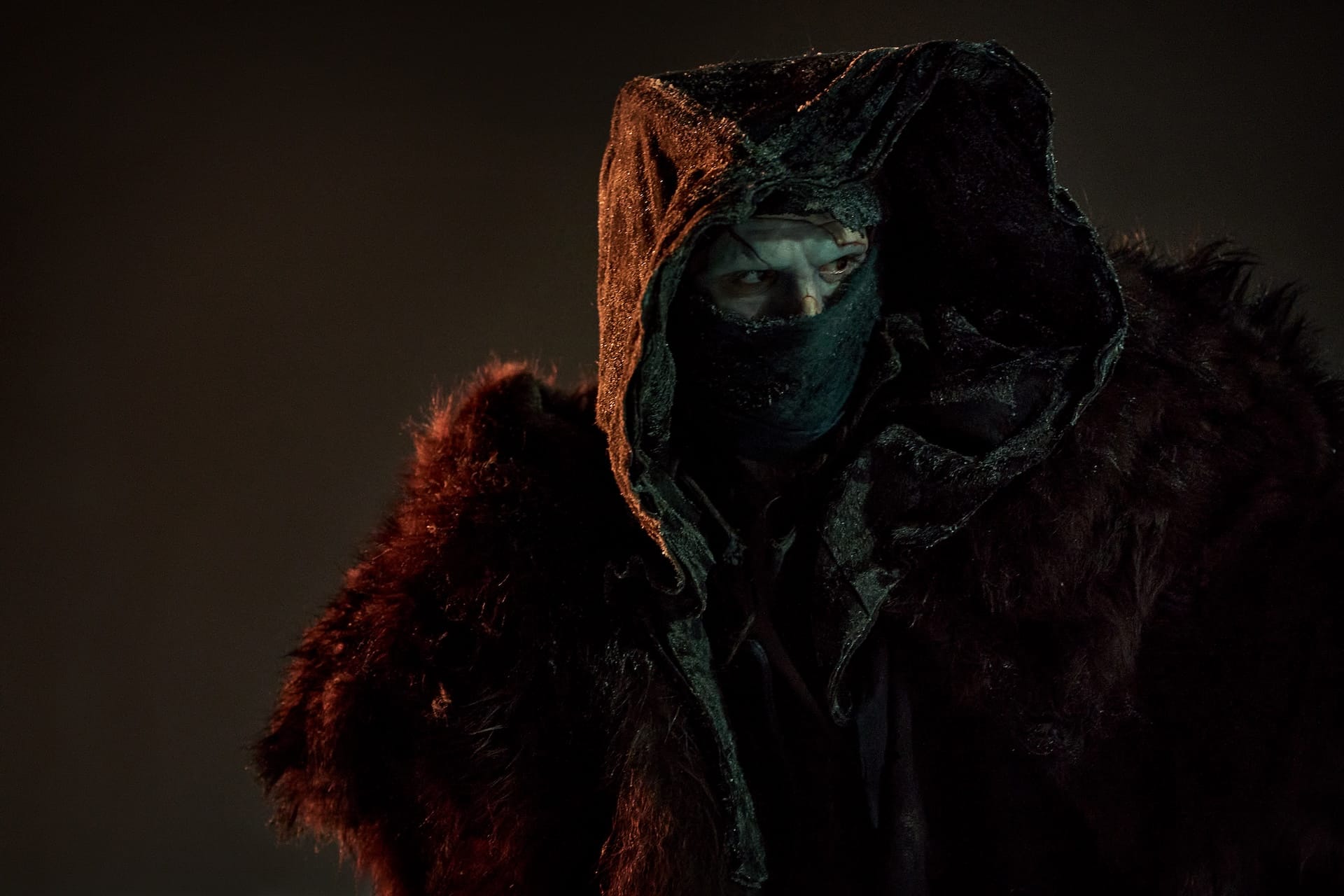
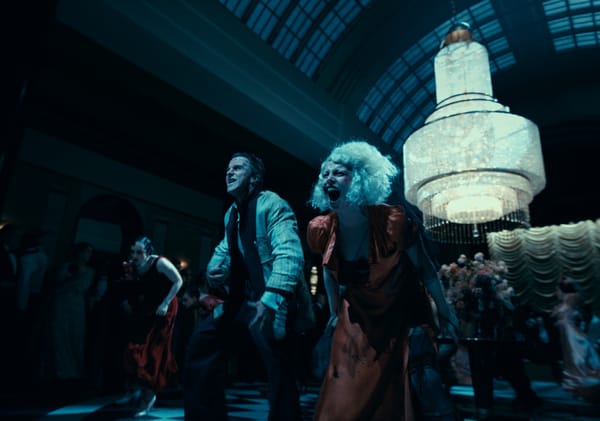
I remember walking out of a screening of Crimson Peak, and a fellow critic said that if del Toro wants to be a production designer, he should just be a production designer. While I didn’t fully agree with that critique for Crimson Peak, it feels far more appropriate here, especially with the time del Toro devotes to Victor building his lab and collecting bodies. As stunning as it is to behold, especially Kate Hawley’s costumes and the makeup department’s work on the Creature, the movie too often loses the tactile quality of del Toro’s previous efforts. It feels far more in line with a similar misstep he made on Nightmare Alley, trying to take viewers into the grime of a seedy carnival world, only to make every surface feel glimmering and precise. Being able to play with Netflix money, del Toro has made sure the budget is on screen even when it would benefit the film to go smaller and more intimate in its details.
The spectacle here, as stunning as it can be, also overshadows any interesting idea the film may wish to pursue. If you try to put the film in a Miltonian framework, the Creature’s rage against his creator comes far too late into the picture to really drive the thematic momentum. Moreover, removing any of his morally questionable actions makes him a pure victim, meaning the audience doesn’t have to wrestle with mixed feelings. Finally, you have stale ideas like Victor’s villainy stemming from his cruel father (a retread of a theme done to better effect in Nightmare Alley with its noir fatalism) and the weak material with Elizabeth (Mia Goth) where del Toro seems unsure if he wants to go full oedipal, have her be the celebrant of the natural world contrasted against Victor’s dark science, or to be the love interest of the Creature. None of it feels satisfying, and it's particularly egregious to take one of the great feminist works of literature and not only lose the feminist angle, but also have one female character and do little more than put her in a series of pretty dresses.
Thank goodness for Isaac and Elordi. All the complexity that the film either fumbles or outright erases is somewhat restored through their central performances. As much as del Toro tries to push Frankenstein and the Creature towards devil and angel, respectively, the two actors keep finding the flawed humanity in their characters, keeping the story grounded even when del Toro can’t help but go off on another design tangent or rehash one of his old story tropes. The two actors are putting the film on their backs even when it threatens to crush them under a multitude of poor choices.
Similar to how del Toro looks at the Creature’s grotesque visage, I can’t bring myself to be repelled by what I’m seeing. Buried beneath every poor decision is a director whose passion is undeniable. Strangely, it takes me all the way back to 2004 and his adaptation of Hellboy. The big difference between now and then is that while the passion remains, two decades ago, he was the upstart making compromises so that some version of his vision could make it to the big screen. Now, having become a director whose name can be used as a selling point, he had the power to realize Frankenstein in a way that would have eluded him in 2007. But despite the dazzling visuals, deep reverence for the Creature, and a true love of gothic horror, it falls far short of both his previous works and previous adaptations of Shelley’s novel. Like his doomed title character, del Toro’s reach exceeds his grasp.
Frankenstein is now playing in select theaters. It arrives on Netflix on November 7th.