'Good Boy' Is a Curious Experiment in Terror
What does it mean to make a dog the star of a horror movie?

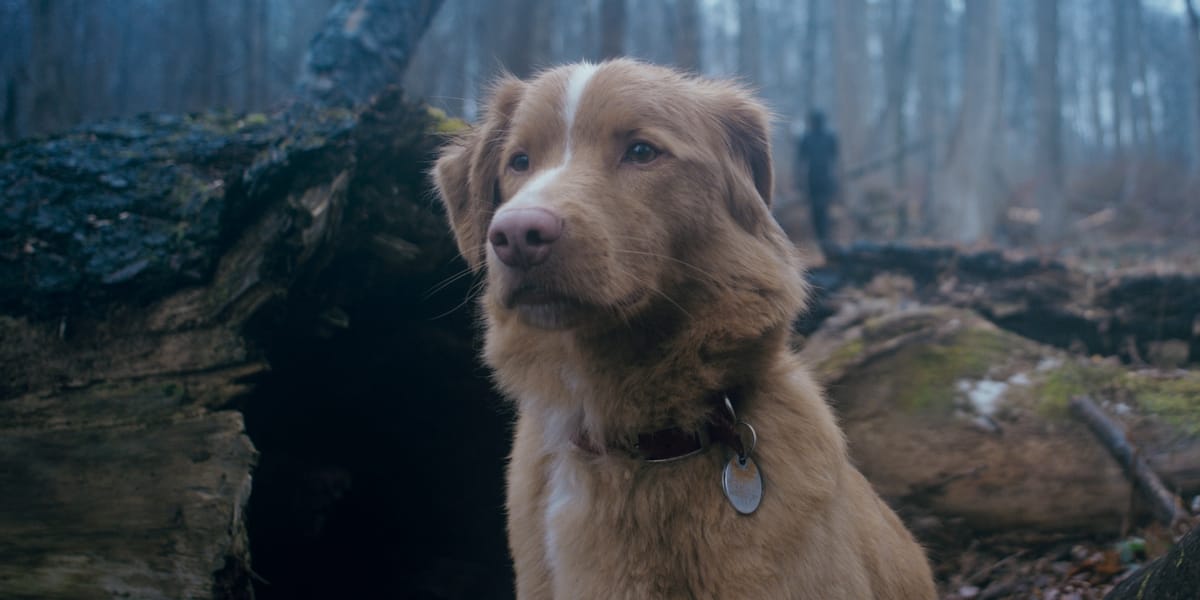
I'm not spoiling anything by telling you the dog lives in Good Boy. Even the film's marketing wants to reassure audiences that this is not a dog snuff film like A Dog's Purpose. Director Ben Leonberg has crafted a bit of an experimental feature, not only putting a dog in the lead role, but making them the lead of a horror movie. Unlike other movies with animal protagonists getting human voice-overs or sending them on a physical journey connected to a human, Good Boy wants to use the trappings of a typical horror film from the perspective of a loyal dog. The film knows we've all seen horror movies where the dog knows there's something wrong before the human does, and Good Boy leans into that idea, giving its star, Indy, far more information than his haunted owner receives. It's a neat idea that's executed perfectly, and yet it's tough to say if there's a greater goal here than pulling off a neat trick.
Because Good Boy is all from Indy's perspective, the "story" happens around him with his owner, Todd (Shane Jensen), being bequeathed a creepy old cabin in the woods by his late grandfather (Larry Fessenden). Todd has recently struggled with an unnamed illness and believes life with Indy at the cabin will do him good, but Indy quickly becomes aware that all is not well out in these woods. Furthermore, Indy starts to receive visions featuring the grandfather's old dog, and these visions function as warnings of a malevolent presence that seeks to prey on Todd. As the darkness closes in, Indy seeks to protect his best buddy.
One of the questions that arises at the forefront of Good Boy is whether Indy is giving a good performance. On the one hand, he behaves perfectly in every scene, and it's clear why Leonberg used his own dog as the star. He always gets the reaction he needs, and Indy always garners our sympathies beyond what any dog would. But can you say a dog is "acting?" Acting isn't just reacting, but about making choices, and Indy doesn't make choices as much as he obeys commands. What's important in the larger scheme of the picture is capturing Indy's reactions within a visual style that conveys the importance of the scene.
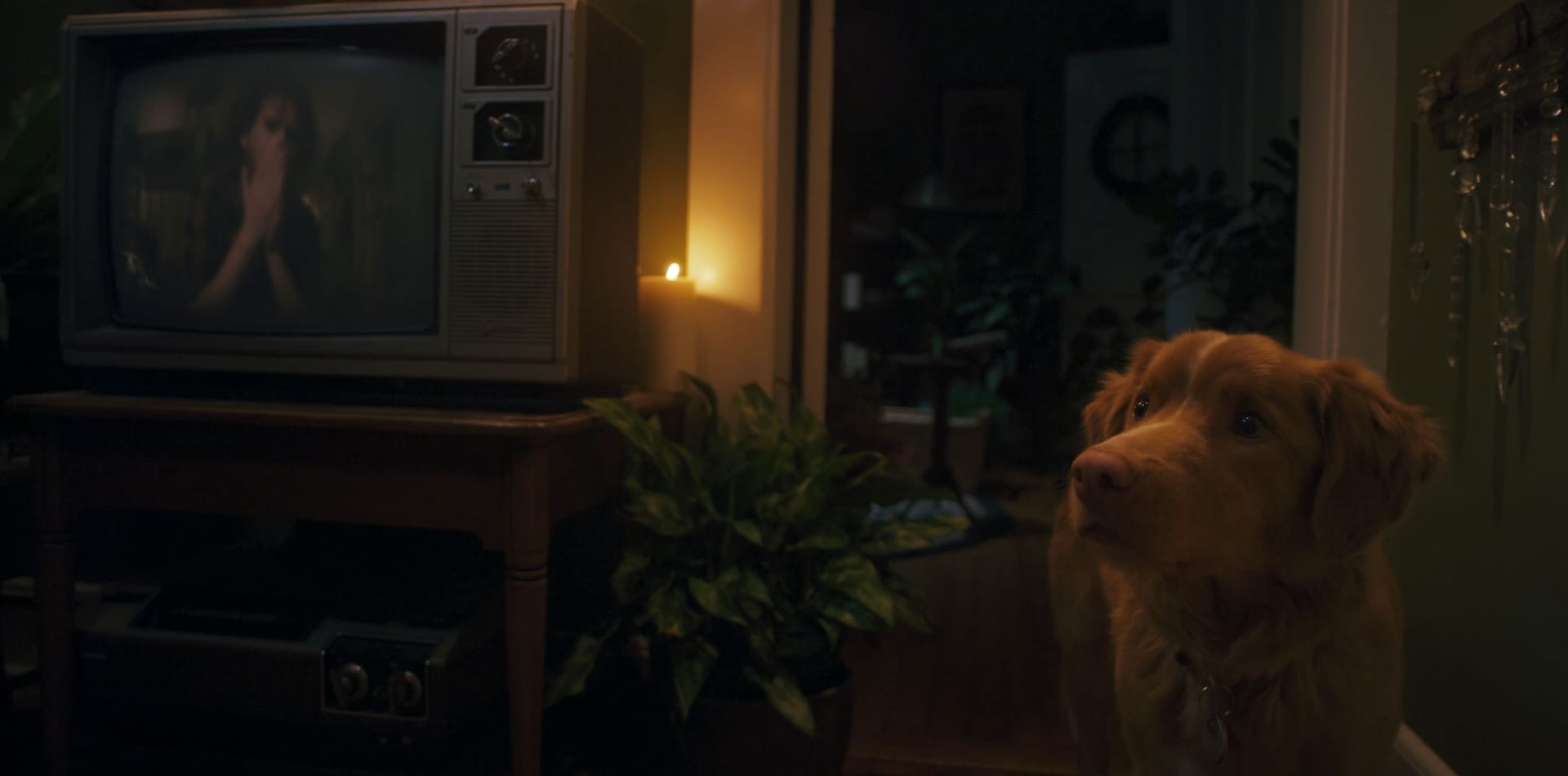
In that way, the stars of the film, alongside Indy, are Leonberg and his cinematographer, Wade Grebnoel. The film is a masterclass in conveying tone through thoughtful visuals that speak to Indy's perspective as well as the encroaching evil around him. From its opening shots, Good Boy is a stunning work of not only creating creepy scenes, but also oddly beautiful ones. It's not so much that the film seeks to visually upend horror films, but that it understands the burden of translating Indy's perspective by doing more than simply shooting from a low angle. It's not simply "here's what a dog finds scary," as much as here is the horror as the dog observes it.
And yet it's tough to say Good Boy is a scary film beyond our general concern for Indy. Leonberg throws so much into making sure this is Indy's film that the surrounding picture starts to lose specificity in its storytelling. Understandably, the movie doesn't want to give a dog the same level of understanding as a human, but it also sacrifices specificity in Indy's relationship with Todd. Perhaps the film's biggest misstep is that it chooses to keep almost every human face obscured or out of focus. On the one hand, this emphasizes that the movie is Indy's story rather than Todd's, but it also diminishes the relationship between our main characters. Todd's illness becomes his only defining feature, and beyond that, he's just the every-human. But one of the things that makes a bond with a pet special is that it's unique. You give them dumb little nicknames. You sing them little songs. They behave in certain ways that are both common to pets yet singular in the relationship. The most we get from Todd and Indy is that they like watching movies together, and even that feels brief.
The story is about Indy trying to save Todd, but we never really care about Todd as much as we care about Indy, so the dog's "mission" never feels particularly fraught. We don't want Indy to lose his buddy, but that relationship needed as much attention as the cinematography for bringing us into Indy's world. Again, I understand not wanting Todd to overshadow Indy, but the movie requires a bit more to inform Indy as a character. Think of the Disney short "Feast," which also leaves its humans faceless, but provides an arc of a dog whose relationship is based on how much his human gives him to eat, but observes his owner's heartbreak after a breakup. Good Boy lacks those defining features, and without them, it becomes more of a neat idea about "horror movie from a dog's perspective," but fails to grasp anything beyond the broad emotions of "I don't want the dog to be sad."
And yet I can't deny how much mileage Leonberg gets from this basic premise thanks to Indy and the visuals. We care about this dog, we are curious about how everything will unfold, the film is beautifully composed, and it doesn't overstay its welcome at only 73 minutes. It's a neat feature coming at the right time of the year, and it signals that Leonberg, in his feature debut, has the ambition to push past a gimmick and try his best to convey a story in a way that hasn't been tried before. There's no doubt that Indy is a good boy. However, his film stops shy of being a great story.