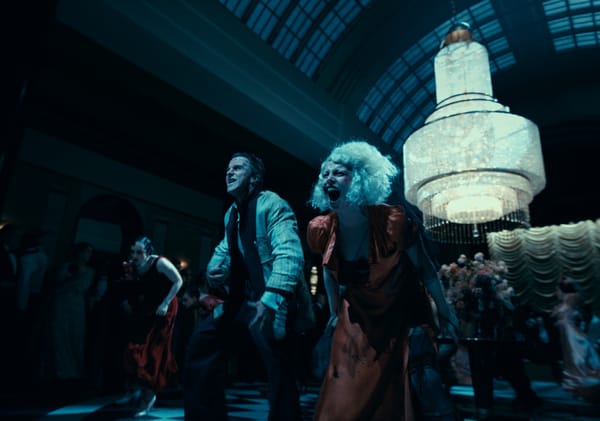
‘Good Fortune’: We’re Going to Need a Miracle to Solve This Affordability Crisis
Aziz Ansari’s light comedy may come to familiar conclusions, but sometimes it’s enough to just feel seen.

Millennials are the first generation of the modern era to feel like they will not economically surpass their parents in either income or job status. There are multiple factors contributing to this dour outlook, including the Great Recession, the pandemic, and an ongoing housing shortage. This has all contributed to an affordability crisis where voters were so desperate just to return to 2019’s economy, they put Donald Trump back in the White House (shockingly, that has not worked out in terms of making anything cheaper). We all know that the top 1% is hoarding more wealth while everyone else is struggling just to get by in a society that punishes the poor for being poor by adding more poverty. Money can buy happiness, so what are we to do when so many have so little? Aziz Ansari’s debut feature, Good Fortune, doesn’t pretend like it has all the solutions, but sometimes it’s enough that a comedy from a major Hollywood studio is willing to commiserate with the audience and share a chuckle over our meager future.
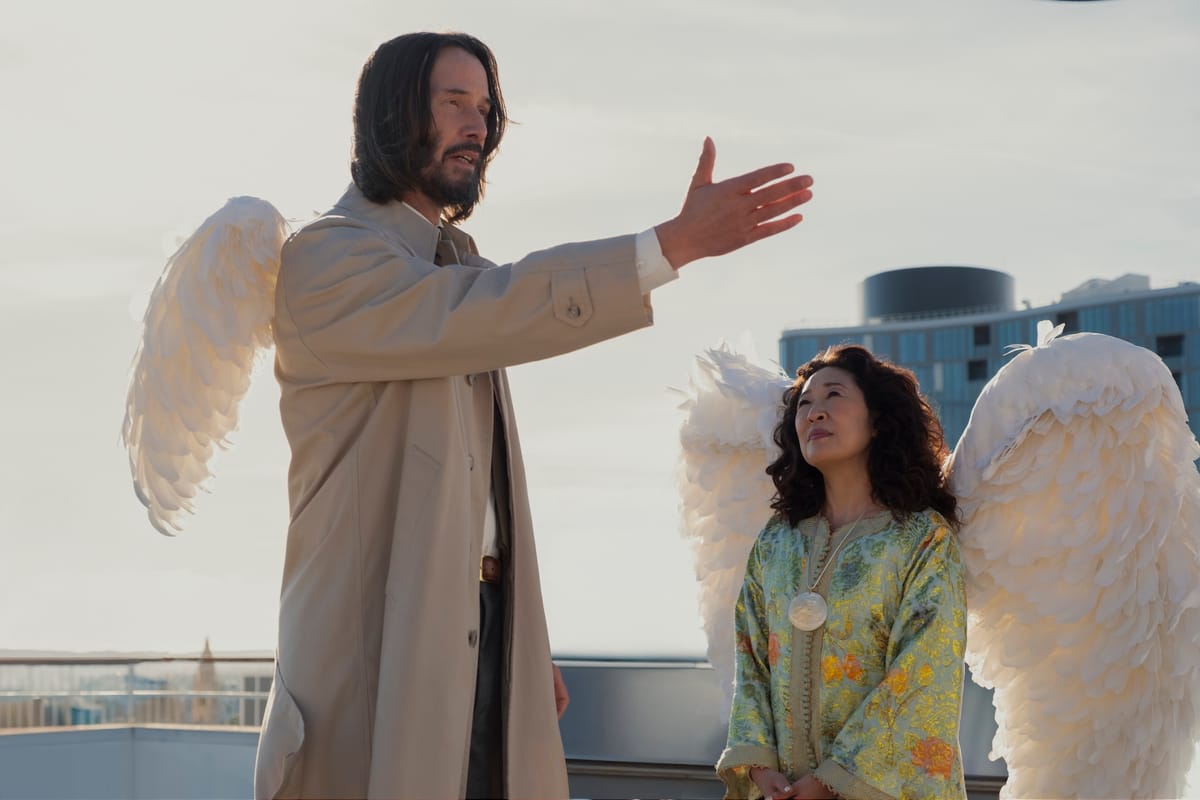
Arj (Ansari) has it rough. Despite being a college graduate and a documentary editor living in Los Angeles, he can’t land a steady job. Instead, he’s grinding his way through the gig economy, waiting for hours in line and performing other lowly tasks. His depression catches the attention of Gabriel (Keanu Reeves), a minor angel who protects people who are texting and driving, but longs for greater responsibility in changing lives. When Arj seems to connect with the wealthy venture capitalist Jeff (Seth Rogen), only to have Jeff summarily dismiss Arj after a misunderstanding, Arj is despondent. Gabriel, seeing an opportunity to guide a lost soul, thinks he can show Arj that Jeff’s life isn’t all it’s cracked up to be by swapping their places. However, Gabriel’s plan backfires, and Arj doesn’t want to switch back after living Jeff’s pampered existence. This leaves both Gabriel and Jeff stuck working menial jobs while they wait for Arj to have an epiphany about his old life and agree to return to the way things were.
It's no surprise that Good Fortune is consistently funny. Ansari is a veteran comedian working alongside Rogen, another comic talent of the millennial set. They’re also both outsiders to a life of luxury, coming to fame and fortune from far outside the Hollywood sphere (South Carolina and Vancouver, respectively). The observations about the gig economy and income inequality feel honest and genuinely sympathetic. It’s refreshing that Ansari wants to share the frustration rather than act as a scold and pretend a supporting actor from Parks and Recreation has the solution to class disparity. We know things are bad, and it’s so bad that to even have a glimpse of wealth, you’d have to get a misguided guardian angel involved. That all leads to a nice balance of observational humor as well as trusting the comic instincts of the cast.

As good as Ansari and Rogen are, the film’s greatest asset is Reeves. He’s had such a long and diverse career at this point that it’s tough to say he’s playing “against type,” but for an actor who is now probably best known for John Wick, it’s great to see him lean into the gentle foolishness of Gabriel. The sharpest element of the script is how Ansari casts Gabriel as another laborer, someone looking to advance but, for reasons beyond his control, is stuck at his current station. But Reeves’ guileless performance provides a nice contrast against the rage and frustration emanating from Arj and Jeff. Gabriel can see the unfairness in the system, but he’s also awed by the wonder of tacos and “chicken nuggies.”
Some may bristle at the film’s anodyne conclusions about being human is to struggle, and that the wealthiest among us have shed their humanity in the name of comfort. There’s a lot of anger right now, and Ansari’s attempt to funnel that anger through light comedy and bromides about people just looking for a livable wage may feel inadequate to some viewers. But having sat through some turgid satires that got high on their sense of self-importance, I like that Good Fortune never lectures its audience or pretends it has a solution beyond imparting that people may have to peacefully organize against the wealthiest to effect change.[1]
We’re in a bad place right now, and Good Fortune is on the right footing by challenging Arj to have hope. It has not been a wonderful life for him or the many others who are working multiple jobs just so they don’t have to sleep in their cars. No one wants to be homeless, and it has nothing to do with laziness or entitlement. People are struggling, and those with power should be doing more to alleviate that struggle rather than compounding it. And if we can’t have that, then we should at least be able to share a laugh about how much this income inequality sucks. Gold Diggers of 1933 didn’t become a hit film because it had policy solutions; it was a hit because it was a movie made during the Depression, influenced by the Depression, and offering viewers a bit of light escapism without downplaying the Depression. There’s a place for movies that can offer keen insights into modern ills, but other times, you need a movie like Good Fortune that’s willing to empathize.
[1] There’s never a good time to perform for a wealthy despot, but it’s particularly a bad time to do so if your new movie is about the wealthy’s indifference to the suffering they create.