‘Hedda’: Nia DaCosta Threw a Lavish Party I Desperately Wanted to Leave
DaCosta’s update of ‘Hedda Gabler’ is an exhausting whirlwind of deception, lust, and status.

The experience of watching Hedda is like someone whispering the sexiest, juiciest gossip in your ear about someone you’ve never met. There’s a weird dissonance where the tone and delivery imply drama and intrigue, but you have no personal investment, so it’s a stretch to even deem this information titillating. Nia DaCosta’s update of Henrik Ibsen’s Hedda Gabler perhaps plays better if you’re familiar with the play, but there’s hardly a moment to get your bearings as the movie rushes towards you in a manic frenzy. We struggle to keep up with the players, their complex motivations, deep-held secrets, and only when we briefly come up for air can we wonder, “Do I care about any of this?” It’s a movie that works best on the surface, letting the performances sing as the camera swirls around the gorgeous production design and costumes, but anything deeper feels overwrought. There’s a sense that DaCosta never fully trusts the audience to understand the drama inherent in the text, so she cranks the energy in every scene until the knob breaks off. Instead of being in on the party, we’re left wondering what all the noise is about.
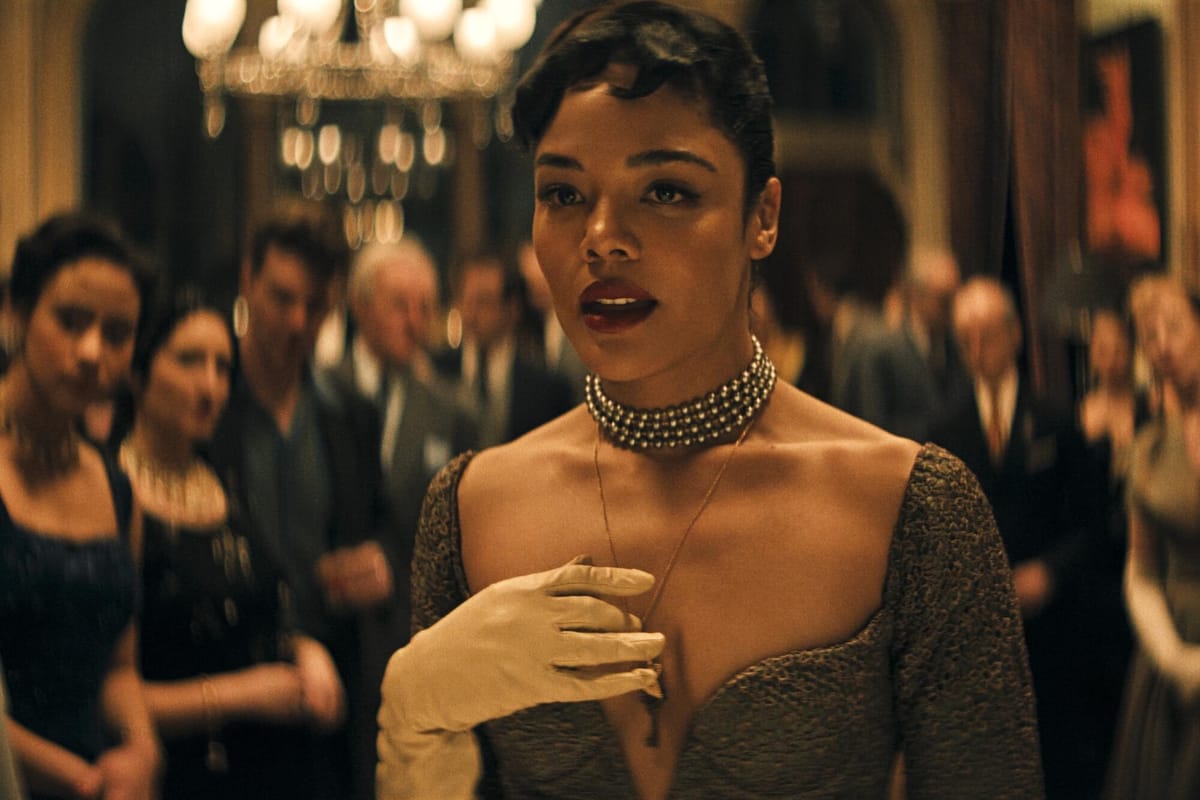
Hedda Tesman née Gabler (Tessa Thompson) is throwing an opulent party in the hopes that it will sway the academics in attendance to hire her husband, George (Tom Bateman), for a prestigious position at the university. Hedda and George are financially overstretched, and they need this job to come through if they want to continue living their opulent lifestyle. The events of the evening hit a curious snag with the arrival of Thea (Imogen Poots) and later Eileen (Nina Hoss), Hedda’s former lover and a rival to the professorship George desires. Eileen and Thea, partners both academically and romantically, have brought Eileen’s new manuscript on human sexuality, which excites the male academics and looks to give her the edge, unless Hedda uses her gifts for gossip, duplicity, and seduction to win the professorship for George.
To the film’s credit, both DaCosta and Thompson consciously keep Hedda an enigma without making her a cipher. There’s quite a bit brewing beneath the surface, and what Hedda “wants” is what propels the film, even if the character probably doesn’t fully grasp her own desires, instead acting more on impulse and pique. This is not a movie where you root for anyone; we’re watching a cavalcade of intersecting psychologies and neuroses collide against each other, and even at the narrative’s margins, the least interesting characters are committing adultery or plotting blackmail. Hedda is the curious center at the eye of the storm, and only a performer as gifted as Thompson could hold the screen playing such an elusive figure.
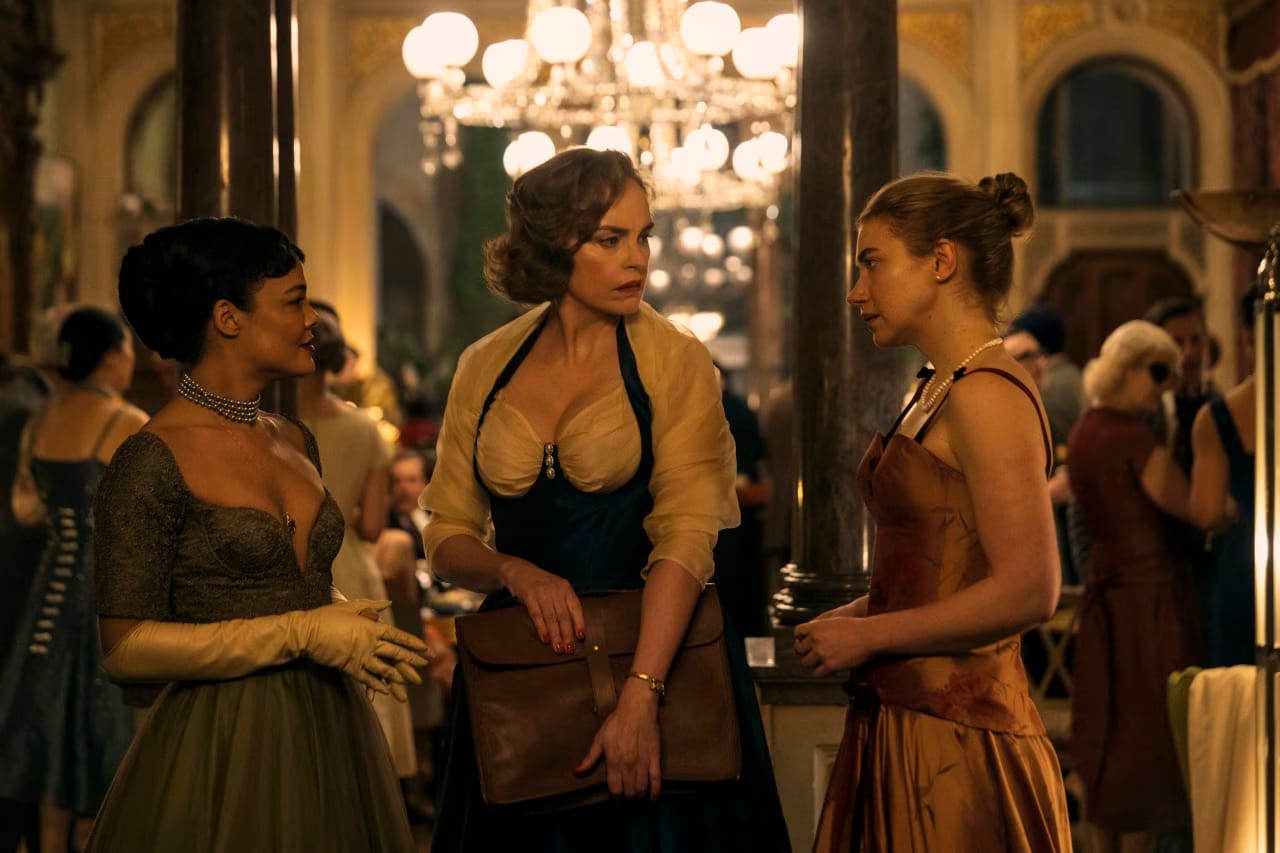
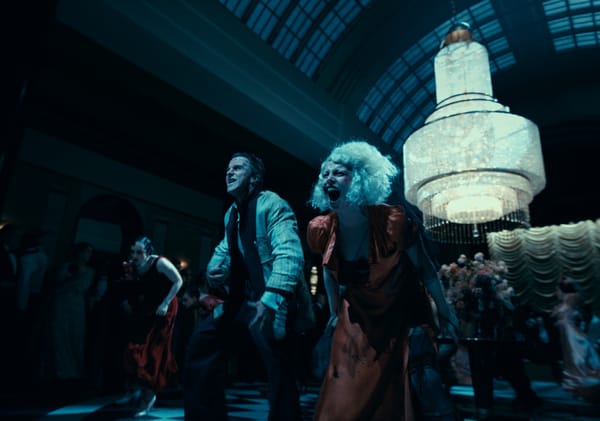
But it’s tough to let Thompson shine when DaCosta seems to reject the quieter moments the movie needs to let the drama land. If a feeling or a desire isn’t openly articulated (something easier to put on stage when there are fewer tools to convey those emotions), then DaCosta will pile on the close-ups, the single tear rolling down an actor’s cheek, or resort to Hildur Guðnadóttir’s score that feels largely comprised of whooshes and inhaling. DaCosta seeks to stun us, but these choices serve to undermine the drama rather than focus the material. When you have actors of Thompson and Gold’s caliber in a room together, locked in a heated confrontation over their desires and pasts, you can trust them to deliver without showing off all the technical bravado your budget has to offer. The audience needs space to let moments land, and in Hedda, there’s barely a moment to register anything before we’re on to the next. In one scene, a husband shoots a gun at his cheating wife, misses, and the bullet brings down a chandelier. It’s a big, explosive moment that means little because we don’t care about the husband, wife, or what their relationship means beyond representing the tumult in Hedda’s life, which we already understand.
There’s also the possibility that Hedda Gabler can’t be translated in this manner. I appreciate DaCosta’s goal to reset the time to the mid-20th century in London and, through her casting, make nods towards sexism and racism. Part of what drives Eileen’s faith in her manuscript is understanding that there is no other way for her to enter the upper echelons of academia as a woman. But this tricky balance plays as bizarre as one scene features a drunken Eileen trying to be “one of the guys,” but because she just took a dip in the lake with other partygoers, her nipples are clearly visible through her white top. She then doubles down on asserting the arousing aspects of her vaunted manuscript, thus turning a perceived weakness into a strength. And yet in the back of my mind, I kept thinking, “Boy, there sure is a lot of psychosexual drama surrounding this academic manuscript.”
The more subtext gets translated into text, the less there is for the viewer beyond what’s being shoved in our faces. On the one hand, we can get as dizzy and delirious as the characters, lost in the maze of their convoluted psychologies while they’re literally running around a hedge maze. But emotionally, there’s little for us to absorb despite the intense performances on screen. Hedda and Eileen are rich, interesting characters, but they’re frequently drowned out by the debauchery that surrounds them. It’s like trying to have a real conversation at a loud party, and rather than forging a connection, your voice gets sore, your ears are ringing, and you just want to go home.
Hedda arrives today on Prime Video.