'Highest 2 Lowest' Has Spike Lee Searching for Creative Rejuvenation
Lee's take on the Akira Kurosawa classic takes the story in a compelling new direction.
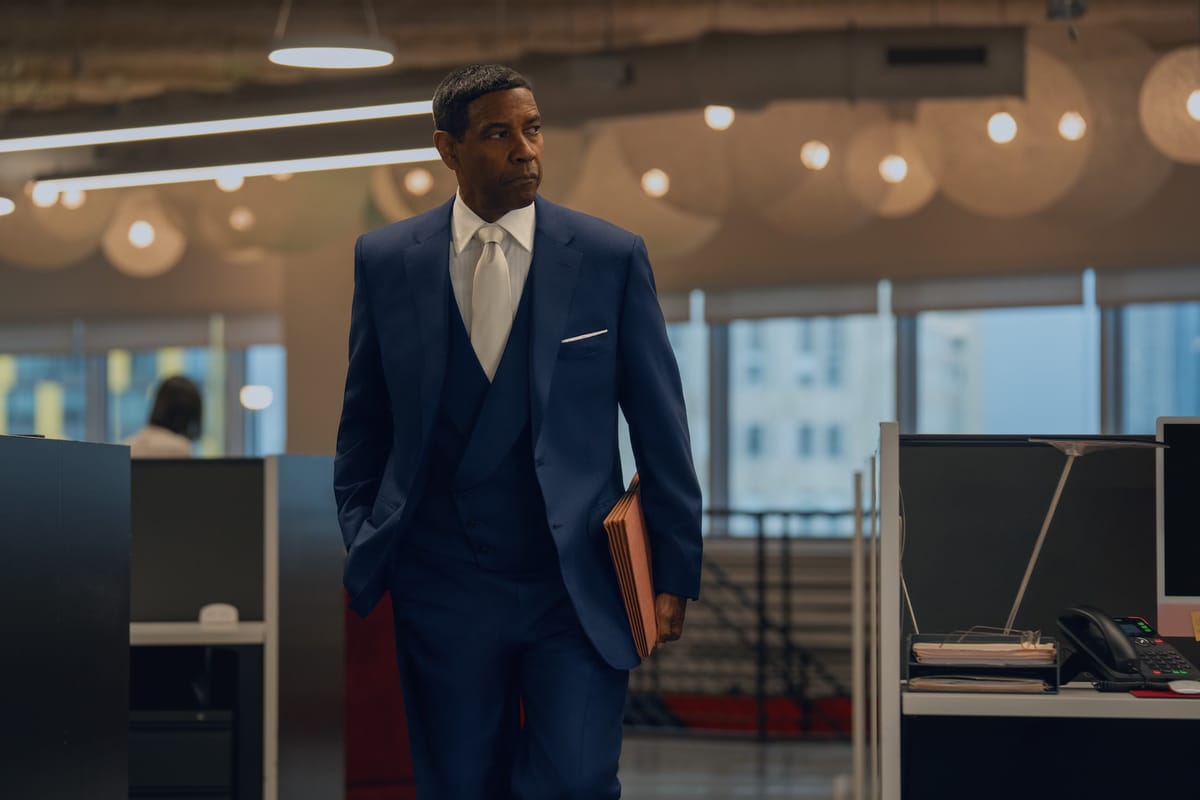
It’s strange to think of a filmmaker as fiery and aggressive as Spike Lee as an old man, but Lee is now in his late 60s after working as a director for almost four decades (his debut feature, She’s Gotta Have It, will mark its 40th anniversary next year). When the great Akira Kurosawa reached his late 60s, he also started considering his legacy and what he would leave behind, leading to the films Kagemusha (1980), Ran (1985), and Dreams (1990). So it’s appropriate that Lee has taken one of Kurosawa’s greatest works, High and Low (1963), a study of class divisions, and flipped it into one about an aging artist breaking out of a gilded cage. Re-teaming with Denzel Washington for a fifth time in their incredible careers, Lee’s Highest 2 Lowest is a surprisingly confessional work about finding artistic renewal later in life.
The film uses the same set-up as High and Low as well as its source material, Ed McBain’s novel, King’s Ransom. In this telling, our wealthy man is music mogul David King (Washington), a man with “the best ears in the business,” but whose record label, Stacking Hits, is in danger of being bought out by a rival company (“Stray Dog,” because Lee loves a cheeky reference). King thinks he has outmaneuvered his competitors by pulling together enough investment money to purchase the company and return it to his original vision. However, his power play is disrupted when a kidnapper takes the son of King’s chauffeur, Paul (Jeffrey Wright), thinking it’s King’s son, Trey (Aubrey Joseph). Asking for a ransom of $17.5 million, King must decide if it’s worth bankrupting himself to save another man’s child.
Lee sets the tone brilliantly with images of the New York skyline set to “Oh, What a Beautiful Mornin’” from Oklahoma! performed by Broadway legend Norm Lewis. Lewis’ booming baritone engulfs the viewer alongside the urban vistas, but the loftiness of the scene belies a false ascendence. The skyscrapers loom large, but they’re also cold and remote. Lewis’ voice is rich, but disconnected from performance, a beautiful melody that doesn’t fully embrace its singer, a Black man singing a tune that traditionally comes from a white character. Lee is stressing to us that there’s something discordant in these wealthy trappings, and that what appears to be success is artistic alienation.
I imagine some viewers are going to have a tough time hanging with the first half of Highest 2 Lowest because of how heavily Lee emphasizes this disconnect. Howard Drossin’s score constantly threatens to drown out the entire movie, its lush melodies bearing down on every scene as if everywhere King goes is as richly appointed as his Manhattan penthouse. When we move through King’s home, almost every surface is adorned with some stunning work of art (and usually stressed as Black art; we’re even told at one point that King’s financial freefall may cause him to lose his Basquiats). But that’s the issue at hand—is King really appreciating the artistry here, or is it merely adornment for his power? Is he wearing the robes of a king, or are the robes wearing him?
King has genuine artistic aspirations, and his fight for Stacking Hits arises out of his concern that Stray Dog will strip the company for parts and use it to feed A.I. models. However, while King is addressing real issues, Lee frames this fight as one for power. Trey keeps pushing for his dad to listen to a new artist, but King says he’ll only do it when he “comes up for air.” He’s caught in the business side of the music business, and while he argues that this business is ultimately in service of artistic goals, everything we glean from King is that he’s a former titan, someone to be respected, but no longer relevant.
One can’t help but wonder how much Lee sees of himself in King. Do the Right Thing is unquestionably one of the best American movies ever made, and the director has had a rich career filled with incredible works across genres, including Malcolm X, Four Little Girls, 25th Hour, and Inside Man. But is Lee now nothing more than an elder statesman? There’s tension between being revered and being put out to pasture. You can see that in Spike’s history when the Academy gave him an honorary Oscar in 2015, the youngest person to ever receive the honor, but also a bizarre implication that he couldn’t win the award in competition. Lee then went right ahead and won an Oscar for Best Adapted Screenplay in 2019 for BlacKkKlansman (while also making his disdain known for that year’s Best Picture winner, Green Book). Like King, Lee has found wealth and professional success, but that doesn’t necessarily mean artistic fulfillment.