
‘If I Had Legs, I’d Kick You’: The Pure, Uncut Psychological Horror of Being Mommy
Rose Byrne shines in Mary Bronstein’s film about a world that only knows how to blame, shame, and drain its mothers.

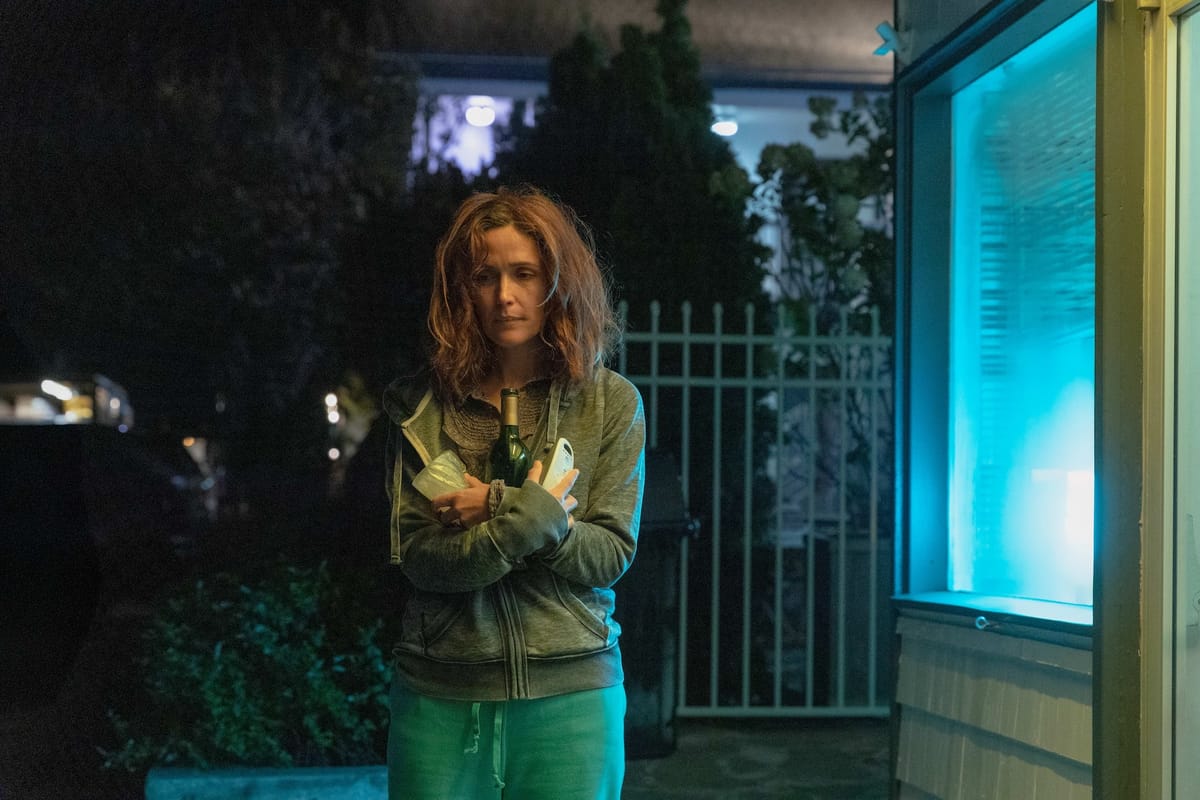
American society does not love mothers, but it does expect them to do everything. The role of nurturer is taken for granted, and moms are meant to be an inexhaustible and uncomplaining resource whose job is both vital and also somehow less important than anything that directly earns an income (also, given inflation, they must now earn an income). It’s an ongoing horror show that would chip away at anyone’s sanity, and that’s where we’re placed in Mary Bronstein’s bracing If I Had Legs, I’d Kick You. Rose Byrne, one of our most under-appreciated actors, gives one of the year’s best performances as a mother whose last shreds of sanity are unraveling as every interaction is a hopeless negotiation, and all that awaits is the knowledge that you are “failing” as a mother. Although the film starts to lose texture as it wears on, Bronstein and Byrne never lose our interest as we’re dragged down into the abyss of modern motherhood.
“Mommy’s stretchable,” the precocious daughter (Delaney Quinn) says of her mother, Linda (Byrne), during a therapy meeting while Linda manages a rictus smile that tries to pleasantly disagree with her young child’s assessment. Linda’s daughter isn’t eating food, so she has a tube going into her stomach for nutrient goop she gets at night while she sleeps. While her daughter's eating disorder, Linda’s husband, Charlie (Christian Slater), is off captaining a boat for eight weeks. Oh, and the ceiling of their bedroom in their apartment just broke open due to flooding, so Linda and her daughter must stay in a crummy motel during the renovation. But don’t worry, because Linda’s paying job is as a therapist, where other people can also dump their problems onto her. She seeks any reprieve she can, whether it’s in pot or wine or in confiding in her therapist (Conan O’Brien), but the problems for Linda are unceasing and unforgiving. She may not want to admit it, but Linda is stretching far past her breaking point.
Bronstein makes some bold moves from the outset, not only with the hole in the ceiling that will serve as one of the film’s primary symbols for the darkness swallowing Linda’s life, but by drawing us into the sensory overload of Linda’s world. Notably, Bronstein doesn’t let us look at her child’s face. Instead, we experience the daughter as an almost unceasing stream of difficulties and demands, not a “bad seed,” but an endless font of need and want that can figuratively and (due to her eating disorder) literally never be sated. This expands to almost everyone Linda encounters, from the doctor (Bronstein) who keeps stressing that Linda needs to be more present in making her daughter eat or else they’ll need to “reassess,” to her patients who are trying to cling to Linda without any thought that she may also be drowning.

The film also cleverly notes how this kind of overbearing dynamic only further isolates Linda. Any friendly outreach is met with suspicion, like how she rebuffs the motel’s superintendent, James (ASAP Rocky), and strives to just get high or drunk in peace for any moment she can have by herself. Linda’s relationship with her therapist is particularly telling as we can see how desperate she is for a single person to listen to her problems and give her some semblance of emotional support, but she’s chosen a guy who works two doors down from her practice because she lacks the bandwidth to go anywhere further. She’d rather take the awkwardness of seeing her therapist in the breakroom getting coffee than go to another person because the travel is too much of a lift.
The film isn’t meant to depict what being a mother is like day-to-day as much as what it feels like. The complications that rain down on Linda border on the absurd, but Bronstein draws us into that unceasing stress where we not only long for quiet but also know that every moment is eating away at Linda. When the doctor says that it’s unlikely that the daughter will make her necessary weight, Linda responds, “You set us up to fail!” and that feels like it could apply to everything else in the movie. There is no support system here, so Linda is just falling further into darkness. Bronstein is aware of how dark this can get, hinting at not only abandonment, but also at one point including interrogation footage of Andrea Yates, the woman who drowned her five children in 2001. The larger question swirling around the film is how much we can casually place on mothers under the assumption that their sanity is somehow immune to infinite stressors.
If I Had Legs thrives because it has Byrne at its center. Easily one of the most underrated actors of the 21st century, Byrne gets a chance to shine here in showing Linda’s slow unraveling. What she does with her eyes alone is stunning as she manages to subtly get from “I’m barely tolerating you,” to “I cannot believe I am having to tolerate you.” There are a lot of ways to go broad here, but Byrne plays all the notes of the character, leaning into Linda’s quiet desperation but also knowing when to scream, shout, and go a little ballistic. Byrne is the kind of actor who can take this kind of put-upon mother, make her brilliantly comic in a show like Platonic, and then play a similar, overworked caretaker here while creating a new, unique performance.
If Bronstein’s movie has one problem, it’s that, like its protagonist, it doesn’t have anywhere to go. It can load up the pressures and stress, but the tone of grinding your emotional bandwidth into dust is present from the moment Linda’s ceiling caves in. It’s a movie that makes you feel terrible by design, but similar to how an action movie can drain your adrenaline, a psychological horror movie can max out how bad you feel. However, I do appreciate that Bronstein isn’t even making a plea about how we, as a society, can do better by mothers. This is not a polemic because we know the things we could do (communities that support mothers rather than overworking them, a robust social safety net, etc.), but If I Had Legs, I’d Kick You is about empathizing with the feeling of stress that comes from a sense of constant shame and failure. The audience can at least see and hear Linda, even if no one else can.
If I Had Legs, I'd Kick You opens in limited release on Friday, October 10th, before expanding nationwide on October 24th.