
‘It Was Just an Accident’: Jafar Panahi’s Brilliant Revenge Story Explores the Prisons We Create
The Iranian director, a victim of his country’s detention policies, wrestles with the impossibility of catharsis.

When it comes to revenge, the saying goes “dig two graves,” and in his latest feature, It Was Just an Accident, filmmaker Jafar Panahi doesn’t take long before digging the first. However, what first presents as a simple revenge fable quickly spirals into an absurdist farce and profound questions of what justice means when corruption is a way of life. While forgiveness can be powerful, it is not a simple matter of wiping the slate clean. We can’t easily let go of the injustices done to us, and so we’re left with the difficult question of who we want to be and the limitations of both individual identity and societal change. And yet these weighty themes never bog down It Was Just an Accident, which thrives on its terrific performances, sharp script, and Panahi’s brilliant compositions that turn production necessities into artistic strengths.
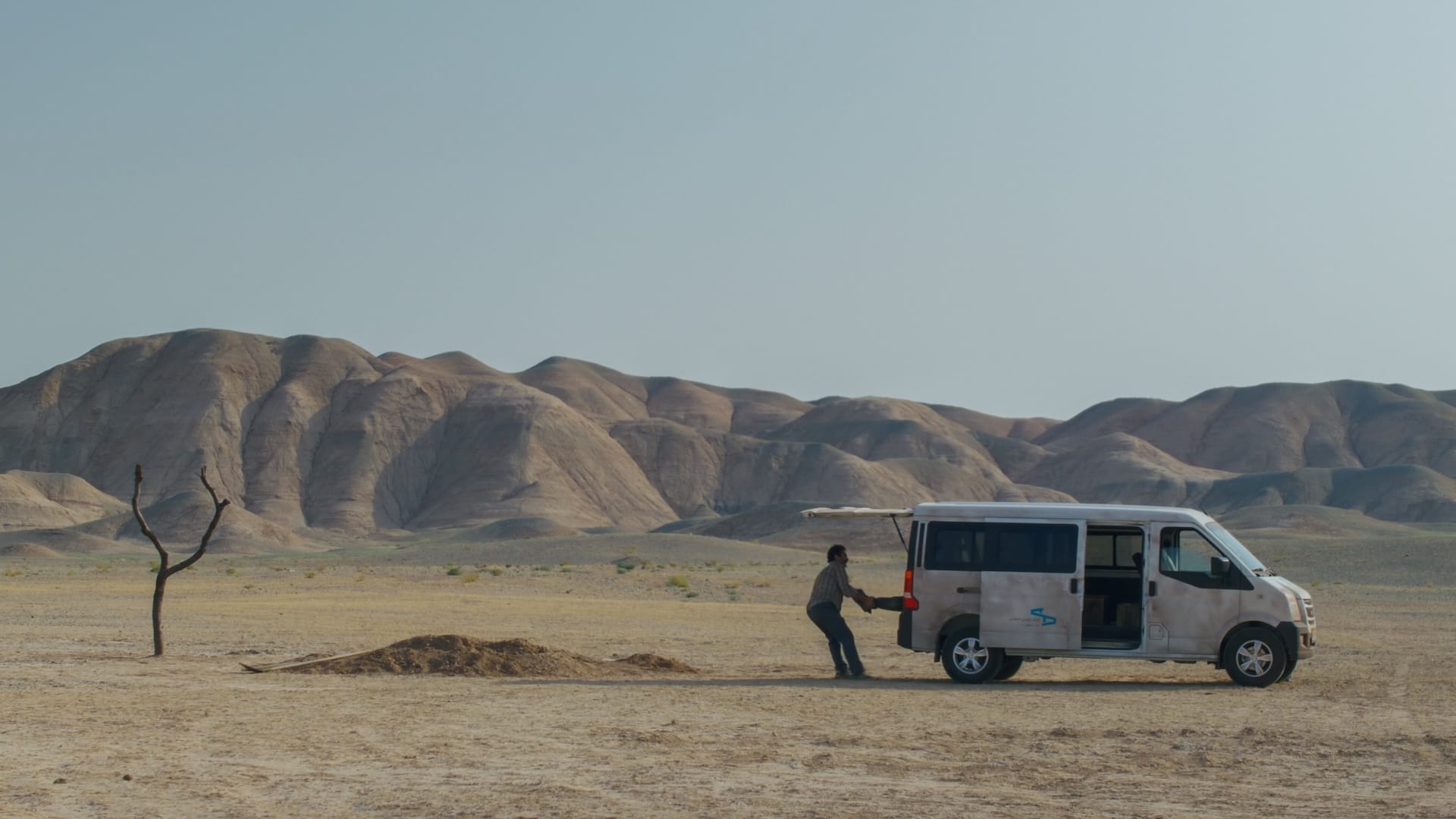
After accidentally hitting a dog with his car, Eghbal (Ebrahim Azizi) goes to a mechanic to repair the damage. Another mechanic, Vahid (Vahid Mobasseri), hears the squeak of Eghbal’s fake leg and immediately wonders if it might be the same man who was his sadistic guard during Vahid’s time in prison. The following day, Vahid kidnaps Eghbal, throws him into a shallow grave, and begins to bury him alive, with Eghbal protesting that he is not Eghbal or has ever worked as a prison guard. Since Vahid never saw his tormentor’s face, he’s left with a gnawing doubt if Eghbal is really his man. To find the truth, Vahid begins connecting with other former prisoners, including wedding photographer Shiva (Mariam Afshari), bride Golrokh (Hadis Pakbaten), and Shiva’s ex, Hamid (Mohamed Ali Elyasemhr). Along for the ride is Ali (Majid Panahi), Golrokh’s new husband, an outsider to the torment experienced by his bride and these other people looking for revenge. As the group tries to ascertain Eghbal’s identity and then what to do with him, new complications intrude on their wayward mission.
It's odd to think of constant injustice as a way of life, but that’s what Panahi shows us in modern-day Iran. Corruption is everywhere, with almost every interaction at least requiring a payoff. The detentions of this world are not based on law, but on the state’s desire to control its populace. Once inside, guards can endlessly torture their captives since justice and reform aren’t the goals. If this is the society you’re in, then what do you as an individual owe that society? One of the major questions that makes It Was Just an Accident distinct from other revenge thrillers is how it asks what morality do you owe to the system if the system creates and fosters sadistic prison guards? If there is no real justice system, then are the only choices left revenge and forgiveness?
Panahi relishes this ambiguity, refusing to give any viewer a simple answer as he twirls his thriller into comic farce and back into grounded drama without ever skipping a beat. He’s aware of the underlying absurdities at work here, not only on behalf of a state that imprisons anyone it deems a troublemaker, but also for those seeking revenge. At one point, as the characters covertly try to cart around a semi-conscious Eghbal, their van runs out of gas, so they’re forced to push their vehicle through the crowded streets of Tehran. These are not a slick band of criminals, but what would a sophisticated crime even look like when anyone can be deemed a criminal? There’s also the broader dark comedy of these characters knowing each other because they shared the same torturer in the same way people bond because they had the same homeroom teacher in high school.
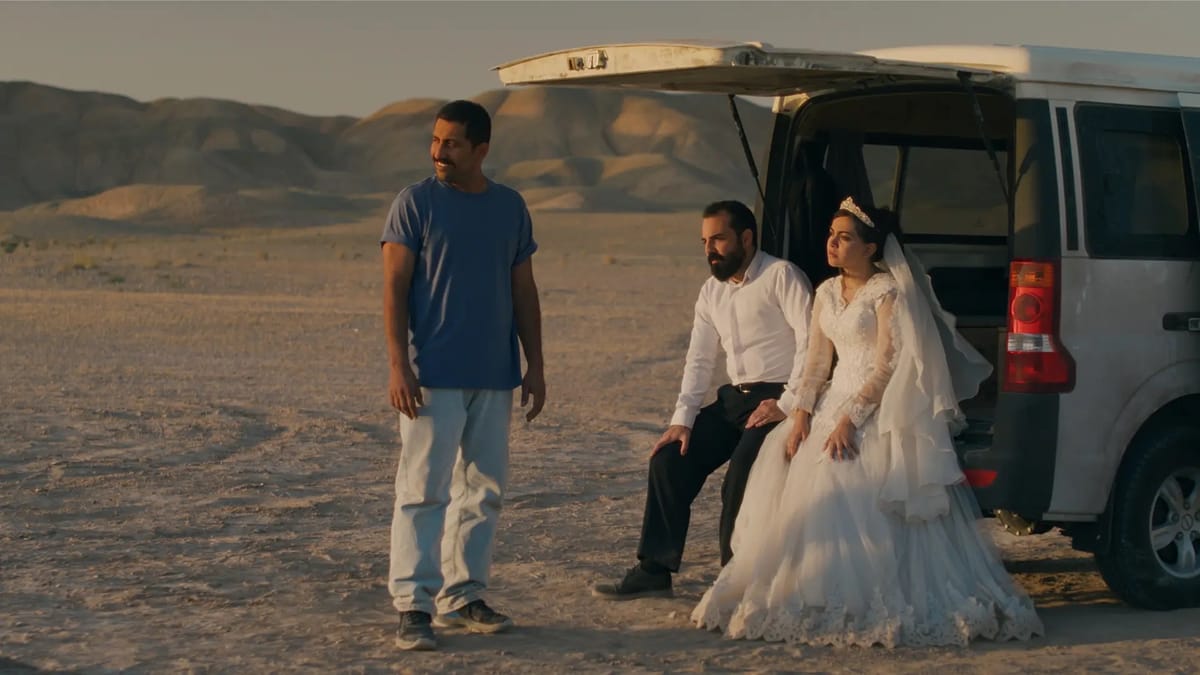
And yet these comic beats never derail the larger stakes or moral questions at play, or how Panahi chooses to depict these quandaries. The filmmaking restrictions in Iran necessitated that Panahi and his crew plan well in advance, and they were limited to only a few takes to avoid suspicion. This ends up working to the film's benefit as Panahi tends to rely on long, unbroken takes, letting the characters hold the energy of the frame while the setting provides artistic contrasts. In one scene, the characters debate whether to resume burying Eghbal alive, and Hamid, the angriest and most erratic among them, launches into a diatribe about why they must take revenge. Panahi doesn’t break away from Hamid, following him in a medium-wide shot as he shouts at his cohorts. However, this framing allows Panahi to capture the desert and mountains behind his characters, accentuating that although they physically inhabit a wide-open space, they’re still painfully confined by both their trauma and their current predicament.
It Was Just an Accident is specific in how it examines Iran’s current police state through Panahi’s personal experiences, as well as universal in asking how much influence we have on the world at large through our moral choices. Once punishment becomes fungible, exercised at the whim of the state rather than the rule of law, then how are we left to make our way in the world? No law says everyone must engage in casual corruption, but that’s the culture, and that’s how you go along to get along. But does this culture absolve any trespass? Are we actors on the state or merely having the state act upon us? Exploring these questions, Panahi consistently shows the limitations of forgiveness and catharsis, his characters seeking emotional transformation inside the tight frames that the visual composition allows. Through this lens, It Was Just an Accident isn’t a story of revenge, but one of escape, only to find that no one is free.
It Was Just an Accident is now playing in select theaters.