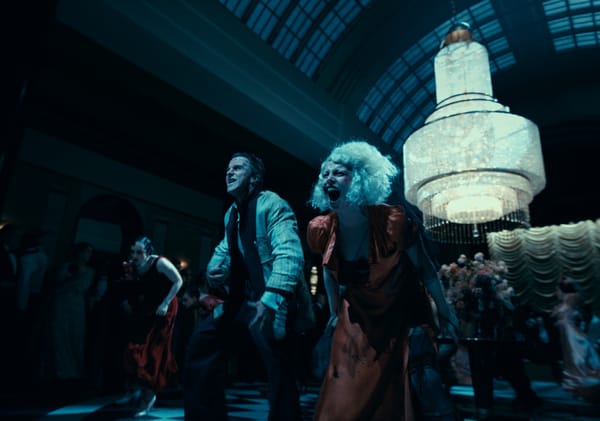
'Kiss of the Spider Woman': Escapism and Transformation in Technicolor
Bill Condon's musical adaptation explores why we need art in the darkest of times.

When you consider that Bill Condon's screenplay successfully translated Chicago to the big screen and six Oscars, including Best Picture, it's a little surprising that, for his directing efforts, he's only made three musicals: Dreamgirls, Beauty and the Beast, and now Kiss of the Spider Woman. While each musical has its own circuitous path to the big screen (Kiss of the Spider Woman being the longest as a book, then a movie, then a Broadway musical, and now a movie musical), Condon knows how to translate those lavish productions even if, as is the case here, the musical numbers are forgettable. Even more surprising is that as an openly gay man, Condon hasn't depicted homosexuality with as much love and complexity since his great 1998 feature Gods and Monsters. For a director who flirts with journeyman status (credit where it's due: he directed the best scene in a Twilight movie), Kiss of the Spider Woman feels personal and intimate even if its songs fail to leave an impression.
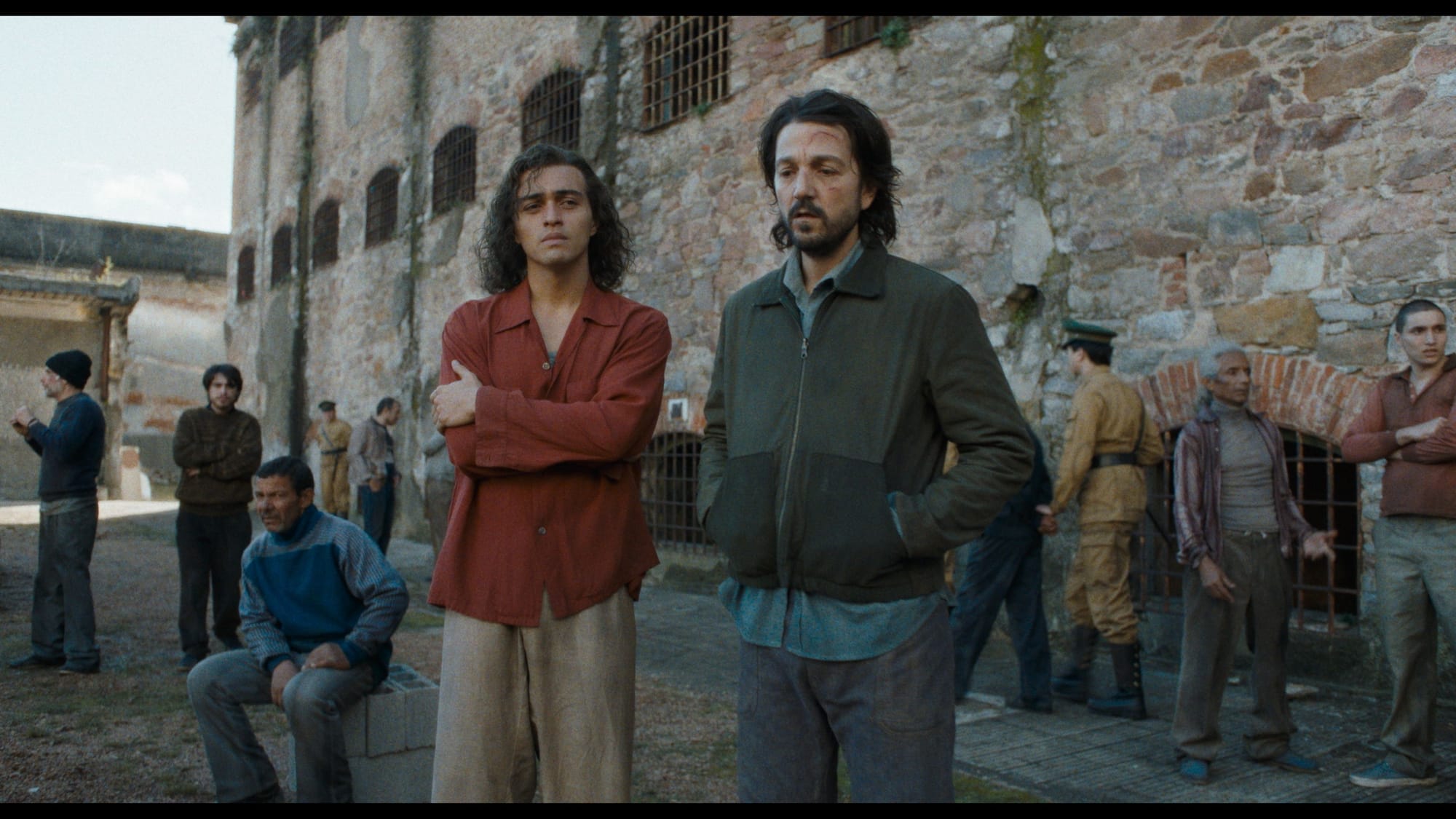
Set during Brazil's military dictatorship in the 1980s, Luis Molina (Tonatiuh), a window dresser, is imprisoned for "indecent conduct" and thrown into a cell with revolutionary Valentin Arregui (Diego Luna). The warden wants Molina to extract some information from his cellmate, but the two men don't appear to have much in common, with Luis being an apolitical observer and Valentin being too serious to care for the frivolity he sees in Luis' life. However, when Luis begins to act out his favorite movie, "Kiss of the Spider Woman," the two men envision themselves as participants in a classic, 1950s musical where this imagined escapism creates a shared awakening.
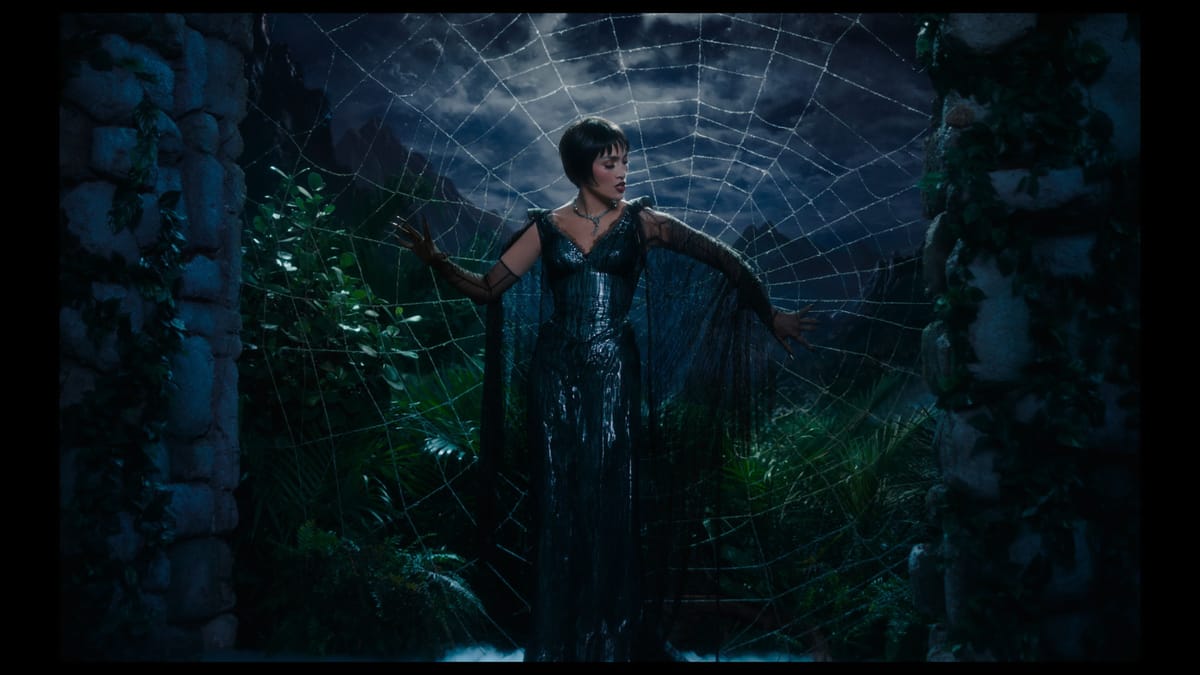
The framing device allows Condon's storytelling to create a series of thematic cages for his lead characters, especially Luis. Not only physically imprisoned, we see through his storytelling that even labeling him as "gay" is a kind of prison, as he's more queer-coded through his identification with Kiss of the Spider Woman's leading actress, Ingrid Luna (Jennifer Lopez). He wants to be her, and yet the story within a story has Ingrid's character, Aurora, imprisoned by the fate of the Spider Woman (also Ingrid), a beast of the jungle that will kill Aurora's love for the sake of the village. The themes aren't particularly subtle; Luis' growing affection towards Valentin makes him, like Aurora, fear he will have to betray Valentin, but it works in showing how Luis experiences an awakening to Valentin's political determination and will.
By the same token, Valentin comes to see the value of art and escapism by "experiencing" the movie as Luis tells it. The Valentin we meet at the start of the movie is one fully immersed in political philosophy and science, missing that what drives people to action more than anything is their interpersonal relationships. Few join a revolution because they've read Marx; they join because they see a system of oppression harming the people they love. As Valentin starts to fall for Luis, his rebellion takes on shape, texture, and specificity.
Through these dual awakenings, you get a lovely romance with Tonatiuh and Luna giving terrific performances. This is a romance where the tenderness feels earned, and the love that blossoms between these two men feels transformative for how they see themselves and the world at large. As a pure love story, Kiss of the Spider Woman thrives on the chemistry and connection between Luis and Valentine, with Tonatiuh and Luna selling the fullness and complexity of how their bond has transformed them into deeper, more thoughtful people. It also provides a nice way of showing how art enriches people when it becomes a shared experience, even if it's based in fiction.
It's just that the musical numbers aren't great, or, more specifically, the songs themselves are easily forgettable. This is particularly surprising when you consider the music comes from the songwriting team of John Kander and Fred Ebb, the minds behind classics like Chicago and Cabaret. And yet here, their work is easily overshadowed by the lavish choreography, cinematography, and Lopez being given room to go full-on diva. It's honestly surprising how well everything around the actual music works, but the gilding can only take you so far. As well as Condon knows how to shoot and craft these numbers, and as much as Lopez feels perfectly suited to play this kind of classic Hollywood star, the air starts to go out of the movie in these scenes because the music isn't strong enough to pull us along.
There's also the issue of flipping between the real world and the musical number. Chicago managed this marvelously of finding the perfect balance between the prison and the musical numbers, but Condon keeps undercutting his own momentum, rarely letting a musical number build and capture the audience like it needs to. It's one of these instances where he feels caught between the beauty and symbolism of the movie-within-a-movie and never wants to leave Luis and Valentin for too long. The two can't be lovers in a 1950s movie musical, and while Luis wants to be Aurora, he can only see himself as her duplicitous accomplice. This speaks to Luis' sense of self-loathing, but it also feels like Condon is worried about centering Aurora and her heterosexual love interest (played by Valentin) rather than the Luis/Valentin relationship.
That’s a shame because the romance between Luis and Valentin is what anchors the entire movie. I understand not fully going into the fantasy of the musical numbers at first, as we’re feeling the push and pull between Luis offering escapism and Valentin being reluctant to embrace what he sees as empty entertainment. But, like Valentin, the movie needed to take a full plunge into the romance of these numbers to sell the value of escapism. Kiss of the Spider Woman makes a convincing case that escapism isn’t inherently self-serving but can be liberating and enriching when shared with others. The film manages to achieve escape velocity thanks to the strength of its love story, but it always has trouble fully breathing the free air.