You Don’t Need to Be Nice to ‘Melania’
Outlets shouldn’t treat a box office flop as if it’s a success.

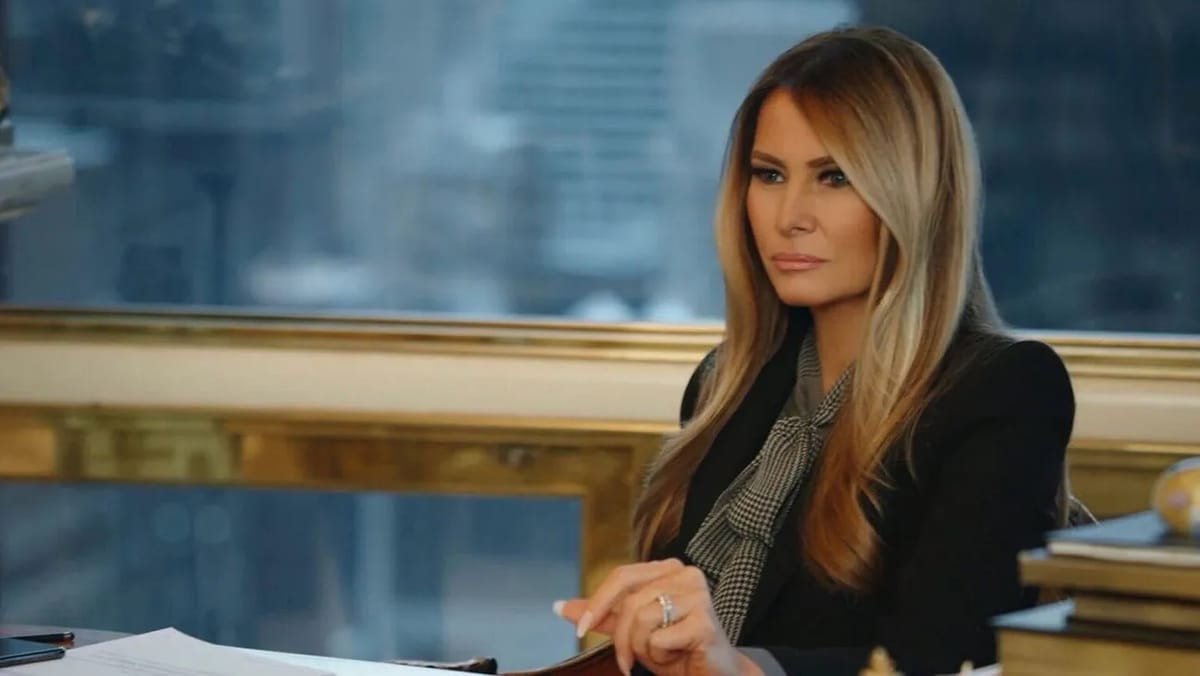
Melania, a new documentary about first lady Melania Trump, debuted over the weekend. The film reportedly cost $40 million to produce and $35 million to market. Its opening weekend at the U.S. box office was only $7 million, a return that would qualify as quite poor for any other movie carrying a $75 million price tag. And yet major outlets rushed to defend and celebrate its opening. Brian Stelter at CNN quoted Amazon’s spin that Melania is the best-performing documentary in a decade, and that it pulled in more than its projected $2-5 million opening. The Hollywood Reporter cheered “’Melania’ Best Jason Statham’s ‘Shelter’ to Place No. 3.” Variety (which has the same owner, Penske Media) proclaimed, “’Melania’ Doc Beats Expectations.” And The New York Times, which last year dubiously claimed that the box office success of Sinners came “With a Big Asterisk” said Melania, “Arrives with a Strong Box Office Showing for a Documentary.”
This is a strange way to treat an underperforming movie. Let’s try to just look at the numbers. First, there are no circumstances where spending $75 million and only getting $7 million back on opening weekend qualifies as a success. Even if Amazon is trying to argue that the film will have an audience on Prime Video (which is easy for them to say, given that they never share their streaming figures). Second, it would be weird if the movie wasn’t the highest-performing documentary of the past decade, since it’s one of the few that’s even getting a wide theatrical release. Most documentaries go straight to streaming, which is why no one spends $35 million to market them. In the pre-streaming age, it was rare to see a film like Michael Moore’s Fahrenheit 9/11 be a hit. More often than not, any documentary receiving a theatrical release would be on the arthouse circuit and make a modest return.
Setting aside whether or not Melania is any good (critics have it at 10% with critics on Rotten Tomatoes, but 99% with users), we shouldn’t suddenly reinvent box office metrics and move the goalposts. Even though I can’t say for certain whether the film is being review-bombed by MAGA fands on Rotten Tomatoes, the reviews have certainly been scathing. The Guardian called it a “gilded trash remake of The Zone of Interest.” Vanity Fair said, ““is a purportedly serious film that plays like a mockumentary.” And Elizabeth Spiers for The Nation said, “I’ve had root canals that were more entertaining.”
Even if your argument is that Melania shows MAGA will come out for certain movies, that still doesn’t warrant the spend. Sound of Freedom was a hit, but it didn’t cost $75 million to make and promote. If it’s that people are clamoring for more Melania, I don’t think a $7 million opening weekend says that any more than people are clamoring for a sequel to Flight Risk, which made $15 million on its opening weekend and also did not cost $75 million to produce and advertise. To merely claim, “Look! A successful documentary!” misses both the context of the lack of competition in the theatrical space for documentaries as well as the enormous spend that would never happen if Donald and Melania Trump weren’t easily bought by a bunch of billboards touting the movie’s existence. Amazon spent $40 million to make Melania, but according to The Wall Street Journal (via the aforementioned CNN story), the first lady pocketed $28 million of that money.
The film is, first and foremost, a bribe. It’s a way for Jeff Bezos, via Amazon Studios, to curry favor with the Trump Administration. $75 million, the reported cost to produce and promote the documentary, is a rounding error for Bezos and Amazon. What’s far more valuable is staying in the good graces of a corrupt autocrat who can wield tax policy and regulations for or against Bezos’ companies. We’ve seen this with the rightward turn of the Bezos-owned The Washington Post in Trump’s second term, as well as the billionaire buddying up to a person he previously treated as an adversary during the President’s first term.
By the metric of a bribe, Bezos is presumably getting what he paid for by propping up Melania Trump in a flattering light. Outside of that, it’s ridiculous to spend $75 million on a documentary, which is why no one does it. The fawning media coverage that has accompanied its release appear to be part of the package. To treat the film as just another documentary and ignoring the larger context of its production and marketing does a disservice to the readers, paving over the conflicts of interest and presenting it as a surprise win.
The reason so much money was pumped into Melania wasn’t because she’s such a fascinating figure (for someone who has been in the public spotlight for over a decade, she rarely seems to command much interest). Nor is it because Amazon is excited about the future of theatrically released documentaries. If anything, such a ploy would be clear evidence that an aggressive spend on a documentary, despite a built-in audience (here being MAGA Republicans), still won’t net you a favorable return. They spent a lot of money because they wanted to be in good with the administration. And even if that money hadn’t been a bribe, as a spend on a new release movie, it’s still abysmal. As critic Jason Bailey pointed out on Bluesky, Battlefield Earth is synonymous with being a box office bomb, and that movie made $11 million opening weekend off a $44 million budget. (Box Office Mojo says its budget was $77 million, but I think the point still stands.)
Perhaps these reporters want to make sure their publications stay on the President’s good side (although given Trump’s unpopularity, I’m not sure how much that’s worth). Maybe they want to keep Jeff Bezos and Amazon happy, although I doubt they can keep claiming every theatrically released Amazon movie is secretly a hit.
Trying to position Melania as a box office win not only overestimates the appeal Trump, but also asks we should ignore its primary purpose as open graft. The film's quality is beside the point because most movies' box office performance is intended as part of a studio's larger strategy. If a movie's success was unexpected, it provides some kind of insight into the larger marketplace and how studios may operate based on audience interest. What Melania tells us is that you can spend $75 million on a movie and it will still pull in fewer people on opening weekend than Mark Wahlberg playing a hit man with male pattern baldness.