Netflix Said Theatrical Was "Outmoded." Then It Had the #1 Film at the Box Office.
How the success of 'KPop Demon Hunters' might point to a fascinating hybrid model for the streamer.
Netflix prides itself on being a disruptive force in the entertainment industry. They used the Internet and the advent of disc-based movies to create the DVD-by-Mail business, providing a massive end-run around Blockbuster Video’s stranglehold on the rental business. Netflix then quickly moved into online streaming, licensing thousands of titles under its “Watch Instantly” banner while studios were still fumbling around with the idea of online distribution. And before the studios could even try to lock down their entertainment assets and raise licensing fees, Netflix had already pivoted again, this time into original programming and films.
With this successful history—only further cemented by coming out of the recent streaming wars still on top—I’m not surprised Netflix looks at any old convention and sees it as a dying beast. This past April, when asked about theatrical distribution, co-CEO Ted Sarandos said it was “outmoded.” Speaking at the Time100 Summit, Sarandos opined, “I believe it is an outmoded idea, for most people — not for everybody.” These were part of his larger belief that Netflix simply delivers movies the way people want them, which is at home and on demand.
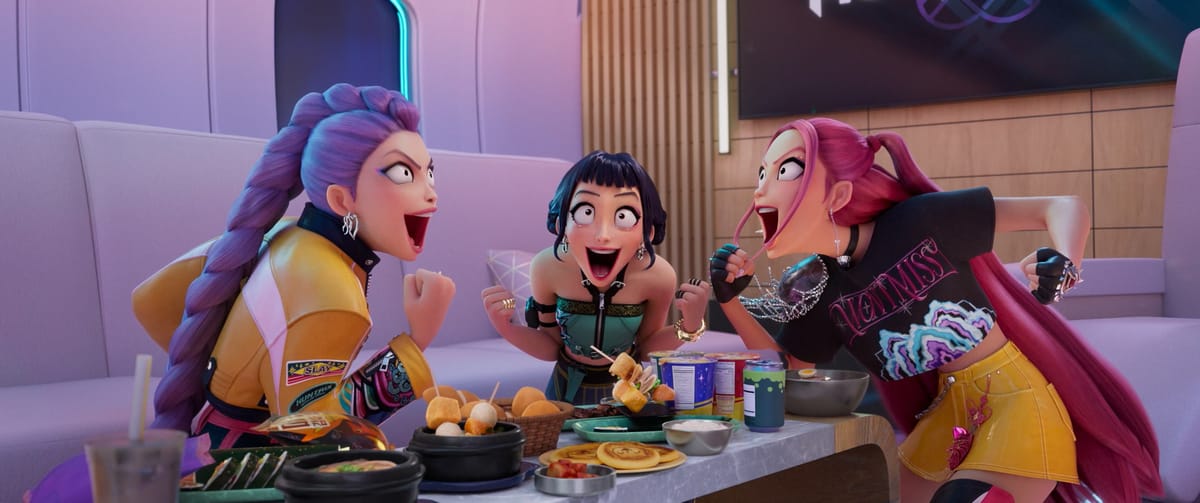
And yet this past weekend, people left their homes and went to a theater to see the studio’s surprise animated hit KPop Demon Hunters (KDH) as a sing-along version. Netflix released the film into 1,700 theaters, far more than their typical theatrical runs (for comparison, Glass Onion: A Knives Out Mystery, a property that Netflix paid $450 million for along with its upcoming sequel, Wake Up Dead Man, only received a release of 696 theaters), showing tremendous faith in a movie that has hung around the streamer’s Top 10 for almost the entire summer. That faith was rewarded to the tune of an estimated $18 million1, making it the number one film at the box office this weekend as the summer movie season winds to a close.
The success of KPop Demon Hunters may lead some to wonder why Sony Pictures Animation (the film’s production company) didn’t release it via Sony Pictures or why it went to streaming before finally getting a theatrical release. In a summer where kids were showing up to films like A Minecraft Movie and Lilo & Stitch, why not make the play, especially when Elio, arguably the season’s biggest animated movie, landed with a thud?
I have a few theories. First, I believe that KDH would have struggled as a straight theatrical release. Although it has some talented actors in its voice cast like Byung-hun Lee, Daniel Dae Kim, Yunjun Kim, and Ken Jeong, none of those are “names” that would immediately draw U.S. audiences. Furthermore, while Sony Pictures Animation has made some of the best animated movies in recent years, including the Spider-Verse films and The Mitchells vs. the Machines, they’re not a household name like Pixar, where the brand could get people in the door. Couple that with the competitive nature of the summer movie season, and it probably seemed like the best course of action was to sell the film to Netflix as they had done with Mitchells, as well as Viva and Fixed.

I’m not surprised that KPop Demon Hunters then thrived on Netflix because it’s not only a good movie, but also because there was no cost barrier to watching it countless times. Once those catchy tunes get stuck in your head, there’s a strong incentive to watch the film on repeat, and so the film became a staple among younger viewers who also had the benefit of that rare thing in entertainment these days: a movie to call their own. KDH isn’t a remake or adaptation, but a new story happily pulling from K-pop and K-drama tropes to craft a unique film that other studios weren’t making. Of course, Netflix being Netflix, they didn’t know they had a huge hit on their hands beforehand, but to their credit, they reacted swiftly once they saw audiences had embraced a title (although this behavior is a rare occurrence on the film side; typically, you’ll see the studio embrace for television, e.g., Stranger Things and Squid Game). That led to this past weekend’s sing-along screenings.
While Netflix likely sees this as merely an extension of their streaming brand, I would counter that the audience is telling the company here. If Sarandos believes that people just want to watch movies at home, then he’s missed the communal nature of moviegoing. Not every movie can be a theatrical draw, but people want to share their love of movies, and they want to do it at more than just marketing activations. As easy as it is to watch countless movies at home now, the product is inherently diminished as it seeks to compete with every other entertainment option at your disposal. Sometimes, it feels as if Netflix is actively leaning into this background noise experience and spending hundreds of millions of dollars on blockbusters that exist to keep your TV busy while you fold laundry. KPop Demon Hunters plays like the antithesis of this belief, a movie designed to keep you bopping along and eager to share the experience with others.
Unfortunately, Netflix then quickly released the sing-along version on streaming rather than extend the theatrical run. That’s a misstep, and undercuts how theatrical can serve streaming rather than be a quickly discarded nuisance. Perhaps it’s a naïve belief, but I hope that Netflix looks at the theatrical success of KPop Demon Hunters and sees a way to expand the success of their movies rather than handling them as disposable products meant for little more than colorful wallpaper. Perhaps the Netflix way needs to be using the streamer to build up an audience before making a theatrical push. Again, this won’t work for every movie (for example, I think Roma is fantastic, and I don’t see that ever making $18 million over the weekend), but treating your movies as something to be celebrated rather than something that’s merely available is a way of respecting both filmmakers and audiences. It’s also just good business. The more audiences feel invested in your movies, the more likely they are to buy their merchandise and clamor for sequels. The trick isn’t simply meeting subscribers where they are, but seizing the opportunity to take them someplace else. Netflix has the opportunity to compete theatrically without diminishing their streaming product, but they’ll need to see this past weekend as the start of a new chapter rather than a one-hit wonder.
Unlike other major studios, Netflix does not release official box office numbers, but analysts agree on the $18 million take. ↩