'One Battle After Another' Is Truly Revolutionary
With his sharp and witty action-thriller, Paul Thomas Anderson finds truth in the absurdity of our current moment.
We live in not only unprecedented times, but times where it feels like everything is darkly absurd. In just the past week, our big, damp President told the nation that vaccines were dangerous because essentially “too much liquid and not enough baby.” Everything feels permeated by one dumb thing or another, and it can feel a little insane to understand what normalcy looks like and yet fall so short of it as authoritarianism takes root in a country that prizes individual glory above all. But as writer-director Paul Thomas Anderson astutely observes in his brilliant new movie One Battle After Another, the aesthetics of conquest and revolution are comically meager next to the importance of family and community. His satire eviscerates notions of honor and glory, reducing them to ridiculous play-acting in service of fragile egos. However, rather than a shrug of “lol, nothing matters,” the movie thrives because, through all of its silliness, there’s a big, beating heart of the lengths a parent will go to for their child, as flawed and weary as that parent may be. One Battle After Another never acts above the fray, but instead questions what purpose the fray has if its primary interest is in prolonging the fight. For Anderson, there is no revolution stronger than the love we have for each other, and no amount of code words and clandestine missions can bring down fascism that thrives on violent conflict. If we’re going to have ideals, we should at least be clear on what we’re truly fighting for and how we choose to wage that war.
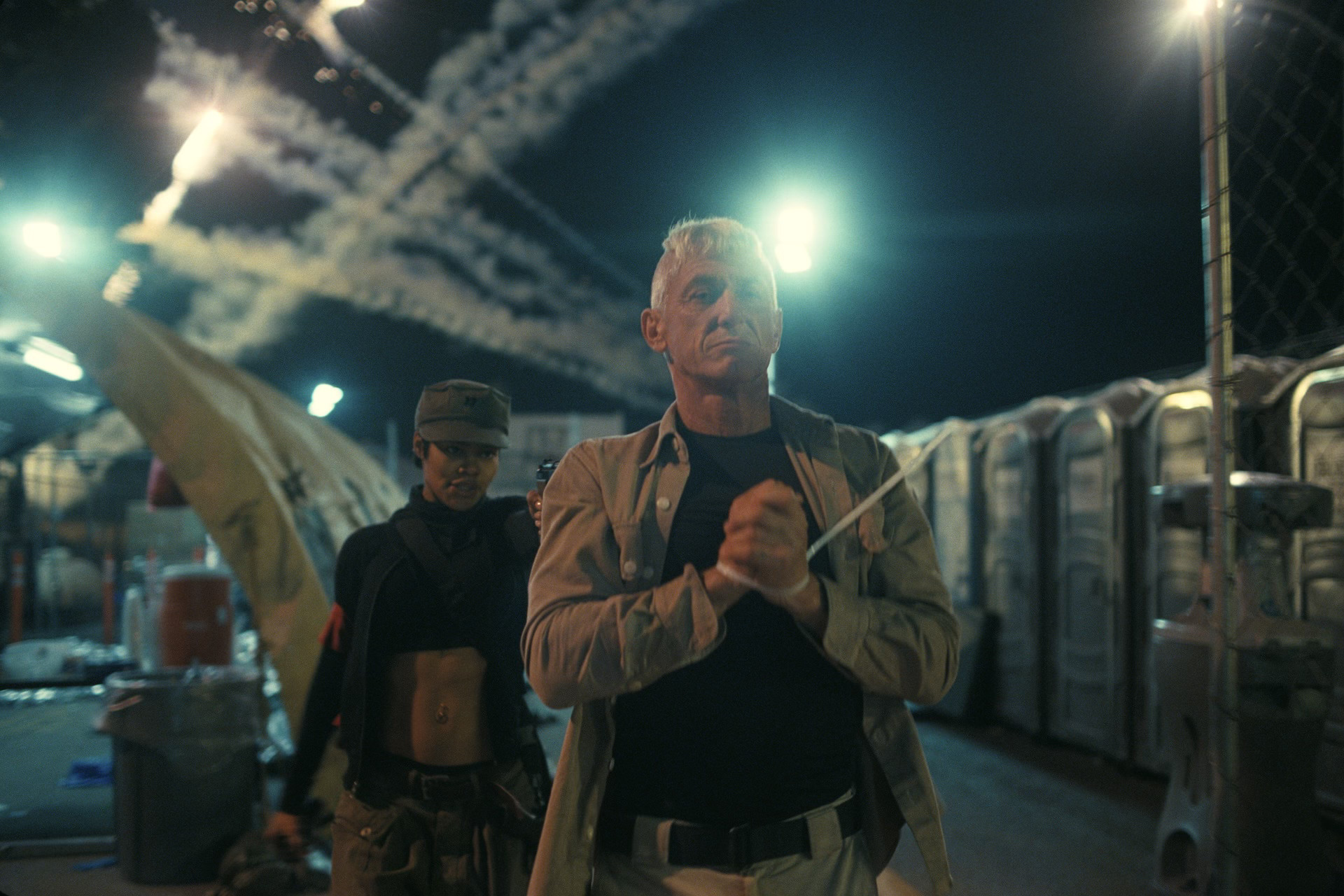
The film begins at an immigrant detention camp near the U.S.-Mexico border overseen by Colonel Steven J. Lockjaw (Sean Penn). The resistance group, the French 75, stages a raid on the base to free the immigrants. Led by the fiery Perfidia Beverly Hills (Teyana Taylor), she meets demolitions expert “Rocketman” (Leonardo DiCaprio). The two fall in love, but Lockjaw begins to lust after Perfidia and coerces her into an illicit relationship. When Perfidia gets captured, she sells out her cohorts, but Rocketman and their infant daughter escape under the assumed identities of Bob and Willa Ferguson. Perfidia flees to Mexico while Bob and Willa move to the sanctuary city of Baktan Cross. Sixteen years later, Bob is still drowning his sorrows in various substances, but Lockjaw, now up for membership in a secret white supremacist club (whose name I won’t spoil here because it’s one of the best jokes in the movie), needs to erase any evidence of the biracial Willa, who may be his child. With Lockjaw sending his troops after the teenager, Bob has to find and rescue his daughter even though he’s far from the revolutionary he used to be.
Rather than a broad swipe at any political viewpoint, Anderson dances on a high wire as he wants to not only indict authoritarian forces, but also those whose revolutionary actions only appear in service of further revolutionary actions. Some may see this as a milquetoast, moderate position, but Anderson’s observations are as trenchant as those expressed by Jean-Pierre Melville over half a century ago in Army of Shadows, where fighting fascism is a given, but problems emerge as revolutionary movements devolve into recriminations, duplicity, and meager bonds that struggle to topple authoritarianism when authoritarians still frame the rules of engagement. Fascists want war because they’re always going to thrive on its violence, aggression, and inhuman means. It’s not that the fascists are “better,” but rather they will drag you down to their level of absurdity and prey on the remnants of your empathy. Everyone’s a freedom fighter until the regime threatens your family.
The clash between identity and idealism provides the movie’s larger crucible, and one that gives a heart to all of the satire on the surface. Perfidia runs from family because she wedded her identity to being a revolutionary, but there’s nothing revolutionary about hiding out in Mexico. The revolutionary figures are those who stay and fight for their loved ones. The heart of the movie, both structurally and thematically, comes in the second act with Bob running around trying to find a way to meet up with Willa. He seeks the assistance of Willa’s martial arts instructor, sensei Sergio St. Carlos (Benicio del Toro), and here we see how effective acts of rebellion don't come from wearing fatigues and bombing random locations, but from a close-knit community of average people engaging in mutual support.
As much as militaristic organizations—whether they exist on behalf of the state or those attempting to overthrow the state—rely on unit cohesion, Anderson notes how fragile these bonds really are, and that they exist more transactionally than for mutual benefit. This can lead to tragic outcomes, like the fate of the French 75 after Perfidia rats them out, but it can also be painfully funny, like Bob trying to find the rendezvous point, but he can’t remember the proper code responses because it’s been sixteen years and his brain has been fried with grief, beer, and weed. In this moment of a father pleading to find his daughter, he can’t break through the ridiculous artifice under the auspices of revolutionary cohesion. Do code words protect the organization? As the film shows, they’re probably more trouble than they’re worth, but the revolutionaries rely on the performative aspects of their aesthetic rather than the pragmatic ones. In their attempts to outmaneuver the fascists, they’ve only made their lives more difficult, isolated, and futile. Meanwhile, Sergio St. Carlos has an iPhone and is far more successful in helping Bob because Carlos relies on strong interpersonal ties to his community.
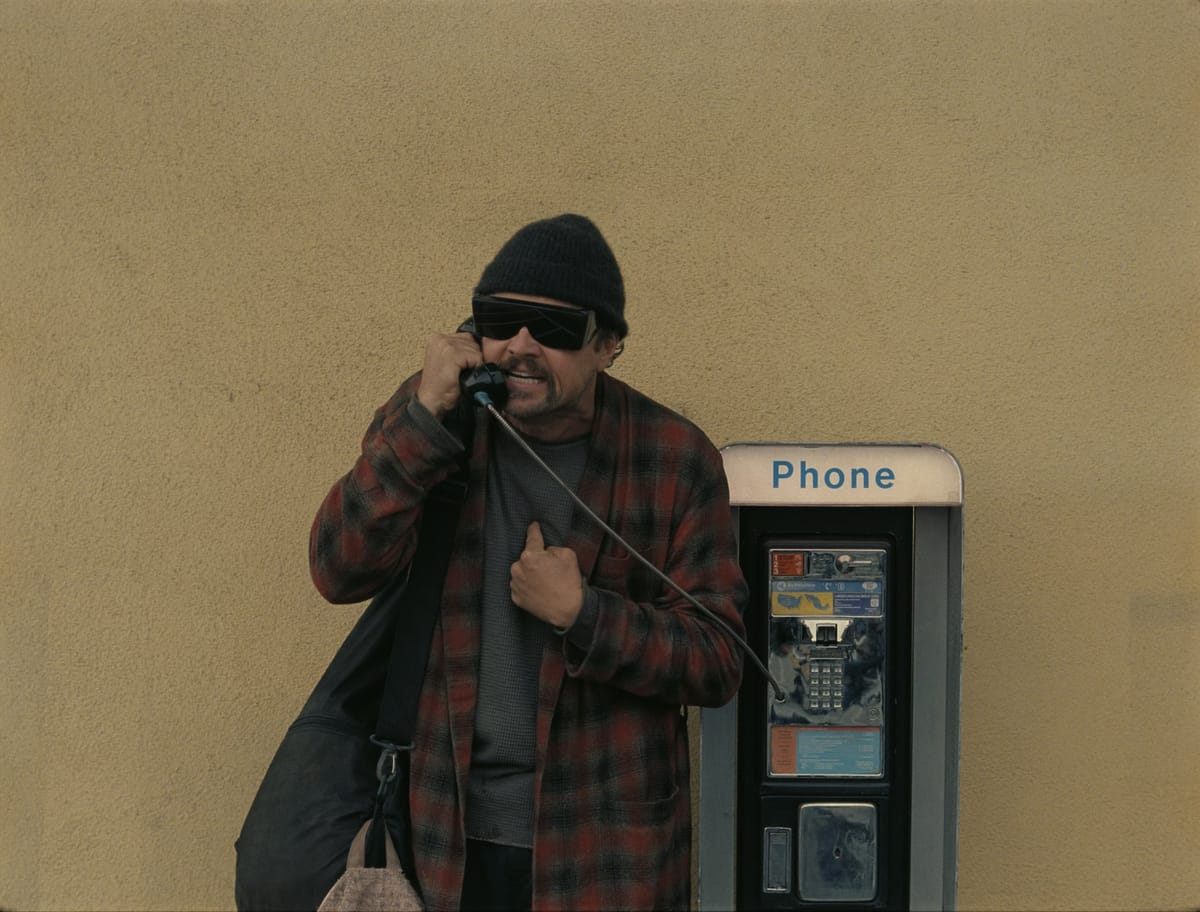
Rather than an exercise in tone policing and chastising activists, Anderson asks for a reevaluation of the means of combat. Even though they’re on opposite sides of the war, there’s probably far more in common between Perfidia and Lockjaw than there is between Perfidia and Bob. Perfidia and Lockjaw want to feel empowered, and they want to exercise violence on behalf of a clandestine organization as a way of garnering power. That’s not to say they come from the same place with Perfidia as a black woman descended from revolutionaries and Lockjaw as the embodiment of white, nativistic fascism, but that they’ve arrived at the same location where they’re guilty of cruel indifference and selfishness. They’re each American heroes in their own mold, and Anderson says that heroism on behalf of personal glory is meaningless. Bob functions as their inversion—he’s outwardly ridiculous as he runs around in his bathrobe and beanie, but his heroism is unquestionable because he’s stopping at nothing to protect his daughter.
Thankfully, none of this comes through as pedantic or a polemic. Instead, Anderson has made a rip-roaring action-thriller satire that’s frequently hilarious without ever playing as snide or condescending. One Battle After Another skillfully plays as confident rather than self-satisfied, which is incredibly difficult for filmmakers to do, especially if they seek to make a film that’s as timely as this one. Never for a moment does it feel like we’re being lectured. Instead, Anderson trusts the audience to pick up on the themes and ideas, and even if they don’t, they’ll still be treated to a massively entertaining romp with clear stakes. This is Anderson’s second time working from a Thomas Pynchon novel (the movie is “inspired by” Vineland), but it is not the labyrinthine plotting and stoner-noir vibes of Inherent Vice. It’s far more in line with the earthy comedy of Licorice Pizza, but pumped up with a blockbuster budget.
Look no further than Sean Penn giving his best comic performance since Spicoli. DiCaprio once again shows why he’s one of our funniest actors, but manages to keep couching it in big movies from prestige directors. There’s not a weak link in the cast, and the whole thing hums along at such a breakneck pace that it feels less in line with your standard, Important Movies about How We Live Now, and more in keeping with the incisive, insightful blockbusters like Mad Max: Fury Road that know how to keep their subtext one inch beneath the surface and while the immediacy of the action drives the narrative forward.
Yes, One Battle After Another is about as topical as a movie can be. Yes, it’s overtly political in a way that few major studio movies at this price point1 are. You can’t miss the commentary in a movie that opens at an immigrant detention facility or features highly militarized police forces moving through communities and using thin pretexts for violent action. But since we live in such stupid, dangerous times, the right movie for the moment is an absurdist action film that knows how to thrill and delight in equal measure. We’re in the middle of a daily, idiotic fight, and One Battle After Another shows why it’s better to look foolish doing the right thing than feign heroism only to create more suffering. A revolutionary act is not continuing a cycle of meaningless violence. A revolutionary act is the unglamorous work of protecting your family and your community. Viva la revolución.
For comparison, One Battle After Another cost around $130 million while Sinners cost $90 million and Weapons cost $38 million. ↩