Other People Want to Sacrifice the Baby
‘Squid Game 3’, ‘Fantastic 4’, and the problem with an overt symbol.
[Spoilers ahead for Squid Game 3 and The Fantastic Four: First Steps]
In stories of heroism, there’s a line between inspiring the audience and flattering their sensibilities. Every viewer wants to believe they’re already a good person, and so sharing a tale of heroism is meant to reinforce that notion. “I would do the same if I had those powers and were in that situation.” That’s fine for escapism, and there’s nothing wrong with looking up at the screen and seeing Batman or Black Panther and feeling uplifted by their actions. However, their outsized realities also make escapism easy. You never have to question how you’d behave because you’re not going to face Joker on a parade float or Killmonger sending out powerful weapons from Wakanda.
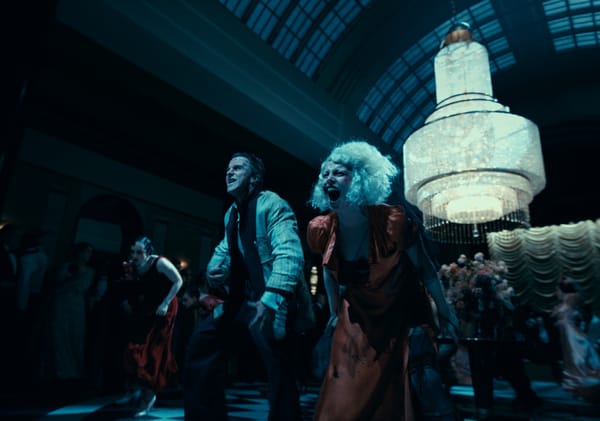
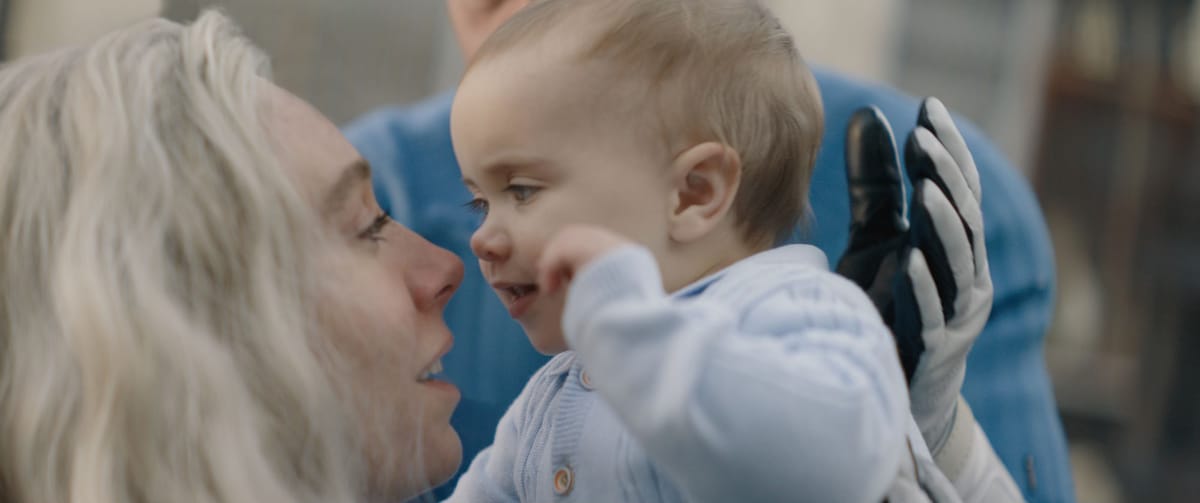
Two recent works try to get more specific in their stakes, but in so doing, only serve to feel phony in their aspirations and commentary. In Squid Game 3 (not a good season of television), a pregnant player gives birth in the arena. The VIPs (wealthy goons gambling on the games) decide that the baby will take the mother’s place after the mother dies. The baby is now a “player” and in the care of the show’s hero, Seong Gi-hun (Lee Jung-jae). In the final game, there are three platforms, and one player must die on a platform for the others to advance to the next platform. Gi-hun, with the baby held close, represents the only decent person left in the game while everyone else is an avaricious and/or cowardly tool who has no problem with killing the baby if it means advancing to the next platform and winning the prize money.
In The Fantastic Four: First Steps, heroes Reed Richards (Pedro Pascal) and Sue Storm (Vanessa Kirby) are about to have a baby, but first they must confront Galactus (Ralph Ineson), a cosmic being who devours worlds. When they meet Galactus to talk him out of his rapacious quest, Galactus sees that Sue is pregnant and says her child can replace him as the devourer, which would let him finally rest. The parents obviously refuse and flee back to Earth. The people of Earth, who revere the Fantastic Four for their previous acts of heroism, ask what happened, and Reed tells them that the price was too high for Galactus to spare Earth, and they would find another way. The people become angry at the Fantastic Four for not giving their child to Galactus if it would mean saving the rest of the planet.
In both of these stories, we’re meant to identify with the heroes. “Of course you don’t sacrifice the baby!” But this is lazy and uninteresting storytelling that fails to grapple with anything deeper or more complex about human nature. The people who want to sacrifice the baby so they can live are never anything more than a predatory mob, given no characterization, shading, or complexity. Because they’re willing to sacrifice a baby, they’re not even people but an antagonistic force our heroes must overcome.