'Riefenstahl' Shows the Empty Artistry of a Notorious Propagandist
Andres Veiel's new documentary thoughtfully reexamines the legacy of 'The Triumph of the Will' director.
When I was a freshman in college, one of my film professors asked me what I thought made for a successful film. I replied that directors typically imply their goals and then we have to see how well they achieved them. The ambition and complexity along the way makes that more difficult to parse, but it’s a fairly good guide if only so you don’t walk out of Grave of the Fireflies saying, “Huh. Not a lot of laughs in that one.” My professor then retorted, “If that’s true, then Triumph of the Will is the most successful movie ever made.” Setting aside how weird it was for a guy with a PhD to quickly resort to Godwin’s Law with a freshman student, he was also working from the idea that Leni Reifenstahl’s 1935 propaganda film was so good because it converted so many to Nazism. This was not only a lazy misread of European history, but also repeating the conventional wisdom about Riefenstahl’s skills as a director—a filmmaker using her considerable talents to evil ends.
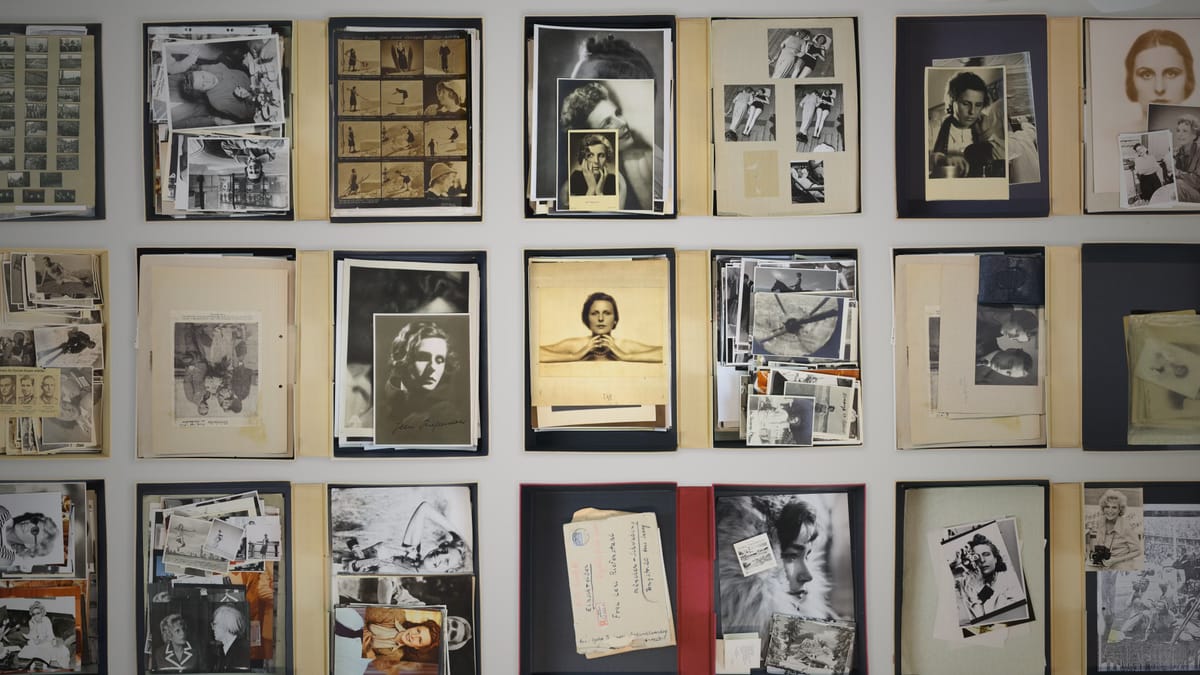
What makes Andres Veiel’s new documentary, Riefenstahl, so interesting is how he doesn't start from the assumption that she was a “good” director. For decades, her legacy has asked people to wrestle with what happens when talented artists serve evil, but by digging through Riefenstahl’s vast archive of materials—which includes recorded phone calls and personal letters—a picture emerges not of an artist, but of a shallow propagandist whose curiosity and examination of the world never expanded beyond the most basic, uninteresting ideas of what constitutes “beauty.” In Riefenstahl, we see her not as an artist subsumed by Nazis, but one who could only thrive within Nazism. Rather than a peer of great German directors like Fritz Lang and Douglas Sirk, Riefenstahl was the dregs of what the Reich could use after all the good filmmakers ran for their lives.
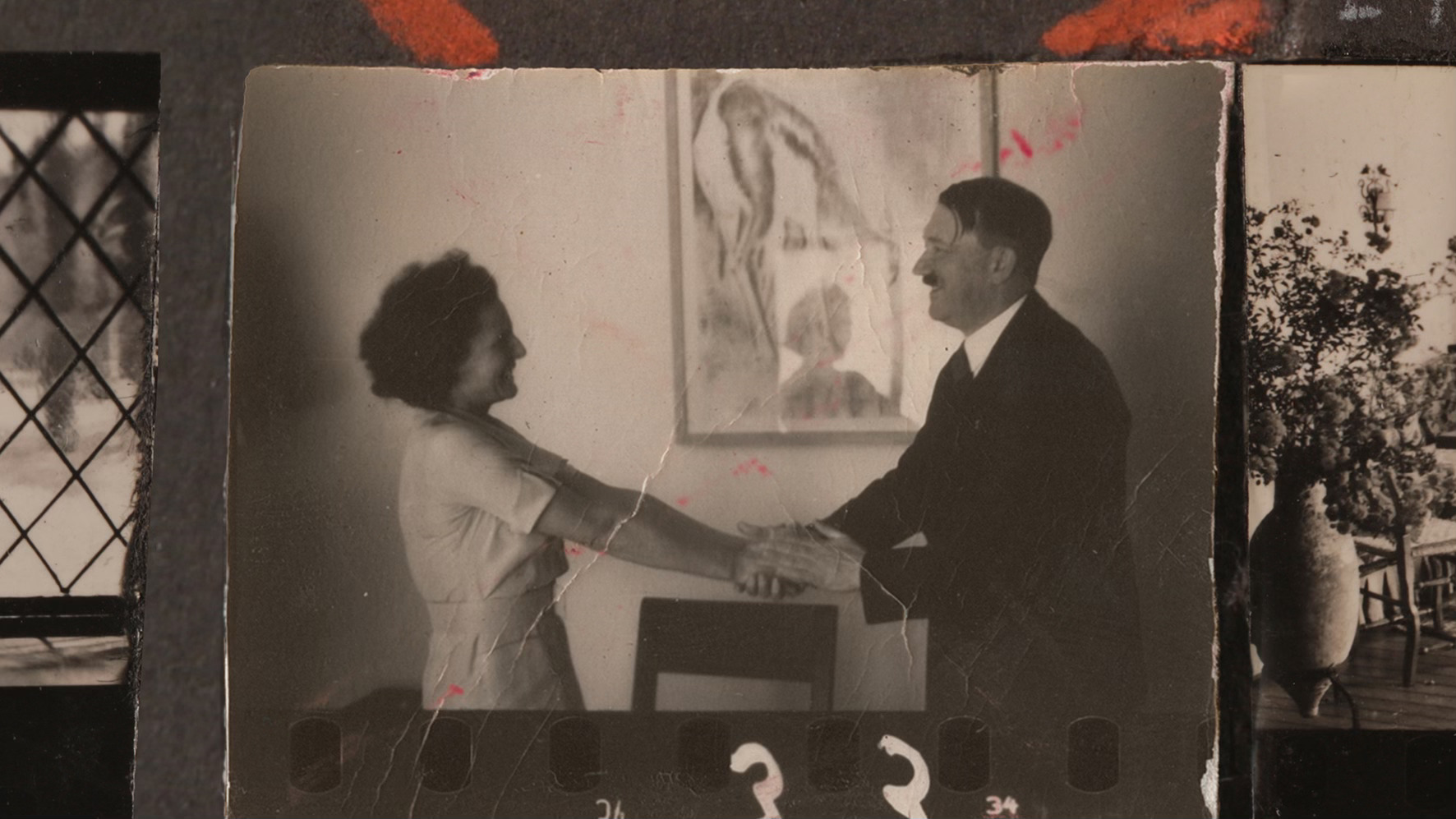
Some of Riefenstahl reiterates what has already been obvious for decades about her affection for the Nazism. Although never officially a member of the party, she was proud of her affiliation with Hitler, Goebbels, and other high-ranking members of the Third Reich, and she also married an officer in the S.A., thuggish paramilitaries supporting Hitler’s rise. Her claims that she knew nothing about the Holocaust is risible, and all post-war discussions of her involvement put her on the defensive where she sees herself as the true victim, not those who were persecuted during the regime.
Riefenstahl’s retort in post-war interviews is that “she had no choice,” but to make propaganda, although such a claim is patently false. She could have fled like other directors, or she could have refused and hoped that it wouldn’t incur the wrath of the Reich. Instead, as contemporary photos and letters show, Riefenstahl was quite happy to serve the ends of the Nazi Party. It made her feel powerful, seen, and appreciated. Moreover, her sensibilities to only create pretty images fell in line with the narrow view of what “art” should be under fascism. Triumph of the Will and Olympia aren’t “good” movies; they’re pretty ones that met with the approval of people who hated art but loved propaganda. For someone as vapid as Riefenstahl, this was a perfectly fine exchange.
This narcissism is useful in illuminating the limitations of Riefenstahl’s filmmaking. Of course, narcissism is fairly prevalent among artists; it takes a kind of arrogance to assume countless strangers will care how you see the world. What separates Riefenstahl from your run-of-the-mill egotistical director is that their narcissism is partially rooted in how much they believe in expressing themselves as artists. Fritz Lang didn’t make M because he thought it would be neat; he wanted to explore ideas about vigilantism, political pressure, child safety, and more. Watching Riefenstahl, you only see an empty vessel who is happy to flatter the sensibilities of the powerful.
To look at Riefenstahl’s work as only exemplary works of craftsmanship assumes an artist is nothing more than the tools at their disposal. We don’t automatically venerate Hollywood directors who make big, empty spectacles, so it seems odd to afford Riefenstahl more leeway. There’s not as much to wrestle with when you see filmmaking prowess in service to such blunt, empty ends. She found the 1936 olympians pretty and the Nazi parade to be exuberant. Are we really going to lump her in with the great directors of her era because she knew where to put a camera? Are we to marvel at someone who, during the war, quickly ran away from any kind of battlefield coverage and back to the safety of a film studio so she could adapt Hitler’s favorite opera?
If Riefenstahl wanted to express an idea, it was rarely anything more than uplifting what was conventionally beautiful and ignoring anything harsher in the hard realities she was helping to create. Part of looking at the world involves making choices about what not to show as much as what you’re showing. All of Riefenstahl’s choices—before, during, and after the war—are about dehumanization in the name of physical glorification. She upholds the masculine Nazi stormtrooper, but doesn’t look down to see who he’s stepping on. She goes to Africa to photograph the Nuba tribes, and as Susan Sontag observed:
In celebrating a society where the exhibition of physical skill and courage and the victory of the stronger man over the weaker have, at least as she sees it, become the unifying symbol of the communal culture—where success in fighting is the "main aspiration of a man's life"—Riefenstahl seems only to have modified the ideas of her Nazi films.
As despicable as this vision might be, it would at least be nice if Riefenstahl had the courage of her convictions. But the picture that frequently emerges throughout the documentary is that she had no convictions, or at the very least, no higher conviction than her own success and comfort. Every attempt to have her defend her filmmaking leads to, “I was made to do it,” and “Why are you being so mean to me?”
Leni Riefenstahl was not a singular visionary; she was depressingly common, uninteresting, and bland. She was the right person at the right time for the worst people in the worst time. We don’t have to celebrate Triumph of the Will as a great piece of art that achieved escape velocity from its intended goal. Real artists give us enough to wrestle with when examining their lives and the works they created. We don’t need to pretend that propagandists are deeper than the shallow beliefs they’re espousing on behalf of the powerful.
Riefenstahl is now playing in limited release. Click here to see if it’s playing at a theater near you.