‘Springsteen: Deliver Me from Nowhere’ Has Too Much Love for The Boss to Respect Him
The film never takes a single chance as it celebrates the creative risks and emotional vulnerability Bruce Springsteen showed on ‘Nebraska.’

Music biopics are on the rise because they mitigate as much risk as possible for studios that don’t want to make original movies. If you take a beloved recording artist, then presumably you also pull in their fan base. It’s also relatively easy to attract talent because actors want to be associated with popular musicians. This creates a sub-genre that is so staid and safe that Walk Hard: The Dewey Cox Story parodied it to the point where no one should have attempted such a by-the-numbers rendering of a musician ever again.
Sadly, there’s still money to be made, and while Springsteen: Deliver Me from Nowhere may not span Bruce Springsteen’s entire life, it’s still guilty of the utter lack of imagination and timid filmmaking that does a disservice to so many artists. What could have been a potent look at how depression drove Springsteen to craft his 1982 album Nebraska, writer-director Scott Cooper crushes the movie under an avalanche of clichés, leaden dialogue, and a refusal to speak honestly to the audience in the way Springsteen’s music speaks to countless fans. Rather than channeling what makes Bruce Springsteen a unique voice, Deliver Me from Nowhere sounds like far too many forgettable biopics.
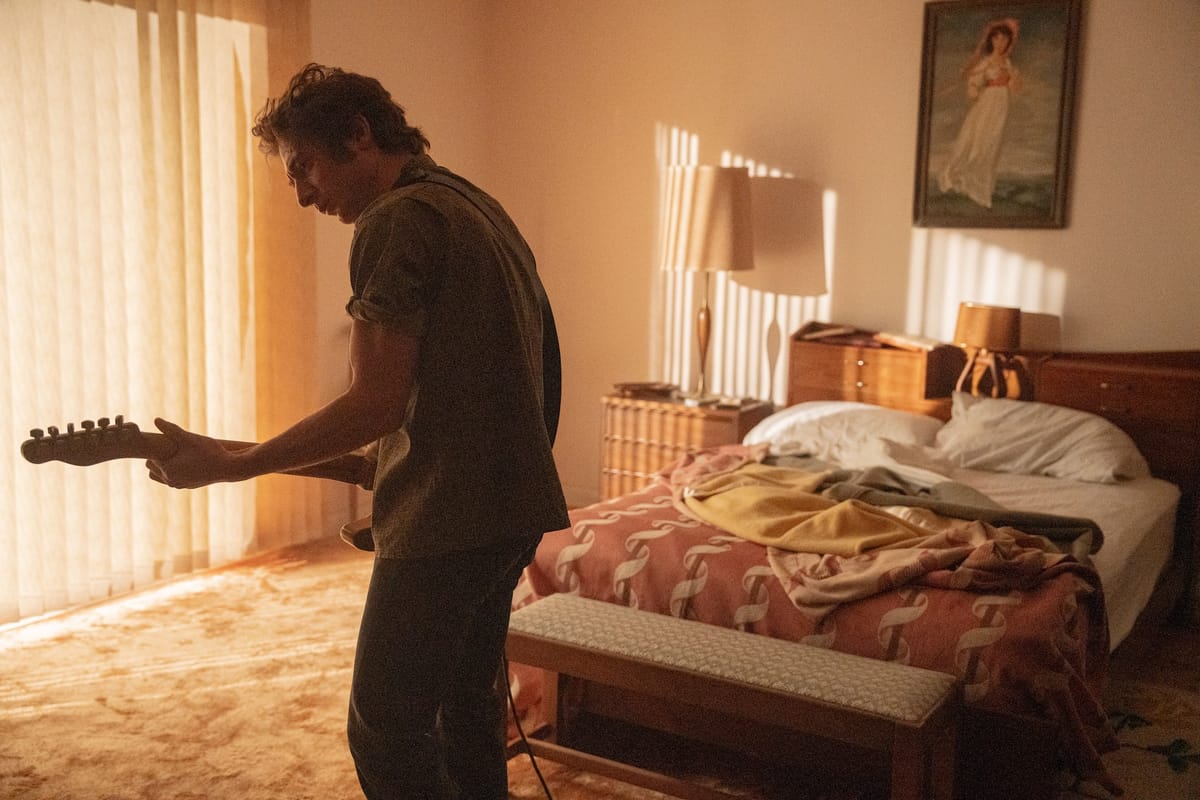
After a brief prologue nodding at Springsteen’s unhappy childhood growing up in New Jersey in 1957, we skip to his success coming off tour in 1981 and the studio eager to get another album out of him. Bruce (Jeremy Allen White) goes to a pleasant and secluded rental home and begins to work on songs that would eventually land on Nebraska or on Born in the U.S.A. two years later. As Springsteen wrestles with the legacy of depression from both his father (Stephen Graham) and his own sadness, he manages to find a connection with local waitress and single mom Faye (Odessa Young). However, once he gets into the studio, he struggles to make his manager, Jon Landau (Jeremy Strong), and others understand what he’s going for on Nebraska as they push for a more conventional sound. The conflict over the album also leads to withdrawing from Faye and wondering if he’s unable to find happiness.
If you stripped out the Springsteen of it all, the first half at least offers a nice core story about a musician channeling their pain through their work. Watching Springsteen’s process, including his influences and the technology he used at the time, adds welcome elements of specificity the help root the film to a time and place rather than dressing all the extras up in 1980s fashions and calling it a day. Artistry isn’t product; it’s process, and the film is at its best when it shows that process not as coming across a chord, but going to a library and researching Charles Starkweather or finding new tools that can save time and money before going into the studio.
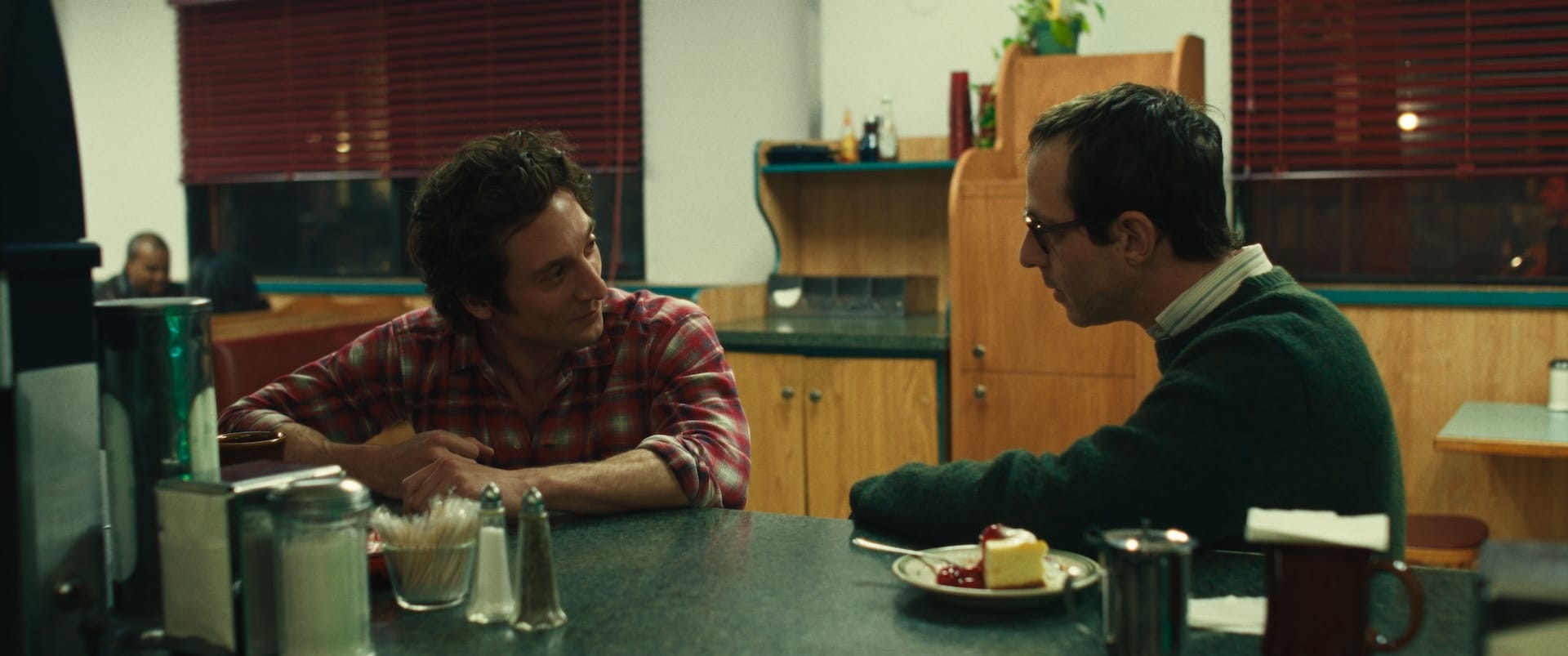
But even in this first half, Cooper’s understanding of Springsteen never seems to extend beyond warm cinematography and White’s understated performance. There’s a lot of Springsteen as Man of the People—performing at bars, hanging out in diners, taking Faye and her daughter to the park. And that’s fine, but through Cooper’s lens, it feels like PR, a way of burnishing Springsteen’s well-worn image rather than finding a new angle or unpacking his appeal beyond hometown hero. That’s not to say we need a filmmaker to rip the lid off Springsteen, but Cooper feels like he’s playing into a picture of the artist that we all know pretty well.
The attempt to look at Springsteen through his relationship with his father could have lent the film a useful perspective, but all of Cooper’s choices are painfully tired and obvious. The past is in black and white, the father is a drinker, there’s abuse in the household, and yet it feels broad. While Springsteen never claimed his childhood trauma to be unique, it’s up to the filmmaker to provide specificity and not trot out a large man in a white tank top as an easy shorthand for “bad husband and father.” It would at least be something if Springsteen had a similar abusive streak, but his depression always makes us feel for Bruce rather than being afraid of Bruce.
The film fully goes off the rails in the second half as it strives to find conflict over the album. It’s a similar pitfall to last year’s A Complete Unknown, where the movie’s conflict feels phony because we know the artist wins. It becomes a tale about “Everyone thought I was crazy, but I was right!” And the power of creative risk is completely elided in favor of the most obvious plot beats possible. With Nebraska, Springsteen wants us to feel a sense of hopelessness and despair, and rather than honoring those emotions, Cooper places us into the most staid, bland narrative possible. We’re comforted by the familiar structure of the music biopic and Springsteen’s music rather than anything that would challenge the audience, like Springsteen thought to challenge people with Nebraska.
Springsteen also starts to disappear in the second half, reduced to a bunch of scenes of being frustrated, while Landau comes in to explain all the emotions and ideas because we’re apparently too dense to connect the flashbacks to the music Springsteen writes. What’s meant to appear appreciative or insightful only reads as shallow. In one scene, Faye chastises Bruce, explaining his mentality (“You’re just running away!” serving as a useful example of Cooper’s weak dialogue) and then saying they could have a real future together, even though their relationship doesn’t seem to be more than a couple dates. It highlights how the film doesn’t care about Faye as a person, but only as a plot device to show that Bruce has commitment issues because of his parents’ dysfunctional marriage.
I suppose if you’re already a Springsteen fan, it’s nice to see this period of his life and a dive into an album that’s lesser known than his others, but even here, you could do far better as a celebration of The Boss’ music (e.g., Blinded by the Light). There are few insights here about Springsteen’s life and artistry, and more damning is how generically it’s all rendered. If studios are going to be intent on churning out music biopics, then they owe it to musicians to give them more than the same tired beats.
Springsteen: Deliver Me from Nowhere is now playing in theaters.