Last Stop in Park City
A look at how the Sundance Film Festival has changed and what its future holds as it decamps from Park City, Utah.

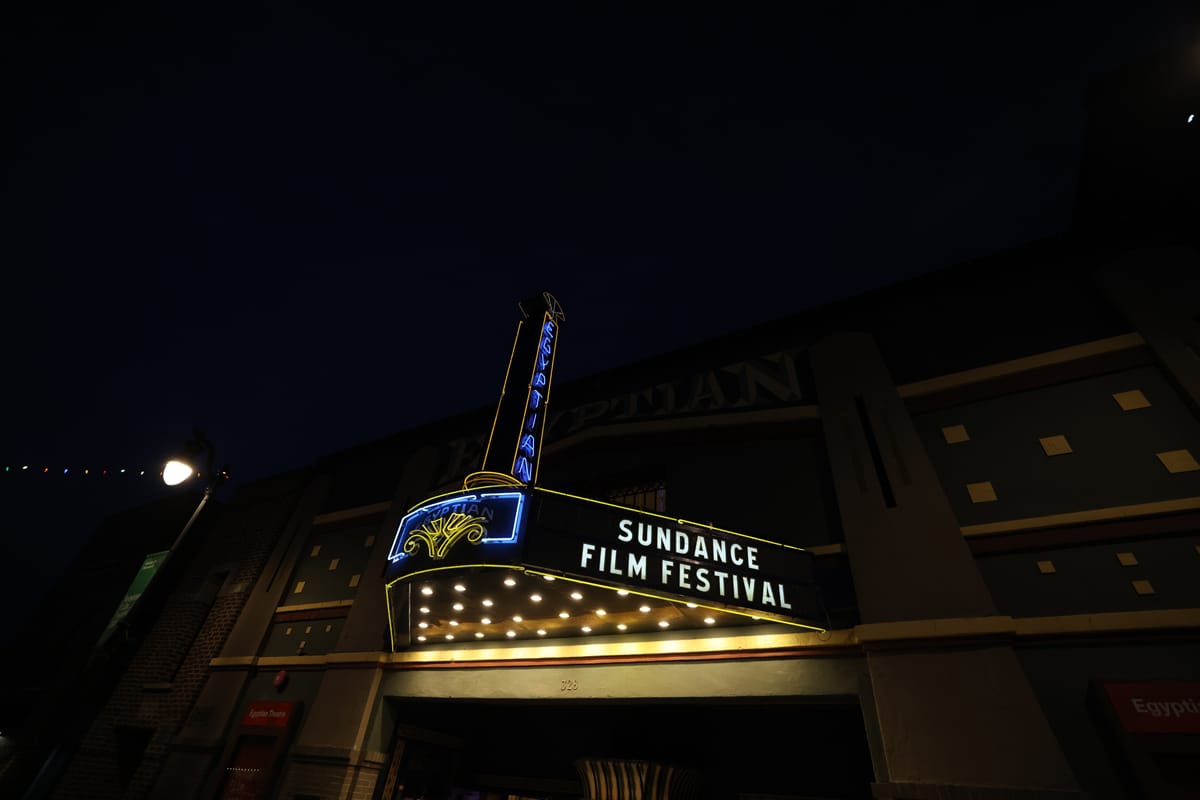
The 2026 Sundance Film Festival will mark the event’s last year in Park City, Utah, which has been its home since 1981. Since its inception in 1978, the festival underwent a massive transformation and changed the landscape of American filmmaking, especially in the 1990s, as independent filmmakers made a splash every January in the chilly confines of a ski town. While you could debate whether Sundance was a celebration of independent film or merely a way for directors to submit a “calling card” to get them to bigger features, you couldn’t deny the festival’s importance to the cinematic landscape, and highlighting smaller features made outside of Hollywood.
But Sundance wasn’t immune to the shifting trends of distribution, and what once was a way to get smaller movies into theaters now has become essentially a preview event for what will arrive on streaming later in the year. For some movies, this has been beneficial. Sundance has always played host to excellent documentaries, but documentaries always struggled to perform theatrically, whereas streaming has given the format more attention than ever before (for better and worse). However, for narrative features, Sundance no longer feels like a launching pad for exciting new directors, not because those directors are making bad movies, but because streaming highlights no one.
The pandemic really feels like part of a turning point for a festival that was already wrestling with the rise of streaming. The last Sundance I attended in person was 2020’s right before the world shut down. The biggest film out of the festival was Max Barbakow’s feature debut, Palm Springs, a sly and charming time-loop romantic comedy that sold to Hulu for $17,500,000.69 (the 69 cents was a way to give Palm Springs the record for highest sale at the time). Hulu had planned a theatrical rollout for the movie, but the pandemic sent it straight to streaming. Barbakow’s follow-up, Brothers, was unceremoniously dumped onto Prime Video following a one-week theatrical run. People may have liked Palm Springs when they saw it on Hulu, but it was never going to achieve the same cultural impact as other Sundance comedies like Little Miss Sunshine or Napoleon Dynamite, and that curtailed the ongoing reach of the filmmakers behind it.
The following year was a hybrid of online and in-person screenings with CODA being the “breakout” of the festival in the sense of not only getting Apple to pay $25 million for the rights (currently the highest any studio has ever paid for a Sundance movie and likely to be the record holder for the foreseeable future), but the movie going on to win Best Picture at the Oscars. And yet it’s had little cultural impact. Partly, that's because CODA is a nice movie but not a particularly distinctive one, but the other part is that it can only travel as far as Apple TV subscribers, and then only a subset of those who may be curious to watch it. It’s nice that it won some Oscars, but its wins only highlighted how Sundance wasn’t changing the conversation about movies or pushing new directors as much as it was giving a little prestige to streamers.
This year’s Sundance features an exciting lineup of new movies from directors including David Wain (Wet Hot American Summer), Gregg Akari (The Doom Generation), Andrew Stanton (WALL-E), and Olivia Wilde (The Invite), among others. But there’s also a sense that any distribution for these movies will likely be for a streamer. Stanton’s movie, In the Blink of an Eye, already has a Hulu release date (February 27), and I suspect any film that garners buzz will land at a streamer with perhaps a marginal commitment to a theatrical release for a week or so. But this is the situation producers are facing: get distribution on streaming or don’t get it at all. There may be some disruption in this space as former NEON executive Christian Parkes launches a special division at Warner Bros, but that now feels borderline experimental rather than studios fighting over which movies they can put into the most theaters.
For some, the shift to streaming is beneficial as they reside in towns with no art houses or independent theaters that would show the Sundance hits. Now they get to see these movies alongside everyone else. But the rise in accessibility has also led to a diminishing cultural cache. Even when streamers dole out huge sums for movies like Fair Play ($20 million from Netflix), Flora and Son ($20 million from Apple), and Cha Cha Real Smooth ($15 million from Apple), they receive as much interest as anything the streamers developed in-house.
I don’t think Sundance wants to be known as a clearinghouse for streamers, but I also don’t know how they, as a single festival, can push back against the larger tides of film distribution. They can’t force Searchlight Pictures to show up and spend $12 million as they did back in 2015 for Me and Earl and the Dying Girl. Even the streamers can be fickle. Amazon used to spend big on movies like The Big Sick and The Report, and now they’ve decided that money is better spent on a Lord of the Rings TV series that no one watches. As Sundance packs up to head to Boulder, Colorado, they’re clearly looking for a new chapter and a way back to the center of their importance in the cinematic landscape. But it will take more than slightly warmer weather in the Rocky Mountains to restore Sundance to its former glory.
What I’m Watching
My wife and I are currently in the middle of watching Community. For her, it’s a re-watch, but for me, it’s a hybrid between the seasons I saw (the first three) and the ones I mostly missed (the last three). I peaced out at season four when it aired because NBC parted ways with showrunner Dan Harmon, and as the creative voice driving the show’s unique comedy, I could see from the season four premiere that the show wasn’t going to come close to recapturing his brilliance. Returning to season four now, it’s fascinating to see how far afield his replacements went, mistaking the show’s genre parodies as its substance rather than its style. Despite the show’s lunacy and flourishes, it succeeded because Harmon knows how to tell a story. Season four lost that foundation, and it’s like a light coming back on when he returned for seasons five and six. I don’t know if the movie will ever happen, but the story of Community is a good example of NBC desperately trying to make it 1997 again through science or magic and missing the genius sitcoms they were currently airing. [I included the clip from Season 5 above because it’s one of my favorite things]
What I’m Reading
I felt my 2025 resolutions were far too nebulous and broad (e.g., “get fit” although I did establish a steady exercise habit, so I’ll take it), so I decided this year to get more concrete. Rather than just a “reading goal,” I wanted something in particular, and I’ve always been drawn to the works of Kurt Vonnegut. He was one of my favorite authors in college, but I never got around to reading all of his novels. So I’m remedying that by either reading or re-reading his books in chronological order, starting with a first-time read of his debut novel Player Piano (1952). I’ll be moving through these books along with others (the next book I’m reading is Wuthering Heights ahead of Emerald Fennell’s new adaptation), so if you want to keep up with my progress, I’m on Fable.
What I’m Hearing
I’m getting back into podcasts a bit. Previously, I was only listening to the latest from Michael Hobbes(Maintenance Phase and If Books Could Kill), but I recently returned to You Must Remember This and its excellent season on Polly Platt, as well as Sarah Marshall’s CBC series on the Satanic Panic, The Devil You Know. I’m also listening to The New York Times’ picks for the Best Albums of 2025. If there are any albums from last year you think I should hear, please let me know.
What I’m Playing
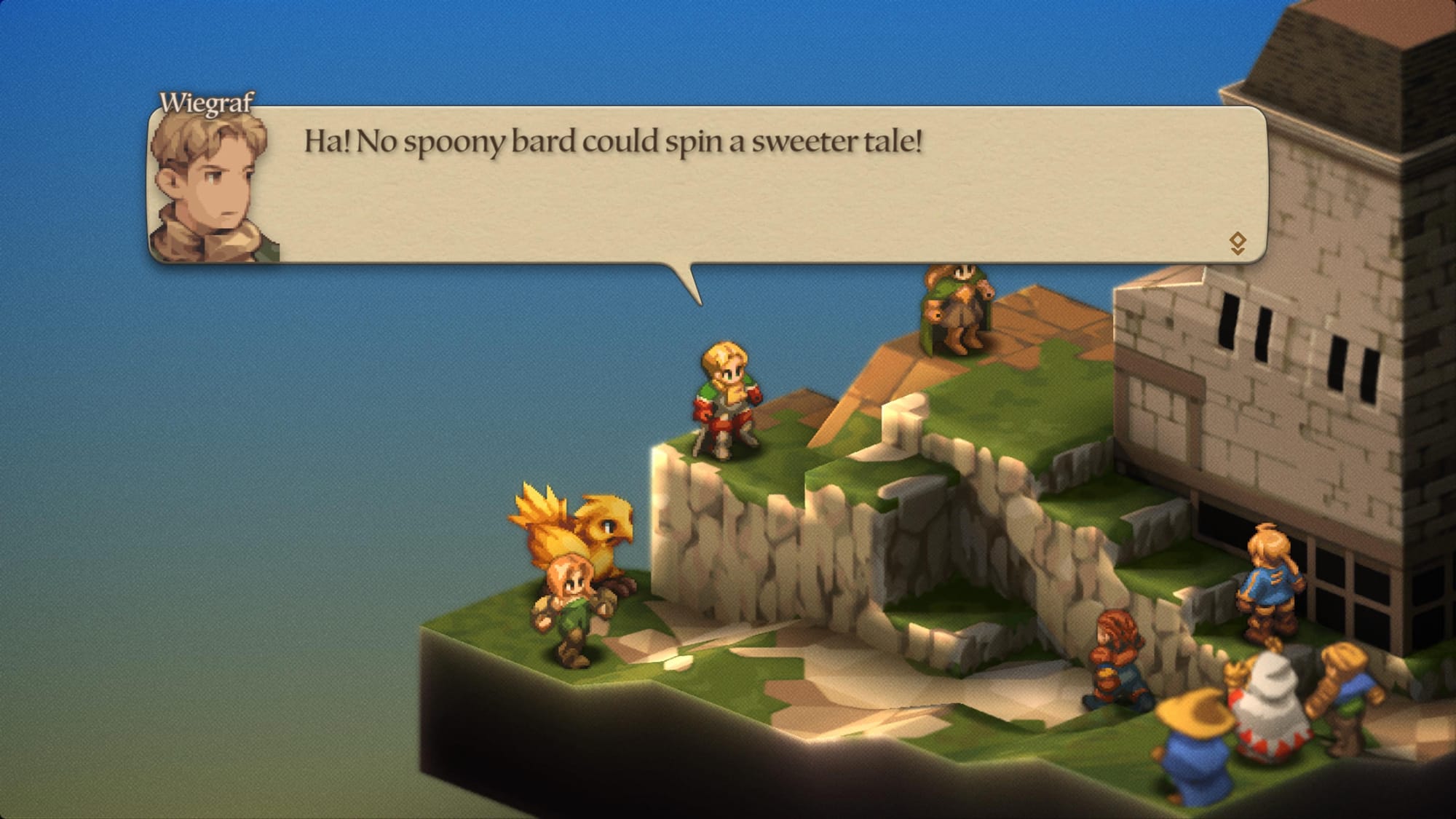
I spent the last couple months of 2025 playing through Final Fantasy Tactics: The Ivalice Chronicles. Final Fantasy Tactics (originally released for PlayStation 1 in 1997) was a game I had tried to get into several times before, when it was on PlayStation Portable as Final Fantasy Tactics: The War of the Lions, but could never get over the initial hump. All the quality-of-life improvements and updates in Ivalice Chronicles finally drew me in. As a story, I’m kind of surprised how hard a game with adorable little sprites goes about class warfare and religion as a way to control the masses. As a game, I think its strategy elements are fine, but I prefer Fire Emblem. In the story battles for Final Fantasy Tactics, you rarely get to see the enemies you’re facing before you choose your party, which means there can be some trial and error in deciding your strategy. Fire Emblem lets you know everything you’re up against at the outset, which makes me feel like I’m making choices rather than rolling the dice. That being said, not all Fire Emblem games are created equal, and I’m curious if its first Switch 2 entry will be what pushes me to pick up Nintendo’s latest console.
I had planned to finally dive into Ghost of Yōtei, but with all the chaos in the news right now, I've currently found Powerwash Simulator far more relaxing, especially as I listen to the aforementioned podcasts.
Other Writing
In case you missed it, I covered all of the first season of Pluribus for Decoding TV. I also reviewed the zombie drama We Bury the Dead for TheWrap.
If you don't feel like purchasing a subscription right now but still want to support this publication, you can drop some money in the jar through Buy Me a Coffee. All donations are incredibly appreciated!