'Superman' Carries the Massive Weight of Expectations and Does It with a Smile
James Gunn's reboot is keenly aware of the character's history and the current superhero landscape but still makes for a joyous blockbuster.
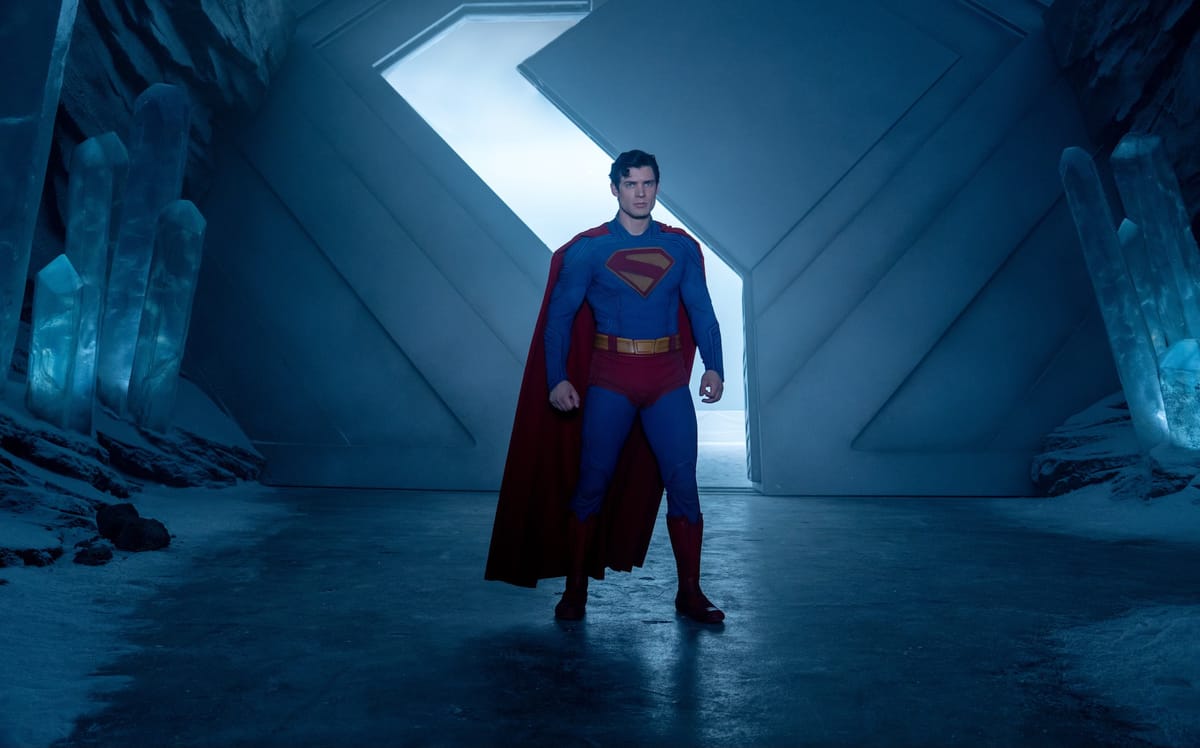
Richard Donner’s Superman was the first superhero blockbuster. In 1978, it made audiences believe a man could fly. While that film and its sequel, Superman II, remain beloved by millions, the character has had a rough go on the big screen ever since 1980. In a world that grows ever more cynical, the cheerful, optimistic nature of Superman feels increasingly at odds with the audience, and his nigh invulnerability only compounds the alienation. Of course, he’s always upbeat—very little can harm him. I don’t think it’s a coincidence that as filmmakers have struggled to update Superman, his dark and brooding DC colleague Batman has become more popular and beloved, or that audiences go for the everyman hero Spider-Man, who must balance superheroics with more mundane concerns like getting to chemistry class on time.
Writer-director James Gunn knows that the Man of Steel has had trouble connecting with moviegoers. Superman is an icon, but one that presents a multitude of narrative challenges that are only compounded by a crowded superhero landscape where audiences are quickly losing interest in every character that comes their way. Moreover, as co-head of DC Studios, Gunn is tasked with the future of not only Superman but the entire DC roster, building out a universe of “Gods and Monsters” to compete with Marvel Studios. That’s a lot to put on the shoulders of one character and one movie, but Gunn manages it with the cheerful, funny, and colorful Superman. The best Superman movie to date, Gunn’s adaptation works to remind people why they found Superman so endearing in the first place, moving him away from remote icon and showing a character whose emotions are as great as his superpowers.
Rather than belaboring another origin story or even the recent trope of “Superheroes are now among us, and the world will never be the same!” Superman decides to skip forward and throw us straight into the action. Superman (David Corenswet) has been flying around and helping people for the past three years, but right now he’s struggling. He put himself in the middle of a foreign conflict to try and avert a war, and new threats keep emerging to consistently pummel him. The world isn’t against Superman, but not everyone loves him, especially billionaire industrialist Lex Luthor (Nicholas Hoult), who is working behind the scenes to engineer Superman’s downfall. Thankfully, Big Blue does have the help of ace reporter and girlfriend Lois Lane (Rachel Brosnahan) and tenuous support from the “Justice Gang” (working name) of Green Lantern (Nathan Fillion), Hawkgirl (Isabela Merced), and Mr. Terrific (Edi Gathegi), but that may not be enough for what Lex has cooked up for the Last Son of Krypton.
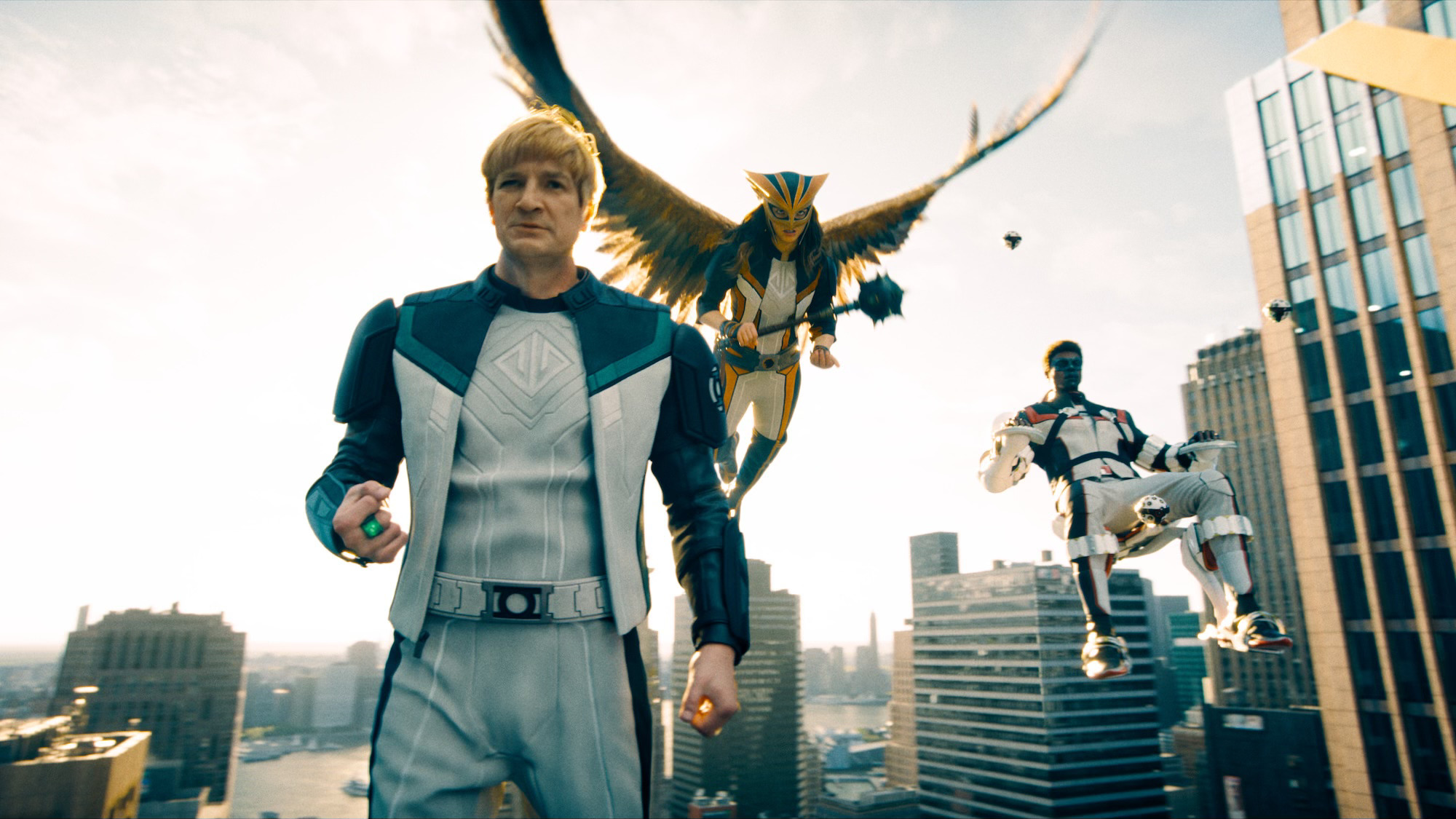
Because Gunn jumps forward to a world where everyone is aware of Superman and Superman has somewhat settled into his role as Earth’s protector, the reboot is always trying to spin a lot of plates. It’s consciously a sequel to a film that doesn’t exist and uses exposition and a crammed plot to whisk the viewer along. This gives the feeling of jumping on a train that’s already left the station where we have to acknowledge that Superman and Lois are already a thing, Lex Luthor is moving heaven and Earth to defeat Superman, there are other “metahumans” floating around, the Earth’s populace has roughly adjusted to the presence of these superpowered people, and Superman is uneasy about his place in the world not because of humans, but because he’s grown up with an idealized vision of what his Kryptonian parents wanted for him. This is all in the span of a 129-minute movie that’s not trying to set up any specific follow-up (no one’s coming to talk to Supes about the Justice League initiative) but also trying to establish the entire canvas for DC Studios in the years to come. Typically, these balancing acts collapse because of trying to serve the next story rather than the one you’re currently telling, but because Gunn is about world-building rather than laying the groundwork of specific characters or conflicts, it allows Superman to hold focus. His multitude of relationships and problems keep him at the center of the picture rather than serving as distractions. This is not “DC Cinematic Universe Part 1 featuring Superman.” This is Superman.
It's Superman because Gunn has a clear vision of what he wants the character to be and the world he wants him to inhabit. When Gunn first announced he would direct the new Superman movie, one of the works he cited was Grant Morrison and Frank Quitely’s excellent 2005 12-issue series All-Star Superman, which leans not only into the gentleness of Superman’s character but also plays up the sillier, sci-fi trappings of his universe. Gunn’s Superman follows through on that vision, making for a movie that’s consistently colorful, bombastic, and full of old-school charisma while retaining a modern edge to acknowledge various political and cultural ills. Some of these work wonderfully, like going back to the character’s origin as an immigrant feeling caught between two worlds, and others are a little too clumsy, like the fictional conflict that’s meant to mirror the current war between Russia and Ukraine. But even here, I can appreciate that Gunn is making a big swing, working to relate Superman to current concerns without losing the spark that made him so beloved in the first place.
The biggest issue is that it can occasionally be too much. There are times when it feels like Superman is both the first and the second movie in a series, and it’s trying to address every concern the audience might have. “Isn’t Superman too powerful?” He’s going to get beaten up early in the movie and then beat up a whole lot more. “Why doesn’t Superman stop all wars?” Well, if he does, that opens a new can of worms about the actions he can take on a global stage. “If this isn’t an origin story, what about Ma and Pa Kent?” They’re here, but it takes a minute to get them. “Should we buy Superman and Lois’ love story if they’ve already started dating when we meet them?” Your mileage may vary.
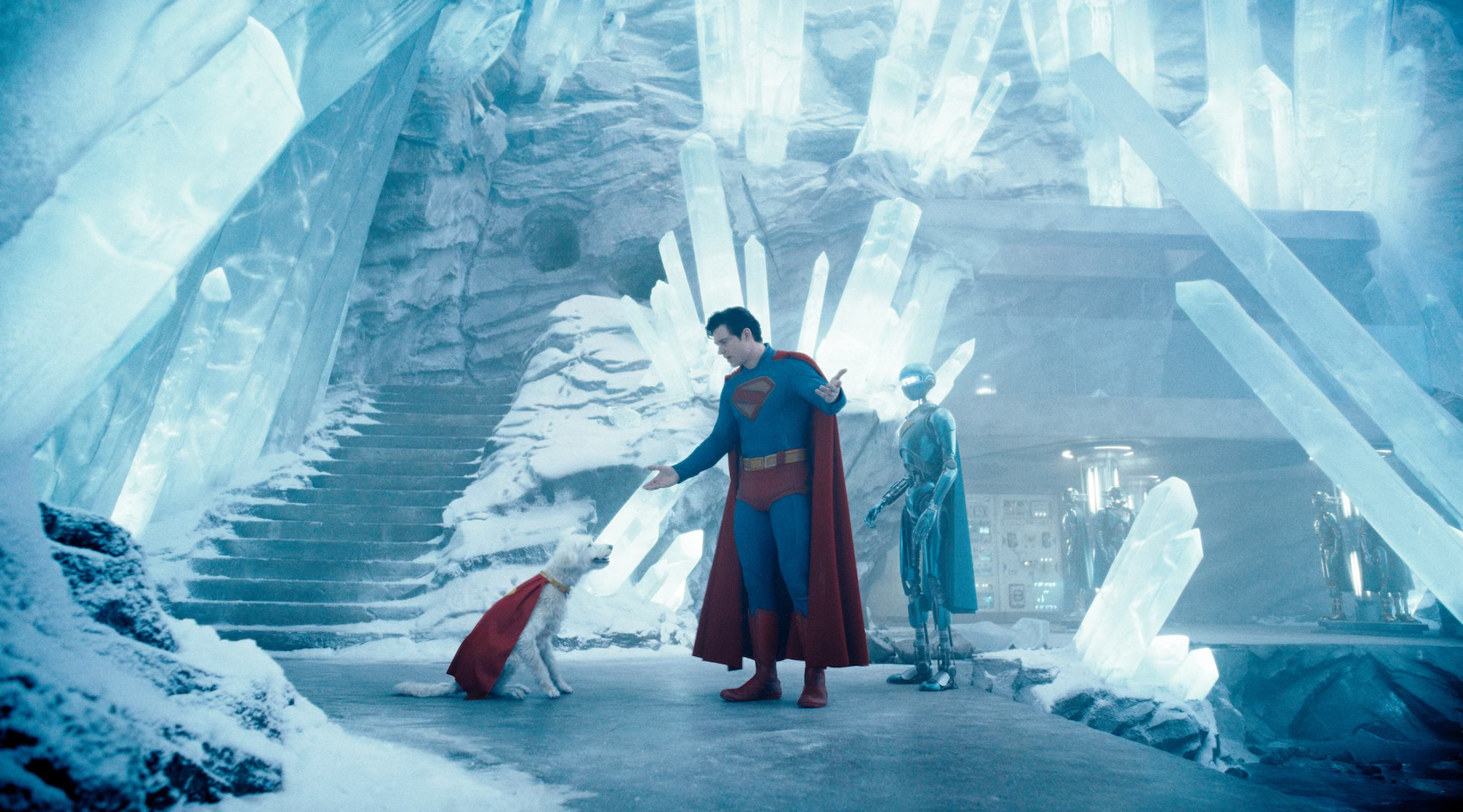
And yet, taking on so much also allows Gunn to take on ideas and characters that earlier movies shied away from. For example, Krypto, Superman’s dog, pretty much steals the entire film. He’s a very good boy. But even with a superpowered canine, Gunn doesn’t throw reality out the window or say this should all be camp. Hoult’s Luthor is the first time an actor has played the character as a person rather than a caricature of supervillainy, and it helps ground the larger stakes of Superman’s place in the world. While it’s tempting to say that Superman is a kitchen sink approach, it’s more accurate to say that Gunn is conducting a 100-piece orchestra, and you can occasionally hear when an instrument hits a wrong note.
As crowded as the plotting can be as it tries to address every character and narrative development, it all holds together because of Gunn’s light touch. Comedy goes a long way here, and the upbeat tone is what makes the movie shine. While we’re likely doomed to years of fanboys debating this movie versus Zack Snyder’s take in Man of Steel, both directors are doing the same thing with the character: taking a feet-of-clay approach to this figure of invulnerability and searching for the humanity behind his deep set of superpowers. But whereas Snyder saw an aloof, conflicted god-figure who (had his vision for the character ever been completed) finally stepped into the hero we know, Gunn makes Superman all-too-human, a torrent of emotions and vulnerabilities who wants to do good but isn’t exactly sure the best way to do it.
That desire, more than anything, is why Superman is the best Superman movie. It’s one thing to see characters on screen inspired by a hero, but Superman speaks to an audience by trusting their inherent goodness and acknowledging that our struggle isn’t one where we’re tempted towards evil as much as it’s one where we genuinely want to do good, but the world is so complex and there are so many competing interests that even if we could leap tall buildings in a single bound or were more powerful than a locomotive, we’d still struggle to figure out the best course of action. For all the history and franchise expectations surrounding this movie, the character of Superman inspires not because of the things he can punch or the buildings he can lift, but because he’s still us, putting our big red boots on one at a time and trying to do the right thing.