'The Bride!' Has Plenty of Juice, but Never Fully Comes Alive
Maggie Gyllenhaal's movie works best as a ferocious scream rather than a traditional narrative.

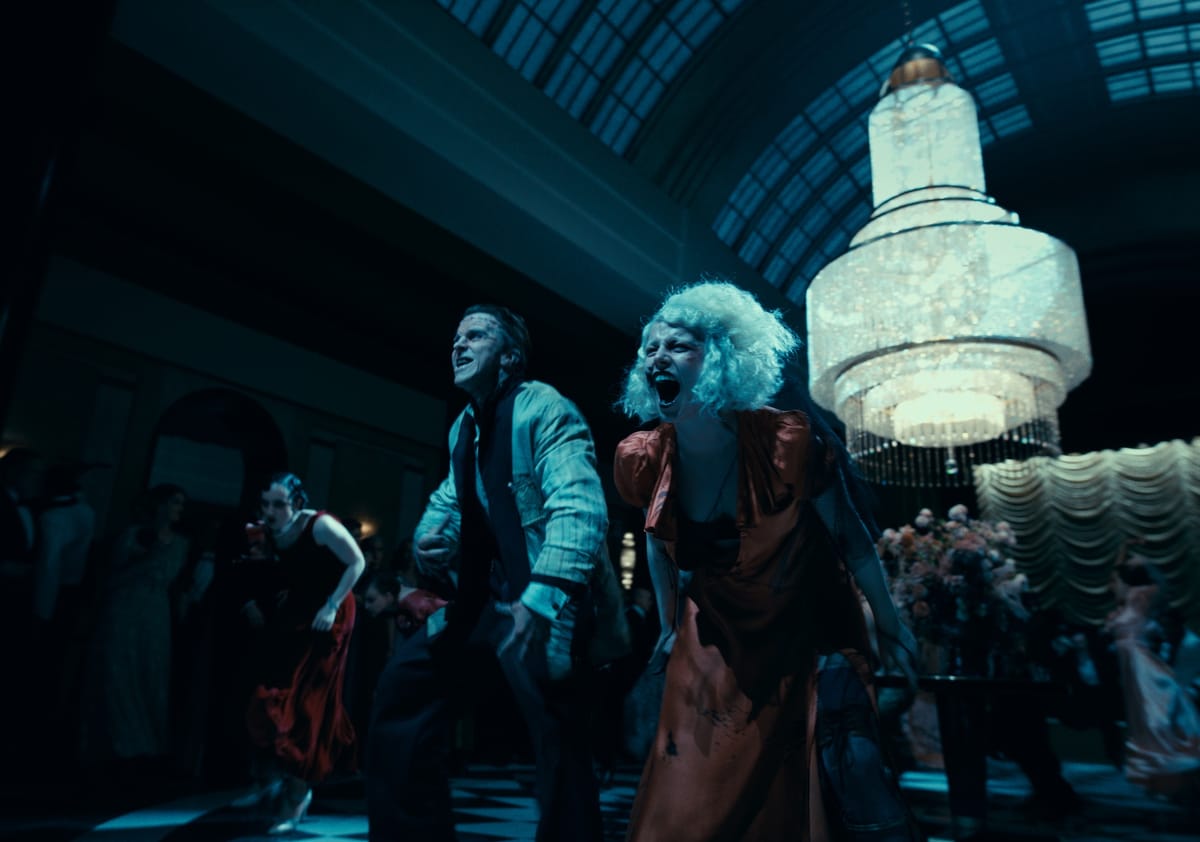
I love it when a filmmaker takes a massive swing. Some films pretend to be edgy only to comfortably sit in the same place as the mainstream. Real audacity comes from movies that confuse the audience from the jump and then have the confidence that they’ll still come along for the ride. Maggie Gyllenhaal has taken that big swing with her second feature, The Bride! An extremely loose adaptation of both Frankenstein and The Bride of Frankenstein, the film itself is a Frankenstein’s Monster of sorts, cobbled together from influences ranging from Young Frankenstein to references to Hollywood’s first major female-actor-turned-director, Ida Lupino. The thematically ambitious tale is one of women’s liberation in conflict with what the world wants a woman to be. In these moments of seeking and aspiration, The Bride! is often exhilarating; a madcap ride where stars Jessie Buckley and Christian Bale throw caution to the wind. However, in a rare instance where less plot would be better, the film often stumbles when it tries to build a sound narrative into a tale that refuses the tidiness of Hollywood storytelling. Despite these frequent missteps, there’s so much fervor and bombast on display that The Bride! demands to be seen.
Gyllenhaal immediately twists the audience’s expectations by having the foul-mouthed ghost of Mary Shelley (Buckley) kick things off with a “knock knock” joke before informing us that her work is not finished, and she has a follow-up idea to her novel Frankenstein that needs to be made manifest. To that end, she takes over the mind of Ida (also Buckley), a bored, listless sex worker living in 1930s Chicago. However, this causes a bit of schizophrenia in Ida, and after an altercation with some mob toughs, Ida falls down some steps, breaks her neck, and dies. She’s reanimated by Frankenstein’s Monster (Bale) with the help of mad scientist Dr. Euphronia (Annette Bening), but doesn’t recall her name or much of what happened before she died. Frankenstein just wants a mate, but this reanimated woman, whom he dubs “Penelope Rogers,” isn’t sure what she wants as the two go on a crime spree with detectives Jake Wiles (Peter Sarsgaard) and Myrna Mallow (Penélope Cruz) in pursuit.
The setup of the movie doesn’t make a lot of narrative sense in that we’re told Shelley is an author, she wrote a book, but that the fictional creation of Frankenstein’s Monster now exists in the world as if Shelley didn’t create a novel, but rather documented something that happened. The best way I could understand this was to see it as metaphorical. Ida spends the whole film searching for an identity (is she the person from before the accident? Is she only the monster’s companion? What does the world want her to be?), and the people riding shotgun are Shelley’s Ghost and Shelley’s most famous literary creation. In the same way we’re inspired and craft our identities around storytellers and their characters, so too is Ida informed by and reacting to these forces while trying to forge a distinct path.
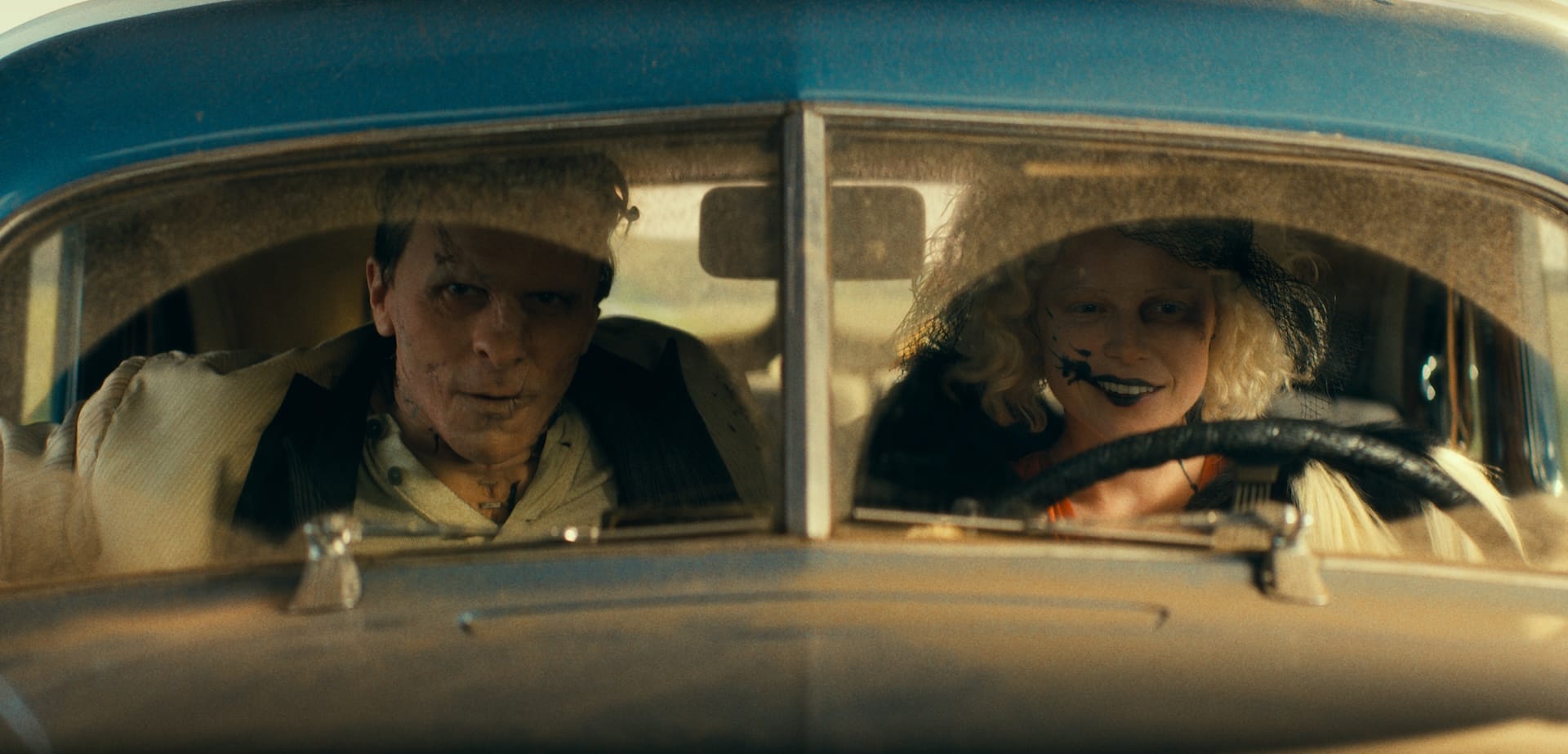
For her part, Gyllenhaal is acutely aware of all the allusions brought to bear on her movie. The character alone, "The Bride of Frankenstein," is a cinematic creation; a logical next step from the book where Frankenstein’s Creature spends a sizable amount of time demanding that his creator make a mate so the Creature won’t be alone. In the classic James Whale sequel, the Bride (Ella Lancaster, who also plays Mary Shelley in the film’s prologue, similar to Buckley pulling double-duty here), quickly rejects the monster, and he concludes, “We belong dead.” What Gyllenhaal imagines is if Shelley somehow had a say in the Bride and if that character got to live for more than a few minutes.
But it’s not only Shelley’s voice here (even if that emerges through Ida as a sharp-tongued thesaurus raging at the world). Gyllenhaal pulls in a litany of other references including Young Frankenstein (as if to say, “I think we all agree we're allowed to these characters in unusual directions,"), Bonnie and Clyde, 1930s Hollywood (as seen in the movies of fictional star Ronnie Reid (Jake Gyllenhaal)), and even lesser-known works like The Legend of Billie Jean. It all makes for a lot of movie, which hops between genres in a way that major studio films rarely do. It’s horror, crime-thriller, dark comedy, a dash of musical, and all in service of trying to unpack how women are frequently denied a voice not only by their abusers, but by men who claim to support those women.
The narrative strains to contain all these ideas and character motivations. Every time the movie seeks to bolster its plot, it only raises further questions that can’t be answered. That extends beyond the “Frankenstein’s Monster is fictional but also exists in the world of the film,” and into the clumsy plotting with Wiles and Mallow, as if the movie needs to exist in the framework of a crime drama. While the detective characters do support the film’s themes about women being frequently silenced and overlooked in favor of their dim-witted male counterparts, their scenes frequently bring the film to a screeching halt as they explain their backstories and desires.
The film frequently shambles along as Ida tries to find herself and what she wants, but it never loses its energy when Buckley is acting up a storm on screen. The performance’s closest cousin would probably be her turn in I’m Thinking of Ending Things as she slips between voices, tonality, and speed to make for a dizzying, bravura display that’s unlike anything else you’re seeing from most actors today. She is a force of nature, and she has to be to harness everything Gyllenhaal wants to do with the character. Bale is a sly counterpart, making sure his hulking Creature isn’t stealing focus but working in tandem with his co-star. The tension is whether Ida can be her own person, distinct from the Creature's affections, or only the fragments of what he desires.
Like Victor Frankenstein, Gyllenhaal’s grasp eludes her reach, but at least for the filmmaker, it's a reach worth making. The Bride! is not an abomination, but like the Creature, a dark, twisted mirror of its creator’s desires assembled in a yearning, angry, violent, post-modern Prometheus. Gyllenhaal seeks to do justice to the radical nature of Shelley’s text and the ongoing desire of women to be heard in a world where men seek to minimize, if not outright silence, their voices. There’s not much subtlety, such as when you have Ida shouting “Me too!” in case we hadn’t picked up on how abused women were repeatedly silenced until the outpouring of sharing their stories in the 2017 movement. The Bride! shows there’s still so much to say and express, even if the words don’t come out perfectly.
The Bride! opens in theaters on March 6th.