‘The Drama’: Thoughts and Deeds
The plot point hidden by the marketing isn’t the film’s primary concern.


[Spoilers ahead for The Drama]
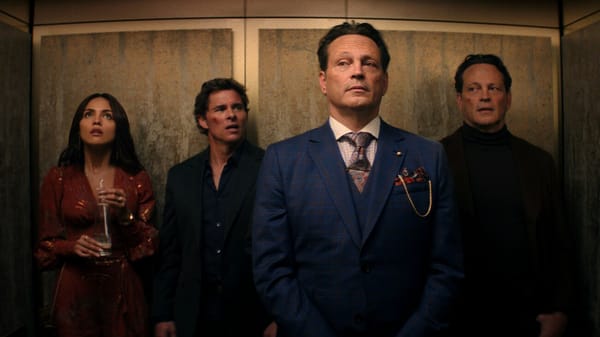
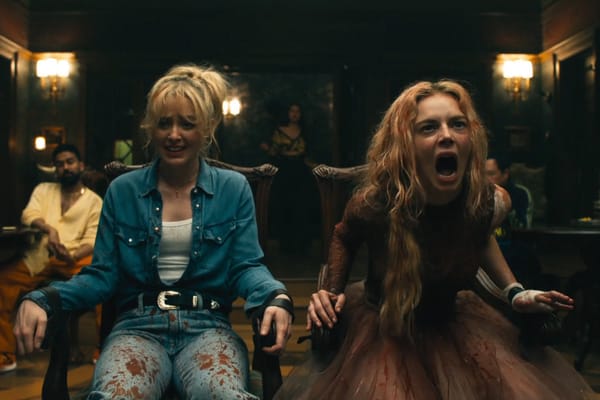
Much has been made about how much A24 should have shared in marketing The Drama. The trailers basically set up that two characters, Charlie (Robert Pattinson) and Emma (Zendaya), are about to get married, but Emma divulges a secret about the worst thing she ever did, which sets off a series of emotional implosions in the lead up to the big day. The secret is that as a teenager, Emma planned a mass shooting at her school. She abandoned the plan, but the reveal sets Charlie worrying about whether or not he’s marrying a violent sociopath.
I can understand why A24 decided not to share this plot point in the marketing (although asking critics not to reveal it in the film’s run-up is another matter). When so much of online discourse is driven by strong opinions, I can easily see people leaping into the fray about whether a dark comedy is an appropriate genre to handle the horror of a school shooting. People end up discussing the idea of the movie without actually going to see it, and A24’s job is to make sure people see it (the film slightly outperformed its opening weekend expectations, so I guess they succeeded).
And yet, I wouldn’t say The Drama is a movie about mass shootings or gun violence. That lingers in Charlie’s fears, but what writer-director Kristoffer Borgli appears to be more interested in is what he explored in his previous film, Dream Scenario, which is the tension between thought and deed. In Dream Scenario, the protagonist, Paul (Nicolas Cage), starts appearing in people’s dreams through no action of his own. This makes him a strange celebrity of sorts, but when his dream manifestation starts behaving in a dangerous and erratic fashion, people turn on the real Paul. Similarly, before Emma reveals she thought about committing a mass shooting, Charlie and their friends Rachel (Alana Haim) and Mike (Mamoudou Athie) all share the worst thing they have ever done. While Charlie, Rachel, and Mike actually did something bad, Emma only thought about doing something bad, and yet she comes in for the harshest criticism.
The gun violence aspect may strike Borgli as a bizarre American element (Borgli is Norwegian, and the character of Charlie is British), but there’s no real exploration of gun culture or why Americans have begrudgingly accepted gun violence as a part of the country’s personality. Instead, the director appears to tap into two other major modern anxieties. The first is what Charlie wrestles with for the remainder of the movie, which is how much do you ever know another person? He and Emma have been together for two years, but this news about her past completely throws him off course. It’s a challenge for the audience: if you learned something horrifying about your partner, could you still stay with them?
The other anxiety is how much people are held responsible not for deeds but for thoughts. We look to others for ideological similarities, and while it’s nice to think that we should be heterodox in seeking viewpoints, ultimately, we tend to align with those who believe as we do. While Emma’s thoughts as a teenager were abhorrent, they were just that: thoughts. In the social media age, we’re constantly sharing thoughts, but the act of transcribing them—of giving them voice—makes them deeds, and social media is a conflict engine. Voicing a thought becomes almost as damning as any deed.
And yet despite these dual anxieties at the center of the picture, neither one unnerved me that much. I found the film incredibly entertaining, particularly from Pattinson’s performance (he’s a handsome man who excels at playing weird little guys), but thematically, it feels a bit thin. I guess I’m just not that scandalized that someone may have thought to do something horrible when they were a teenager. Emma seems genuinely contrite over this shameful secret, so it’s not like she’s even defending this passing phase. To watch every other character freak out over a thought from 15 years ago feels like trying to translate online rage into interpersonal conflict, and it plays as a bit hollow and overblown.
The other problem is learning something new about a person that changes your perception of them. Again, because Emma’s transgression is a teenage obsession that came to nothing, it’s difficult to buy that it upends Charlie’s understanding of his partner. More importantly, change is part of any relationship. Even if Charlie was 100% certain of who Emma was, they’re getting married. They’re planning to grow old together. Does he think that the Emma who’s now thirty is going to be the same as when they’re seventy? Does he think he’ll be the same? People change, and Charlie’s obsession that Emma may still be the same angry teenager (he keeps imagining her as her teenage self after he learns her dark secret) feels like a massive overreaction.
There’s plenty of comedy to be mined from such overreactions, but I’m not sure Borgli wants to downplay the anxiety as misplaced. This is not a Seinfeld episode where outsized emphasis is placed on phony transgressions. And yet, while The Drama may cause major consternation among some viewers, for me, it felt like an attempt to grapple with the fierce condemnations that define our current moment, but through a lens that’s too flawed to provide any clear examination.
The Drama is now playing in theaters.
Want to support this newsletter, but don't feel like a paid subscription at this time? Consider making a one-time donation.