‘The Moment’: Fleeting Fame Is Always Funny
Charlie XCX’s movie explores familiar territory about art and commerce but retains an honest angst about waning integrity in the machine.

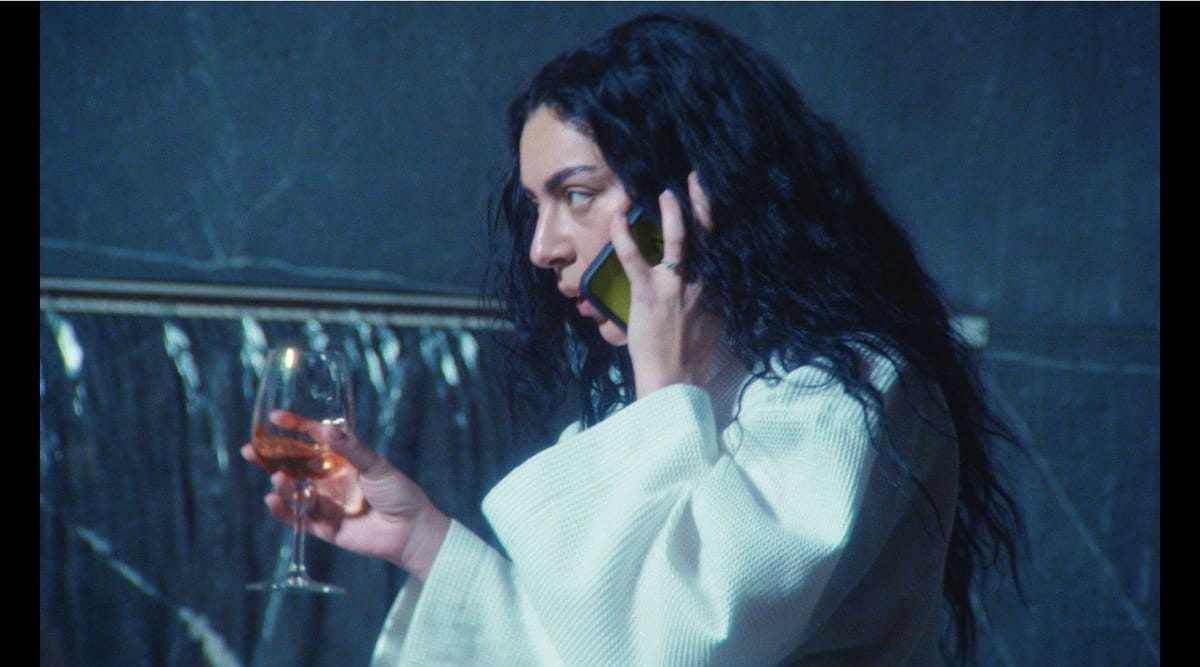
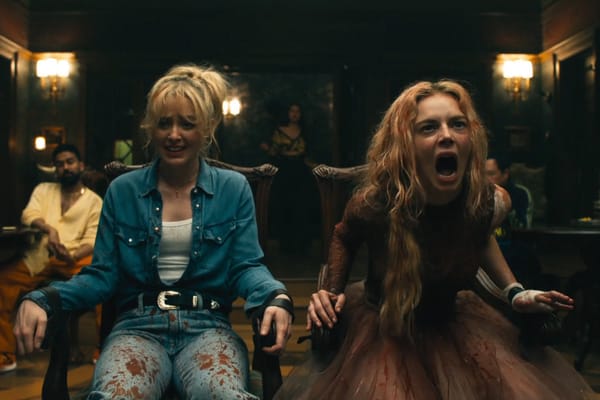
It almost feels necessary to attach the word “icon” or “idol” to the word “pop” when describing a performer, because without it, you can feel the effervescence of their stardom. Pop is short for “popular,” but it’s also the inevitable sound of a bubble’s demise, and if you’re the bubble, you can’t help but wonder when the end will come. That anxiety fuels Aidan Zamiri’s The Moment, a fictionalized spin on Charlie XCX (playing a version of herself) wrestling with making her fame last a little longer while being true to her artistic identity. Even if you don’t know Charlie XCX’s music, the film plays a common tune about how corporate power seeks to flatten everything into its most broadly appealing version, and whether the artist will be able to stand against that machine. What makes The Moment break away from a vanity project is how much Charlie XCX is willing to poke fun at herself and accept that she’s just as vulnerable to the whirlwind as any other young musician.
In the aftermath of 2024’s “brat summer” (so named for the success of Charlie’s album), Atlantic Records wants to keep the momentum going. They feel like the best way forward is to not only have Charlie endorse a special “brat” credit card for young LGBTQIA+ people, but bring on the slimy, ingratiating director Johannes Godwin (Alexander Skarsgård) to helm the video of her upcoming tour. This throws the musician in the middle of a power battle between Johannes and Charlie’s creative partner, Celeste (Hailey Benton Gates), and reflects the larger struggle of wanting to keep the company happy even as they strip away everything that made the album popular in the first place.
Zamiri leans hard on making the audience feel the aggressive crush of this newfound fame for Charlie. Every title card is aggressively thrown up on screen in a color strobe effect as if even knowing where we are is a challenge. Charlie never gets a moment to slow down; denied the calm boardroom of the corporate powers, she has to conduct Zoom calls in her car or sign contracts on the way to an event as a lawyer reads out terms and conditions. It all makes every moment feel tenuous, fleeting, and emphasizes how far Charlie will go to make it last a little longer because there’s no guarantee of future success. It used to be that you’re only as good as your next album, but with all the promotions and ancillary performances required of an artist, you’re now only as good as the next thing you do.
What stops this from being a vanity project of “Oh, poor me, I found fame, and now it’s too much,” is how much everyone is willing to lean into the absurdity of it all. The film lets Charlie be as venal and cowardly as anyone else as she runs from her problems, makes poor decisions under pressure, and gives in to her fears. It’s not a rejection of fame as much as showing she’s just as much of a fuck-up as anybody else, which allows her to be an endearing center without asking for our pity. The furthest the film goes is allowing Charlie emotional space to vent her anxieties, but at least those scenes feel earned when surrounded by bits like Charlie feeling intimidated by Kylie Jenner or waffling on support for Celeste.
As much as this is an extension for Charlie XCX and a way to express her ambivalence about fame, the surrounding movie has a ball poking fun at the way companies misunderstand artists. Skarsgård makes for a terrifically common villain as Johannes keeps making power moves to take full control of Charlie’s tour, but clumsily cloaks it in obvious duplicity. He’s a hack who wants to distill Charlie down into a standard popstar, and it’s incredibly funny watching him cheerfully push his dumb ideas onto what her show should be. The movie also stacks the cast with other reliable comic presences like Jamie Demetriou as Charlie’s hapless manager, Kate Berlant as her makeup artist Molly, and Rachel Sennott poking fun at her presence in Charlie XCX’s 360 video.
The larger conflict of the movie isn’t new, and as long as there are young artists and companies to launch them to a larger audience, this tension will exist. The Moment at least has the honesty and good humor to acknowledge that there are real temptations and insecurities at play. Charlie XCX knows she doesn’t have the power make pop stardom last forever, but she’s at least willing to have a laugh should it all go up in flames.
The Moment is now playing in theaters in limited release.
What I'm Watching
I finished watching Heated Rivalry last week, and I was floored by how good it was. It's a reminder that hit shows can't be made in a lab or algorithmically generated. Even with a relatively meager budget, the show was able to soar thanks to the charisma of its lead performers and thoughtful storytelling. While I'm sure there will now be a rush of imitators (there's no shortage of sports romance novels to adapt), I'm grateful we got such a good one, and I'm excited for the second season.
What I'm Reading
I finished up my second Vonnegut novel of the year, The Sirens of Titan. I found it to be a stronger overall book than Player Piano, with bigger ideas and more exciting sci-fi swings. I also couldn't help but think of how the protagonist, Malachi Constant, compares to some of our tech titans, who have all the money and "luck," but it only deepens their frivolity and callousness. Sirens flips their power upside down, making them not kings but pawns, and wondering if you can build some kind of humanity within them when there was none before.
I've now moved on to The Gales of November: The Untold Story of the Edmund Fitzgerald. So far, I'm liking it as author John U. Bacon switches between the story of the Fitzgerald and other tales of disaster on the Great Lakes. To be clear: I'm not happy these disasters harmed so many people, but "disasters on a body of water" may be my favorite genre of non-fiction. That's just how I am.
What I'm Hearing
I can't wait to be done with the "Gossip Girls" season of You Must Remember This. It's not that Longworth is a bad storyteller (on the contrary, she's one of our finest Hollywood historians); I just find Louella Parsons and Hedda Hopper to be completely repulsive. Yes, they were self-made single mothers, but there was nothing good about their work or their viewpoints. If anything, their philosophy was "Screw you, I got mine," as they helped wealthy patriarchal publishers like William Randolph Hearst and Henry Luce, respectively, wield greater power.
In happier news, there's a new Metric track out ahead of their new album.