‘The Perfect Neighbor’: How America Makes a Recipe for Misery
Geeta Gandbhir’s heartbreaking, maddening documentary shows the suffering created by “Stand Your Ground” laws.

There are times when you look at America and see not misguided laws and attitudes that have inadvertently led us into chaos, but systems that feel specifically designed to immiserate. Maybe it’s the way we prize individual feelings over societal benefits, or perhaps it’s just the violence of a settler society that forcibly removed the land’s previous inhabitants. I don’t have a good answer on why we’re not better neighbors to each other, but as Geeta Gandbhir’s documentary The Perfect Neighbor shows, we’re certainly not going to get there by introducing more violence into the equation.
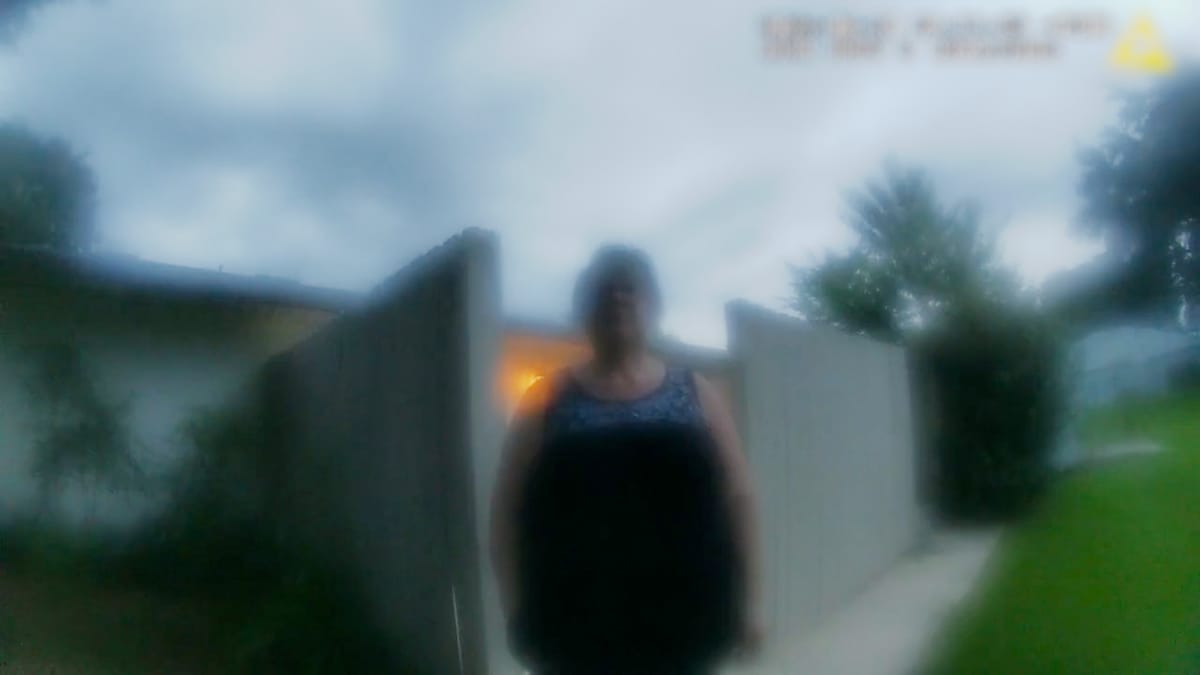
The documentary relies almost entirely on police footage and covers a dispute in Ocala, Florida. Beginning the story with a shooting and then cutting back to 2022, we can see the rising conflict between Susan Lorincz, a middle-aged white woman, and her neighbors, who were mostly people of color. A pattern emerges where the neighborhood’s children would play outdoors, Lorincz would call the cops to complain, make trumped-up charges, and the rest of the neighbors would basically say, “That lady is crazy.” Even the cops seem sympathetic to the plight of the neighborhood, knowing that they’ve once again been called out because Lorincz wants to bring the force of the state down on her neighbors. These confrontations then lead us to the night of the shooting and the resulting fallout.
We know the shooting is coming since it opens the movie, and it gives The Perfect Neighbor a sense of not only dread, but also tragedy. It feels like there’s no way out, not only because of the constraints of time and the clock ticking down to the inevitable violence, but because we can tell Lorincz desires such a confrontation. Her growing rage towards having to live alongside people she despises (and “despises” seems like an apt word as she admits to lobbing racial slurs at her neighbors) encourages her to construct a scenario where she can assert her authority on the neighborhood through the state. She keeps calling the cops, not because she seeks peace, but because she seeks the subjugation of her neighbors.
While one could argue that even with the bodycam footage, Gandbhir, as the film’s director, has a say over cutting it together, and is therefore purposely putting together an unflattering picture of Lorincz since the victim, Ajike Owens, was a family friend of Gandbhir’s. But Gandhbir didn’t make Lorincz shoot through a locked door at Owens, and she didn’t direct or reenact Lorincz’s interrogation when it dawns on her that the jig is up. The facts of the case would be straightforward even if there wasn’t police footage to illustrate them.
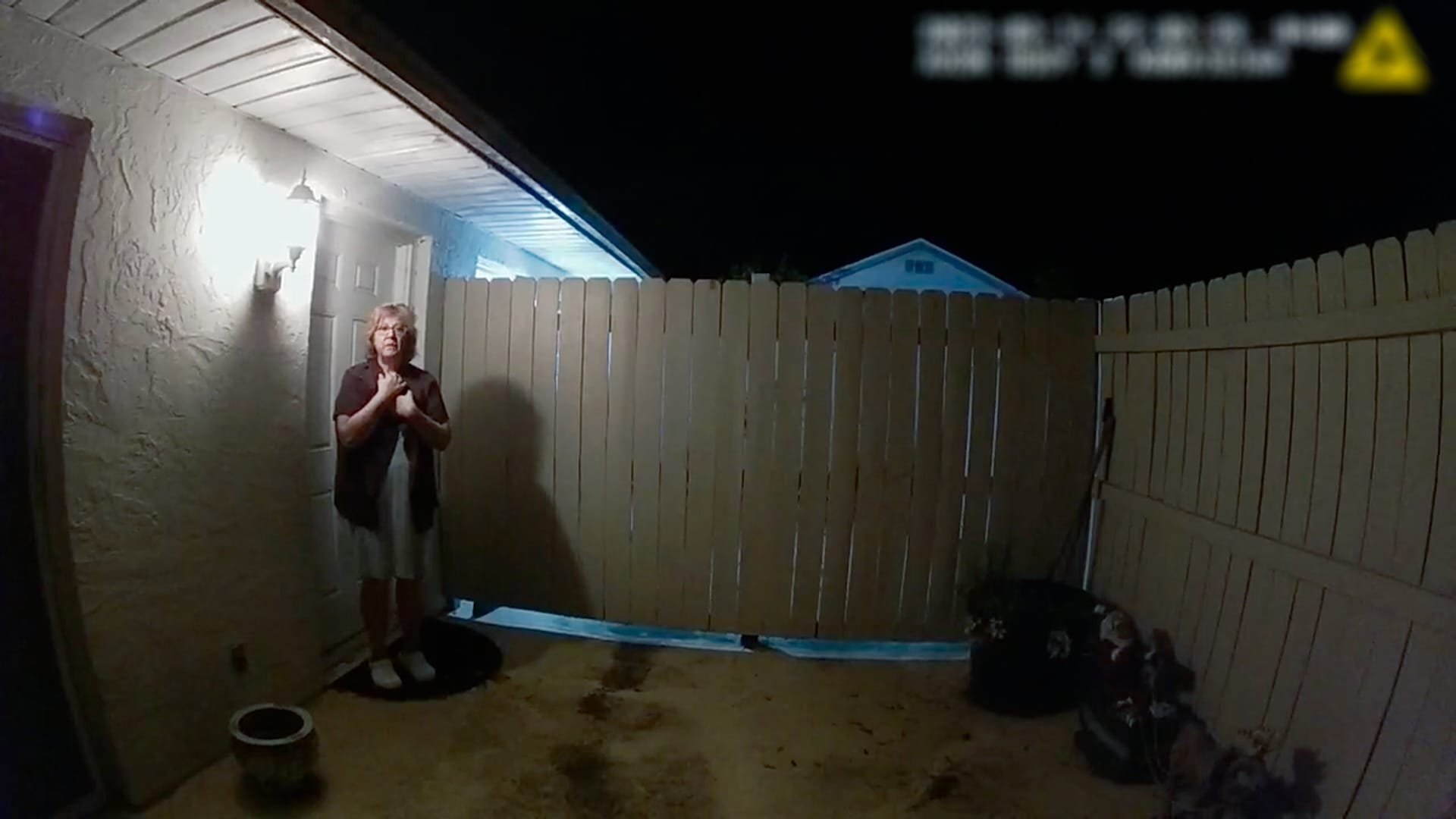
The larger societal implication is how Lorincz thought she could get away with shooting Owens because of Florida’s “Stand Your Ground” law, which became national news in the wake of the Trayvon Martin case. She assumed, not without reason, that as a white woman, she would receive the benefit of the doubt in killing a person of color. Because we only have police footage, it’s difficult to untangle the psychology that would lead someone like Lorincz to calculate this murder (even if she had been successful, what was the plan? To keep living in this neighborhood where everyone saw you as a murderer?), but the societal indictment is clear. Stand-Your-Ground is useful for increasing homicides, but not for deterring crime because no one in this neighborhood has committed a crime. Their “crime” was existing around Lorincz, and she wanted retribution.
Where I wrestle with The Perfect Neighbor is in its reliance on bodycam footage to convey authenticity. Gandhbir explained to The Guardian that using the bodycam would present institutional authority and rebut claims of bias. However, she also said she’s aware of how bodycam footage can be used against minority populations. “The police come into our communities and, afterwards, they use body camera footage to criminalize and dehumanize us, to justify violence they may perpetrate against the community,” says Gadnhbir. “I wanted to take this footage and flip it on its head.”
However, this feels like it’s working at cross-purposes. Either this is a voice of trustworthy authority, or we’re meant to question what we’re seeing. It’s not really flipping it on its head to say, “What if we trusted the police?” That also leads to an unnerving irony, which is that if Lorincz really wanted to blindly fire at someone and get away with it, then she should have become a cop. While Gadnhbir wants to indict the police for inaction here, she’s essentially using their documentation as the entire foundation for her larger piece about stand-your-ground being used by citizens to enact their violent fantasies of racial dominance. There’s certainly an argument to be made here about how police factor into that (like calling the cops in hopes of having them harm people of color), but Lorincz’s case is one of bypassing the police and assuming stand-your-ground would legally absolve her.
Her sickening machinations, more than the bodycam footage, are what give The Perfect Neighbor its raw power. Through this story, we can see so many intersecting issues in America, from the availability of guns to racial intolerance to laws that attempt to codify extrajudicial executions and then offer post hoc rationalizations. There are countless Susan Lorinczes in this country, and there’s no amount of coddling that can protect them from the demons they feel they need to slay. No matter how many times the police show up to try and moderate the situation, if you give these people a path to try and eliminate their perceived enemies rather than encouraging them to find a way to live in peace, they’re going to take the former every time. They stand their ground because they can’t imagine the ground might also belong to other people.
The Perfect Neighbor is now playing in select theaters. The film arrives on Netflix on October 17th.