'The Roses' Is a Funny, Biting Portrait of a Couple That Loves to Hate
Jay Roach's dark comedy plays to its strengths by letting its leads snipe at each other.
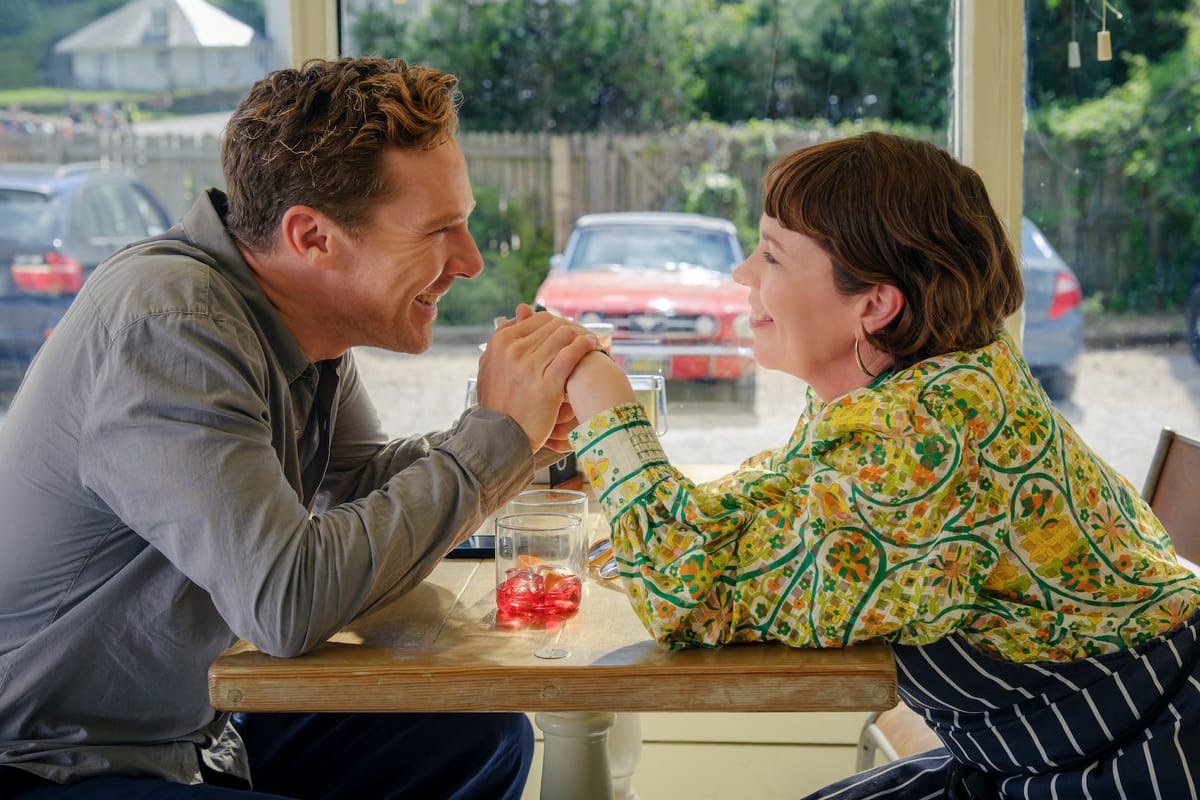
There’s something particularly withering about British wit. I’m not sure exactly why or how it cuts deeper than other nationalities, but from Basil Fawlty to John Oliver, their insults just sting more than anything an American could hope to deliver. It hurts even more when you’ve got two actors who can not only play the brutality of the lines, but the warmth of the tortured love beneath them. That’s why Jay Roach’s The Roses, a new adaptation of Warren Adler’s novel The War of the Roses, shines—it has Benedict Cumberbatch and Olivia Colman as the tortured married couple that relishes torturing each other. While the film certainly enjoys the barbs and hostilities its lead characters lob at each other, it also understands that the unique tension comes from how much affection these characters feel towards each other even if it’s a deeply toxic romance. The emphasis on the twisted love story helps Roach’s version stand apart from Danny DeVito’s 1989 film and even though Roach is an American director, he knows that there’s a lovely strain of venom in dialogue from two British characters played by two luminary British thespians.
Theo Rose (Cumberbatch) is a frustrated architect working a job he hates when he meets chef Ivy (Colman) in her restaurant, which she also hates. The two immediately connect, have sex in the restaurant’s refrigerated locker, get married, and decide they’d be happier seeking their fortunes in America, specifically Mendocino, California. They have two kids and start purusing their professional passions. Theo designs a museum for nautical history, and Ivy opens a crab shack restaurant. Their lives change on the same night when a storm destroys Theo’s building while also sending an influential food critic Ivy’s way. With her career ascendant and his in ruins, he becomes a homemaker and she becomes a culinary star with the resentments between the two growing over the course of almost a decade.
What makes Tony McNamara’s adaptation particularly sharp is how it doesn’t rush to the divorce. Yes, there will be a battle over the house, but the script is more interested in the circular nature of Theo and Rose’s relationship where they emotionally and verbally abuse each other, and then try to heal the wounds they’ve caused. The script also makes sure that no one can be the clear villain. After the storm, Theo and Ivy get set on two different paths, and they resent the other for what they have—Ivy seeing how close Theo has bonded with their kids and Theo for Ivy’s professional success. It’s a neat inversion of typical gender roles that emphasizes how the resentment comes not from what you do (Theo loves the kids and Ivy loves her work), but from feeling what you’ve been denied. Every time Theo and Ivy think they’re giving something to their spouse as a way to heal the divide, it gets turned into a weapon for a later fight because nothing can restore the time Ivy has lost with their kids or Theo’s artistic ambitions.
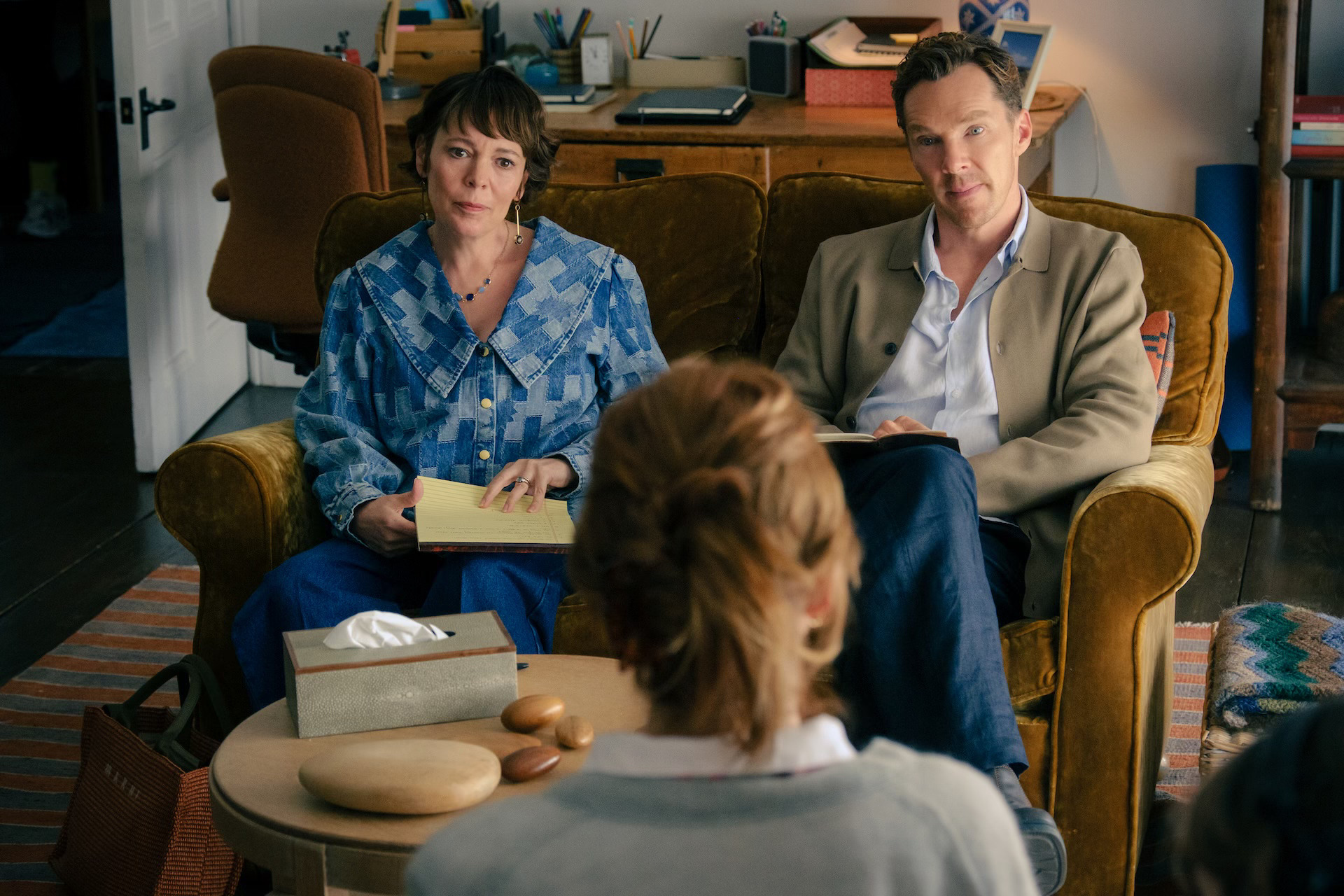
The toxicity between the two characters would be unbearable if not for the delightful charms of Cumberbatch and Colman, who know how to play off each other beautifully. Even though their characters want to “win,” the actors know that they’re not trying to win the scene or overshadow their partner. If anything, to make the movie work, they have to always sell the underlying affection between the Roses. If we leap straight into the attacks, then nothing has really been lost, but Cumberbatch and Colman let us see the slow ebbing away of the love and how the Roses keep seeking to rekindle it without realizing their hate and love are intertwined. Both the film and the actors understand that only a deep love can keep fueling the animosity betwen Theo and Ivy.
From there, it’s just a matter of filling out the cast with some strong supporting actors who help color the world, but never draw focus from the leads. More than anything, throwing in talented comic actors like Kate McKinnon and Andy Samberg allows Cumberbatch and Colman a breather, and you can see how much mileage McKinnon gets from her character inappropriately hitting on Theo. In the larger context of the story, the other couples help illustrate how no marriage is perfect but that there’s something fatally flawed about Theo and Ivy’s relationship. More importantly, these external characters can see what the Roses cannot: they shouldn’t be together, and their continued marriage will only lead to mutual destruction.
Roach’s film career is almost entirely in comedy (even his political movies Recount and Game Change are rooted in the absurd), but his work here feels far more on point than his previous R-rated comedy The Campaign, and certainly more refined than the haphazard Bombshell. Weirdly, it feels like a callback to the days of Meet the Parents and the awkwardness of family relationships, but here the knives are fully out rather than couched in the forced civility of awkward get-togethers. Here, buyoued by British characters whose nationalities already set them apart from their American confines, there’s a liberation to let civility die and go for the jugular regardless of the company.
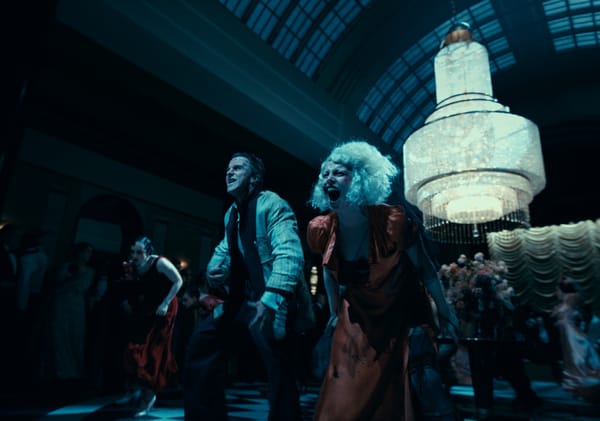
That can be tricky if your actors are too despicable, but Cumberbatch and Colman let their charms flow through the whole picture. Maybe I’m particularly inclined towards this kind of movie because I grew up on Fawlty Towers and love a particularly savage one-liner delivered by someone we’re not necessarily supposed to root for. Rather than aspire to a statement on modern romance or American versus British domestic sensabilities, The Roses has the wherewithal to set its sights on one self-destructive couple, put two brilliant performers in the leads, and watch the sparks fly. When the chandelier finally falls, it feels like the least of their worries.
The Roses opens in theaters on Friday, August 29th.