Why Did Disney Blow Hundreds of Millions of Dollars on ‘TRON: Ares’?
A theory on why the studio backed a project that was almost destined to fail.

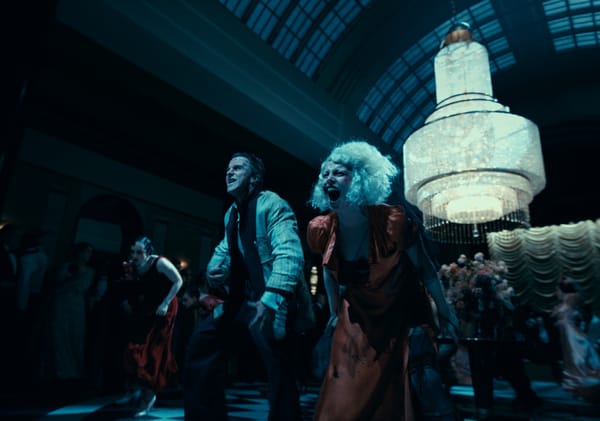
1982’s Tron has always been a cult favorite. It was a movie remembered more for its visuals than anything in its story or its characters. This Simpsons joke from “Treehouse of Horror VI” in 1995 sums it up best:
The Simpsons "Treehouse of Horror VI" segment Homer3
Although TRON returned to screens in 2010 with the legacyquel TRON: Legacy, even getting that movie was an uphill battle. It took several Comic-Cons (and I should know because I was at them) where Disney basically brought in test footage and hoped they could consistently wow the audience, and that would translate to broad success (this is when studios assumed that if something hit at Comic-Con, it would click with the mainstream, which was a silly gamble). When TRON: Legacy finally arrived, the film underperformed, only pulling in $400 million worldwide in a year when Disney had become accustomed to its movies regularly topping $1 billion (e.g., Alice in Wonderland, Toy Story 3).
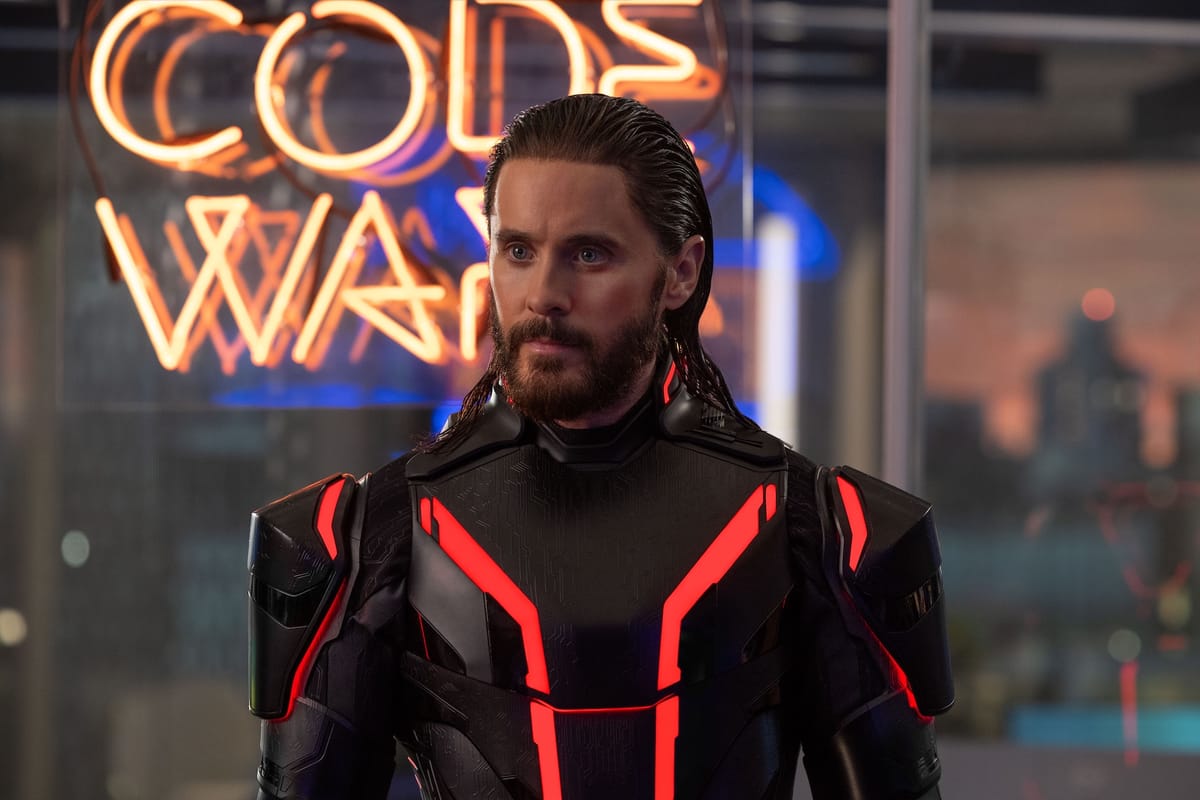
Over the next decade, Disney toyed with the idea of a third TRON movie and even came close to a direct sequel that would have brought back director Joseph Kosinski and stars Garrett Hedlund and Olivia Wilde. That sequel, TRON: Ascension, sputtered out when Disney, flush with acquisitions (Marvel, Lucasfilm, Pixar), didn’t need to generate its own live-action material anymore if it wasn’t a remake of an animated movie. However, the world of TRON was a passion for Jared Leto, who had won an Oscar in 2013 for The Dallas Buyers Club. Disney revived the project, now titled TRON: Ares, and would use it as a star vehicle despite Leto never showing he was a box office draw, and where audiences were more interested in IP or favorite directors than they were in matinee idols.
So look at the pieces on the board: you have a franchise that’s never been a major box office success, led by an actor who’s never been a major box office success (and that’s before you get to all the allegations against him). Why would Disney pay $180 million for this? Why would they pay roughly another $180 million for a worldwide marketing campaign? Did anyone at Disney really think they had a major hit on their hands? The film will arrive below expectations at around $36 million, a long way from the $450 million it needed to break even. While I believe in the old William Goldman adage about Hollywood that “Nobody knows anything,” there was no reason to think a third TRON movie starring Jared Leto was going to be a blockbuster hit.
My theory is that TRON: Ares wasn’t even a play for box office success as much as it demonstrates the shortcomings of synergy. Where you need to look for TRON: Ares is not the original TRON or TRON: Legacy, but “TRON Lightcycle Run,” a ride that opened at Shanghai Disney in 2016 before arriving stateside at Walt Disney World in 2023. How do you sell a ride based on a 2010 movie that most people don’t remember? Make a movie, turn the lights red, and that’s synergy, baby. The movie sells the ride, which will exist long after TRON: Ares leaves theaters.
That’s certainly one way to conduct business, and it helps explain why Disney backed a third TRON movie rather than, for example, a third National Treasure (which likely would have cost less but doesn’t have a theme park component). Still, it feels backwards to create an entire movie that functions as an advertisement for an attraction, even if the film itself feels like a theme park ride. Part of the appeal of a Disney theme park is that it doesn’t have to rely on what’s happening at the movies. Regardless of whether Pirates of the Caribbean, Jungle Cruise, or Haunted Mansion films are good or bad, people still hop on the rides. I suppose TRON is in a different boat because the ride is based on the film rather than films based on rides, but it does feel like a dead-end to green-light one film over another simply because there’s a theme park component.
The theme park aspect is the best theory I can concoct because it makes far less sense to look at the box office returns or Jared Leto’s broad appeal and say, “Yes, we need to spend hundreds of millions of dollars on a third TRON starring the guy from Morbius.” But it also speaks to the fact that Disney, as a studio, no longer knows what movies to make if it’s not wedded to a format that’s already succeeded. They’ve set up so many production pipelines through their various subsidiaries, and while that creates a steady stream of (ugh) “content,” I’m not sure if that’s going to lead to success as a movie studio. Sure, the Disney empire is massive, but if you’re in the business of making movies, you need to actually capture people’s attention, which they haven’t really done this year outside of Lilo & Stitch. They still have a couple likely hits on the way with Zootopia 2 and Avatar: Fire and Ash, but if they want to pull from their library of live-action features (as opposed to what they acquired in their purchase of 20th Century Fox), they’re going to need be far more thoughtful and cost-conscious than what’s, at best, a very expensive Nine Inch Nails music video.