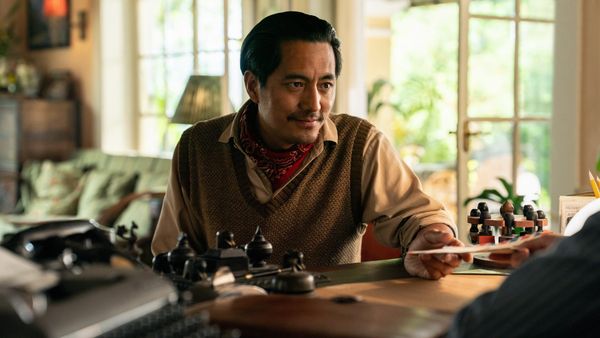
‘Bugonia’: Let’s All Have a Chuckle at Our Utter Powerlessness in the Face of Certain Doom
Director Yorgos Lanthimos remains a master of dark comedy, but his latest feature struggles under its shallow fatalism.

No one goes to a Yorgos Lanthimos movie for something cheerful. You show up for some dark, violent comedy about the fallen nature of humanity. He’s not here to uplift; he’s here to dive into what makes us wretched and absurd and get a laugh from the bleakness of our condition. Bugonia continues that streak but reaches the level of diminishing returns as Will Tracy’s script wants to be about a lot—conspiracy thinking, wealth disparity, barbarity as our state of nature—and then can only answer with a nihilistic shrug. For all of Lanthimos’ strengths as well as the excellent lead performances from Jesse Plemons and Emma Stone, there’s something perversely shallow to get so violent and nasty only to arrive at the same conclusion about humanity as a bored, angry teenager.
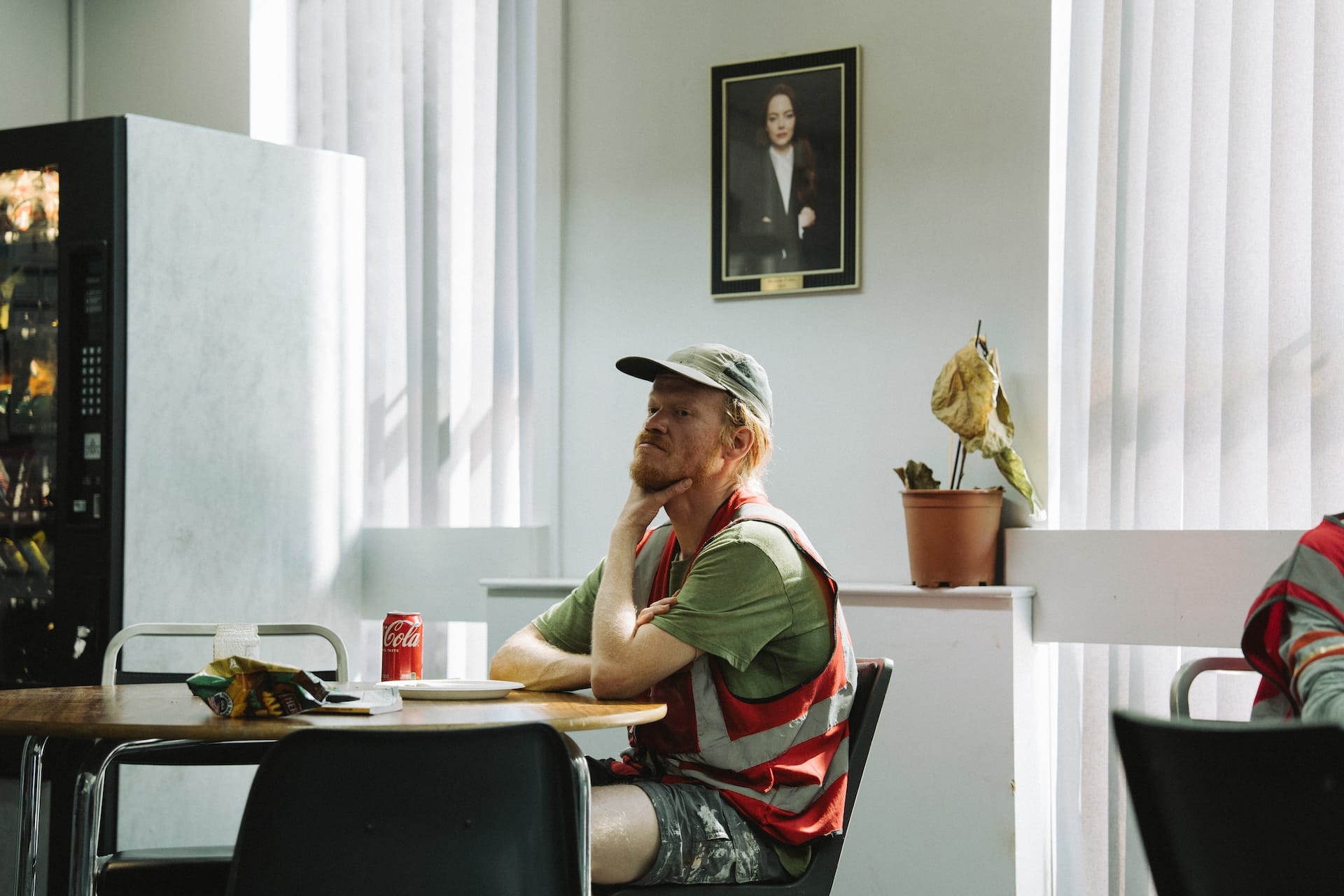
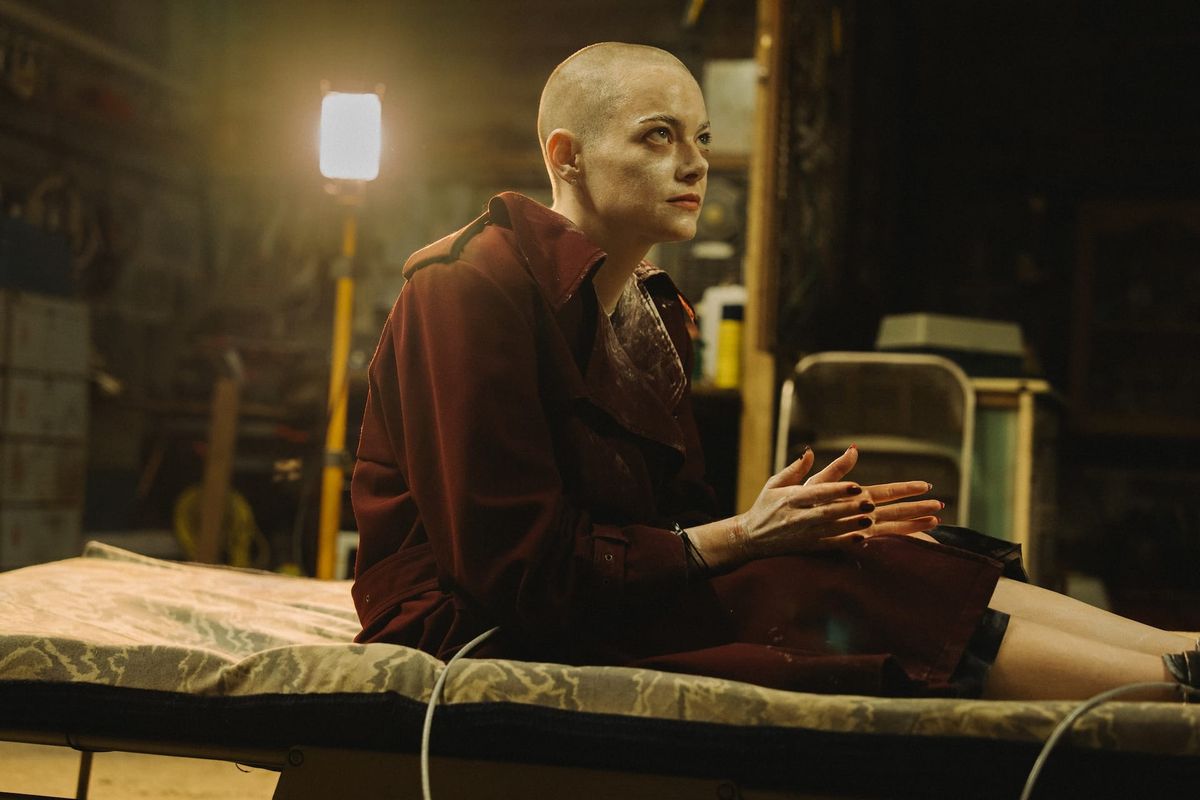
Teddy (Plemons) is convinced that Michelle (Stone), a powerful biotech CEO, is an alien bent on Earth’s destruction. Roping in his sweet but slow-witted cousin Don (Aidan Delbis), the two kidnap Michelle, shave her head so she “can’t communicate with the mothership,” and lock her up in the basement. Teddy wants her to confess that she’s from the Andromeda galaxy and to bring the three of them up to her ship to commence negotiations on bringing back the bee population. Teddy, fueled by this conspiracy theory as well as the suffering of his mother (Alicia Silverstone), refuses to believe Michelle’s pleas that she’s a human being. However, the question continues to linger—what if Teddy is right?
As funny as Bugonia can be (assuming you like Lanthimos’ dark comedy), it can also be grating in how its observations feel real, but also clinical and distant. We are in a time when reality feels like it’s unraveling, which sends sad, lonely people running to conspiracy theories to make sense of the world (see also Eddington, which was directed by Bugonia producer Ari Aster). The diagnosis of our current moment isn’t wrong, but no one involved seems to be able to take the next step to, “Okay, but now what?” Everyone is so eager for that biting satire that they’ve lost sight of the humanity in place, which leads to stuff like a running gag about a local sheriff (Stavros Halkias) making half-hearted apologies for molesting Teddy when he was Teddy’s babysitter. The larger point may be that humanity is irredeemable due to its penchant for cruelty and self-destruction, but being able to laugh at it doesn’t hammer home absurdity as much as it does apathy.
Because Teddy has unwavering certainty in his conspiracy, there’s nowhere for the film to go beyond interrogating whether he’s right or not, and even here, the answer becomes a little meaningless. Bugonia makes it clear that even if Teddy is wrong, the ultra-wealthy are basically a different species from the rest of us because they’ve lost touch with humanity. Michelle’s tactics for getting out of her predicament are all a series of negotiations as if she’s in a business meeting, trying to get the best deal because there’s no way she fully understands the tragedy in Teddy and Don’s lives. She can only be the cold, calculating businesswoman, thinking that the right order of words can make a company more diverse or promote hustle culture or save her life. We’re all so disconnected that we’ve fallen into separate realities, and we’re not trying to bond as much as we’re in a war over whose reality gets to dominate. Teddy’s quest is to ensure that a better reality is possible because his current one—a life of poverty where both his mother and his bees are dying—can’t be all there is.