‘Backrooms’ Is a Setting in Search of a Story
Beguiling production design is ultimately a dead-end in Kane Parsons’ debut feature.

The most fascinating element of Backrooms, the debut feature from 20-year-old filmmaker Kane Parsons, is that at times it feels like a glimpse of cinema’s future. Its construction feels as inspired by the internet and video games as it does from other movies. While it does sit alongside the other vibes-based horror films we’ve seen in recent years (e.g. Longlegs, Strange Darling, In a Violent Nature), it also falls into a similar problem of mistaking style for substance. Despite the intriguing setting and thematic possibilities, Backrooms has terrific actors stuck playing paper-thin characters where the culmination of the journey amounts to little more than vague trauma and anxieties. In Backrooms, there’s plenty to explore, but little to find.
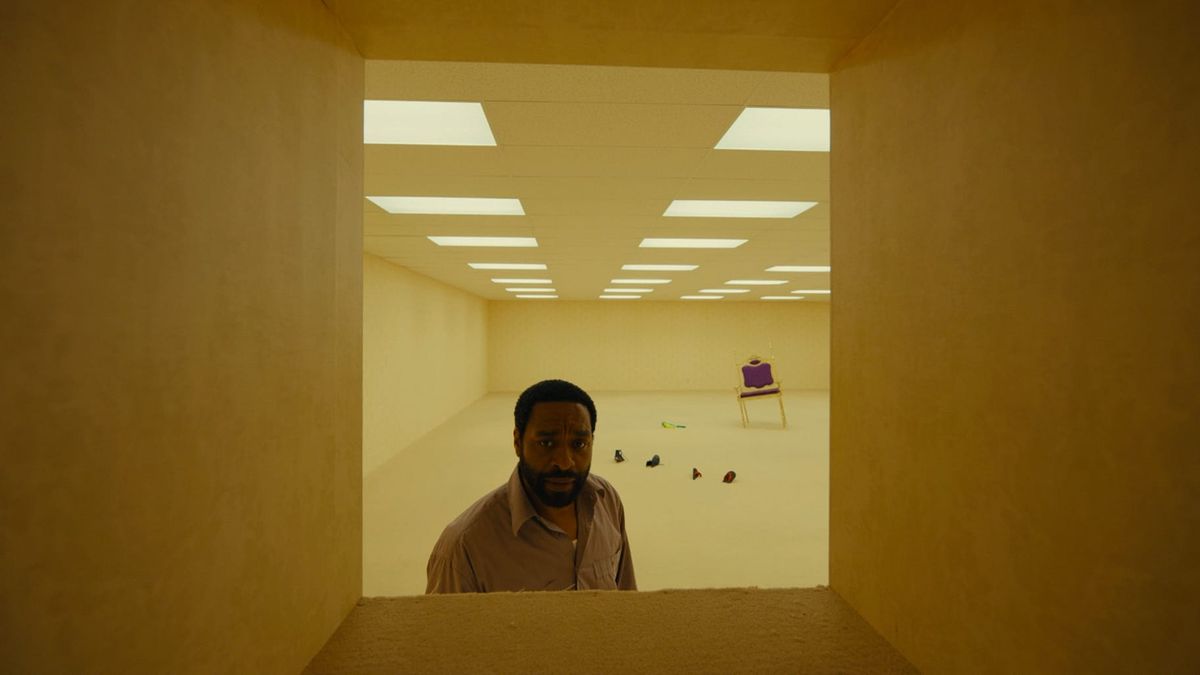
Clark (Chiwetel Ejiofor) is a frustrated architect living and working in a discount furniture store in the summer of 1990. His wife left him, he can’t make any sales, and as his therapist Mary (Renate Reinsve) observes, he suffers from rage and alcoholism. One night, while dealing with the store’s wonky power outages, Clark discovers a doorway in the basement to a seemingly endless series of rooms. While they at first they seem to have banal look of a bland office, nothing sits quite right. Furniture sinks into the carpeting as if it were sand; walls shrink and grow. Clark seeks to probe further with the help of his assistant manager Kat (Lukita Maxwell) and her boyfriend Bobby (Finn Bennett), but when they go missing, Mary (who has her own psychological baggage) goes searching for her lost patient.
The “backrooms” themselves are fascinating, and the highlight of the film. Parsons with production designer Danny Vermette, art director Alan Derksen, and set decorator Trevor Johnston, have made a place that is thrilling in its own right. Like Clark, we’re eager to peek behind every corner. There’s an exhilarating mix of influences here, not only from the endless rabbit holes of the internet itself, but from the design of video games as items can “clip” in and out of the game space, stutter to create bizarre replications, and move in surreal, Escher-like ways. Parsons cites the video game Portal as one of the film’s major influences, and if “The Cake is a Lie” was scribbled somewhere in the backrooms, it would fit right in.
Parsons brings these influences together in such a way as to produce immediate anxiety and apprehension. Perhaps that’s because the economics of horror films are easier to sell, but it remains interesting that while younger filmmakers of a previous generation saw wonder and imagination in hidden worlds, Parsons sees encroaching despair and death. Consider how in films of the 1980s, worlds beyond our own were magical, and while there was certainly darkness (think of the Swamps of Sadness from The NeverEnding Story), there was also astonishment and hope in Labyrinth and even the dark whimsy of Time Bandits. Parsons is at the start of his twenties, and he sees a doorway to intrigue but ultimately doom. The backrooms are clearly psychological, and what’s inside is trauma.
Which makes the whole endeavor feel thin and underwhelming. There’s the idea that the backrooms are attempting to copy and mirror what’s outside like a half-remembered memory. It doesn’t get things entirely right, so a stop sign gets rendered with the text backwards; furniture is distorted or half-buried in the carpet. The sense of dread is also a mirror of Clark’s emotional state, but such an approach indicates that despite Ejiofor’s great performance, there’s not much of a character here. He’s anger and resentment, and that’s pretty much it. Mary, as indicated by flashbacks to her youth, is buried trauma and concern that her mother’s psychosis is hereditary. These are sketches of characters, but they lack the richness of a real person. Consider the highs and lows of running through Joel’s memories in Eternal Sunshine of the Spotless Mind and then compare them to the stale spookiness of what’s supposed to be the psychic pathways of Clark and Mary. Parsons can conjure the terror, but he has no idea where to go next.
Backrooms was partly inspired by video games, and yet there’s the sense this whole thing would have worked better as a video game. In the first-person perspective (which the film assumes at one point as Bobby brings in his video camera at Clark’s request and returns us to the found footage genre in the year of our lord 2026), the player can take on the sense of discovery and bring their own emotions to bear without worrying too much about the particulars of how the environment fills in around lead characters. But as a narrative feature, Parsons shows his main characters to be both afterthoughts yet the drivers of the environment. Since he clearly has the aesthetic mapped out (inspired by the internet creepypasta of the same name and his previous YouTube shorts), everything must fit into the “liminal space” regardless of how that might shortchange the characters. The richness of the visuals never amounts to a journey worth taking.
Backrooms opens in theaters on May 29th.
Want to support this newsletter, but don't want a paid subscription at this time? Consider making a one-time donation.