‘Margo’s Got Money Troubles’ and the Troubling Demands of TV Adaptation
How does a 300-page book sustain at least two seasons of television?

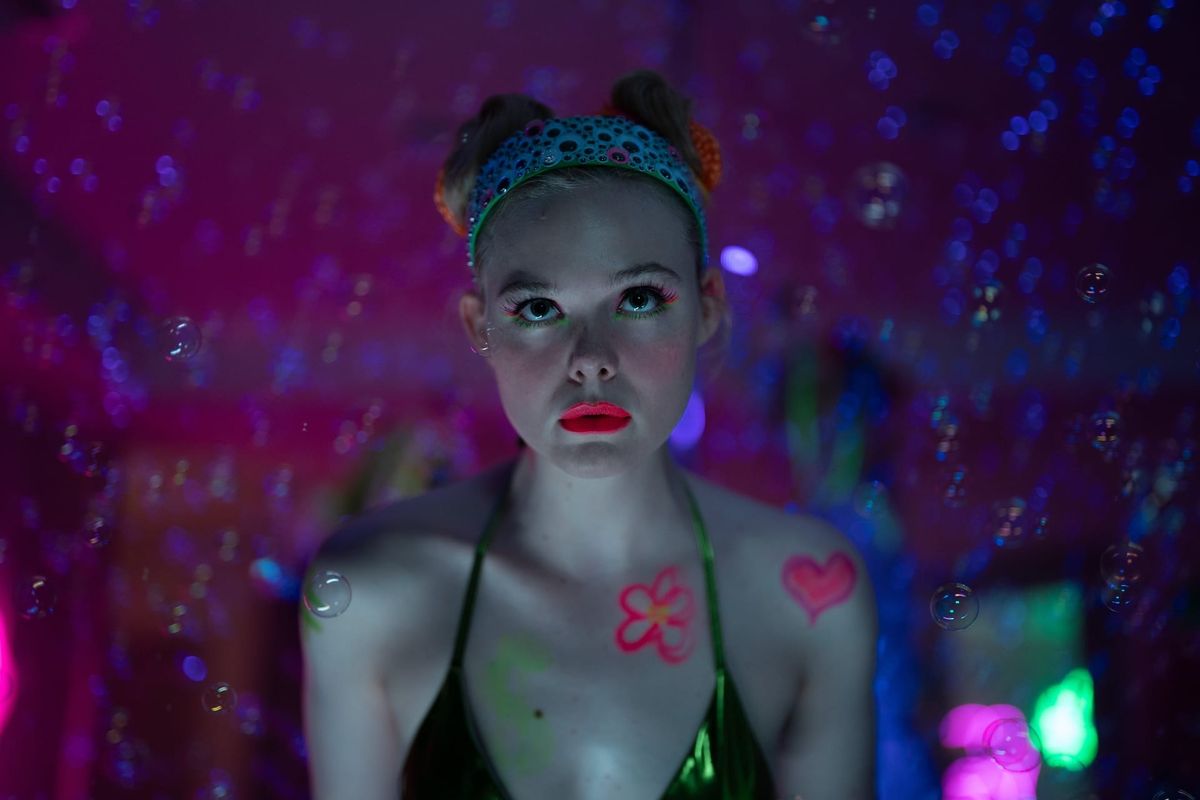
[Spoilers ahead for the book Margo’s Got Money Troubles and the first season of the TV show.]
This week, Apple TV’s adaptation of Rufi Thorpe’s novel Margo’s Got Money Troubles wrapped up its first season. The story follows Margo Millet (Elle Fanning), the daughter of former Hooters’ waitress Shyanne (Michelle Pfeiffer) and ex-professional wrestler “Jinx” (Nick Offerman), who has an affair with her freshman college lit professor Mark (Michael Angarano), gets pregnant, and chooses to keep the baby. However, doing so limits her job opportunities, so she turns to OnlyFans, where she finds sex work creatively fulfilling, but must then deal with the social fallout. It’s a story that could be done as a film, but shows the awkward limitations of television in trying to hold the audience.
If the entertainment industry still functioned as it did a few decades ago, the book would make for a breezy, entertaining movie. Unfortunately, the math today doesn’t work out to green-light the film. Generously, the movie could perhaps be made for $50 million, require another $50 million for prints and advertising, and therefore need $100 million just to break even, an even more difficult prospect when the ancillary markets (home video, cable TV, etc.) have dried up. Also, given the subject matter, it would likely be an R-rated dramedy, a tough sell in a market where people will turn out for blockbuster spectacle or low-budget horror, but everything else is far riskier, especially when the average ticket price is $16 and theatrical windows can be as limited as a few weeks.
While nothing about the property gets cheaper to produce for a streaming series, the economics are far different. Setting aside that it’s far easier to hide the data (How many views are there? What counts as a view?), Apple producing the show sees it as a loss-leader. It makes Apple TV a more appealing product, and if you subscribe, you may then sign up for other Apple subscriptions (Fitness, Music, Arcade, etc.) and then move into Apple’s walled garden of hardware. The show itself becomes kind of an afterthought. If it’s an acclaimed hit like The Studio, then great, and if not, it’s a small piece of a larger picture. What’s important is that it hangs around for a bit, keeps viewers using their Apple TV subscriptions, and then Apple hopes something else will hold them when the show wraps up (that appears to be Widow’s Bay, which everyone I know can’t stop raving about).
I don’t believe that adaptations need to be completely faithful to their source material. If anything, I believe they have to stand on their own so that even if you’ve never read a page of the book or played a second of the game or whatever, you still find the material compelling. For creator and showrunner David E. Kelley, while he starts his show in the same place as the book, he thematically went in a different direction. Thorpe’s novel is a celebration of found family and the hard sacrifices that are necessary when, as an adult, you have to forge the kind of community you want. For Kelley, he wants to tell a story about a family coming back together. This means fractures that are never satisfactorily resolved, like the tension that emerges between Margo and Shyanne after Shyanne learns about Margo doing OnlyFans.
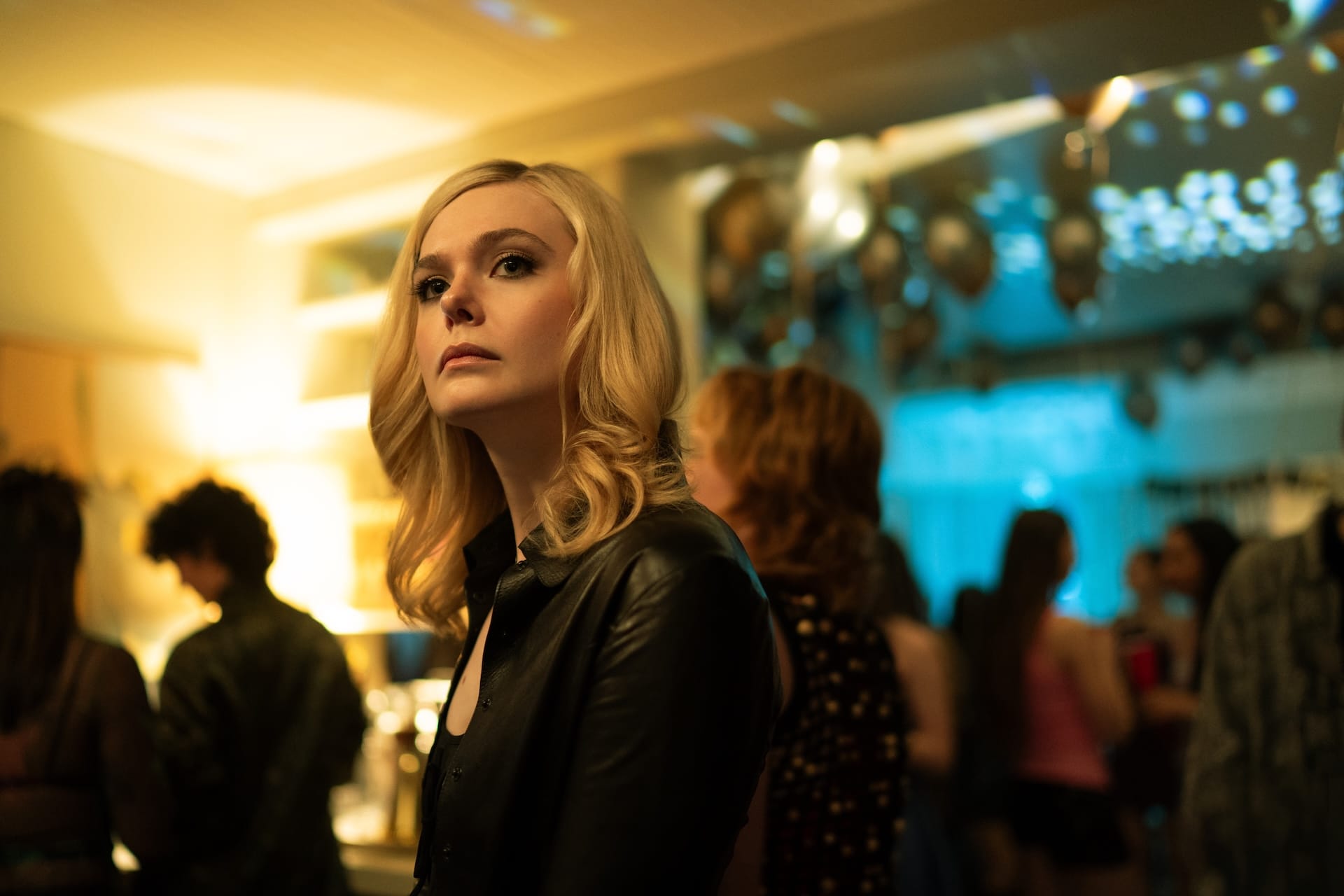
The back half of the first season shows the limitations of trying to stretch this story across eight episodes, with a second season on the way. Episodes no longer feel like episodes as much as a collection of scenes that abruptly start and end. The arc of the season lacks a cohesive structure and seeks to stretch out various conflicts. On the one hand, I’m not going to complain too much about watching great actors like Fanning, Pfeiffer, and Offerman give great performances (Offerman in particular feels like he was born to play this role, even though he’s physically different than the character in the book). But on the other hand, the story itself is one where the momentum dwindles despite raising the stakes of Mark trying to gain custody of Margo’s baby after learning of Margo’s OnlyFans page.
This all culminates in a big courtroom showdown that feels like it could have come from one of Kelley’s legal shows, like Ally McBeal or The Practice. A judge (Paul McCrane), who is A Character, gets in the faces of the various family members and asks them pointed questions as he struts around the courtroom. For a show about a young woman who has to take a big risk for her livelihood, it feels like the safest creative harbor for Kelley. Yes, the scene resolves plot tensions regarding Margo’s baby and family, but in a way that feels disengaged from her maturity. Instead, we get a male figure of authority declaring that she’s a fit mother.
A movie might have had its own issues, but the economy of storytelling would have perhaps forced an adaptation to drill down into the most important elements of the story rather than trying to expand into a story of family reconnection and also how pornography is art because it’s another form of creative expression built around fantasy (whether you agree with the latter argument, that’s the position the show takes). It’s an underwhelming payoff, the kind of tidy bow you could place on ‘90s television (you can see Peter MacNicol’s John Cage arguing to a jury that sex work is work) rather than something that required eight episodes to express.
I’m a believer that a storyteller has you for as long as they can hold you. It’s fun to joke about arbitrary limits, but a skilled narrative can build in as much or as little as it needs. Margo’s Got Money Troubles feels like it’s eight episodes because that will hold six weeks of Apple TV subscriptions (the first three episodes aired on April 15th). It’s getting a second season because that will hold another 6-8 weeks of subscriptions. But just as some books can make for shoddy movies because they struggle to fit within the span of a couple of hours, Margo has the opposite problem of filling time. It’s not a unique problem to this show, but one that highlights how the current economic conditions of filmmaking prevent an adaptation in a more favorable medium. Margo’s not the only one with money troubles.
The first season of Margo’s Got Money Troubles is now available on Apple TV.
Want to support this newsletter, but don't want a paid subscription at this time? Consider making a one-time donation.
Also, if you want to know what I thought about Star Wars: The Mandalorian and Grogu, click over to Decoding Everything.