‘Blue Heron’: An Assured, Stunning Debut Feature Explores a Family’s Fracture
With quiet confidence Sophy Romvari semi-autobiographical story examines the fallout of mental illness.

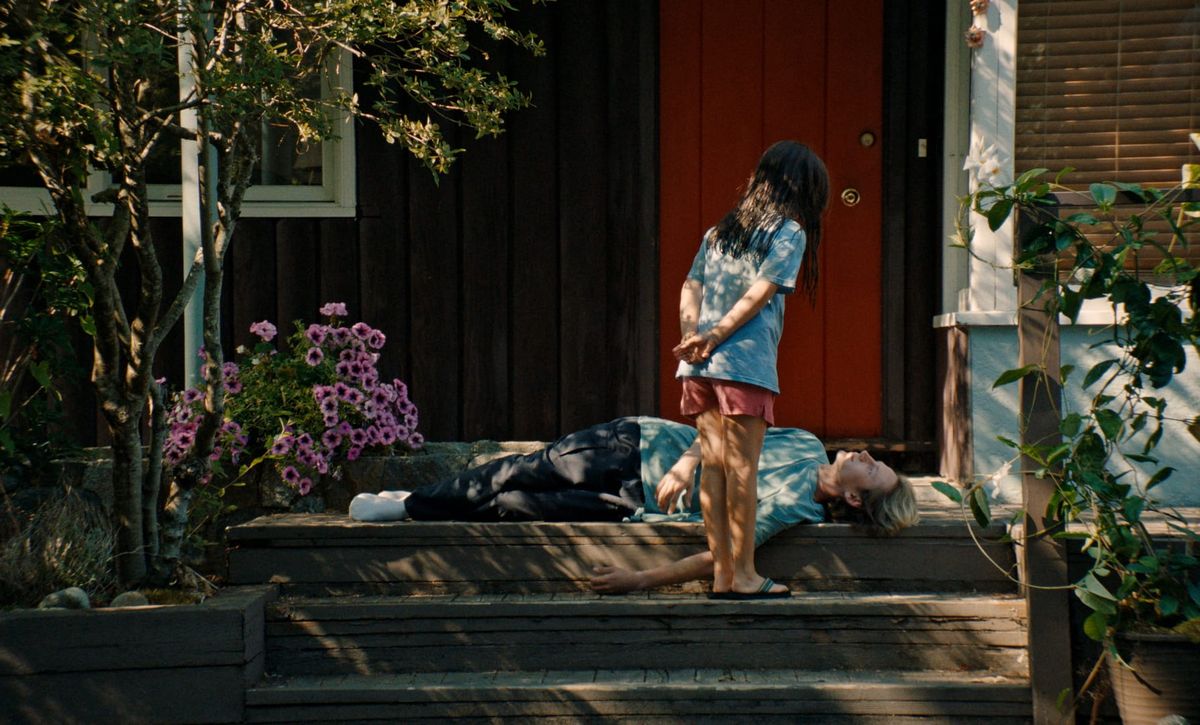
There’s nothing flashy in Blue Heron, but every time the film shifts, you can feel the ground move beneath your feet. Memory is already a slippery thing, and trying to enforce a tidy narrative onto it can often miss the emotional beats of little moments that get overlooked. With grace and poise, writer-director Sophy Romvari invites us into a vision of a past where not everything can be understood, but it can always be felt. It’s a movie that offers no easy answers or simple catharsis, but neither is it an unrelenting tragedy filled with overwhelming grief. Instead, it is an attempt at a reckoning and to show the kind of understanding and consolation that can elude us even in the best times.
Beginning in the 1990s on Vancouver Island, eight-year-old Sasha (Eylul Guven) moves into a new house with her Hungarian-born mother (Iringó Réti) and father (Ádám Tompa) and four siblings. The landscape is lush and vibrant, and the family enjoys their time at the beach. However, there is the issue of Jeremy (Edik Beddoes), the eldest sibling, who starts showing signs of what’s diagnosed at the time as an oppositional disorder. The Mother must take on most of the burden of dealing with this because, while the Father means well, he also tends to bury himself in fiddling around with their home computer. Halfway through, the story shifts, and we see an adult Sasha (Amy Zimmer) trying to understand what it meant to grow up with a sibling who was mentally ill and potentially dangerous.
Blue Heron is not a story of abuse or letting an unspoken violent trauma hang for a reveal, but rather one of an impossible situation. Young Sasha bears witness to the conflict in her family but cannot fully grasp its full dimensions. Romvari skillfully sets us alongside her, letting us share in the odd mixture of curiosity and unease. The film never portrays Jeremy as villainous, but there’s something off. Why is he just bouncing a ball against the wall instead of getting in the car when his mother asks him to? Why is he standing on the roof? Most unsettling (aside from the aviator frames in his glasses; aviator frames being the most unsettling of all prescription eyewear frames) is how he doesn’t speak. We’re left to infer so much, which allows us to share in the unease of his parents and Sasha. What is wrong with Jeremy, and if we don’t fix it, do we have to send him away to protect the younger children?
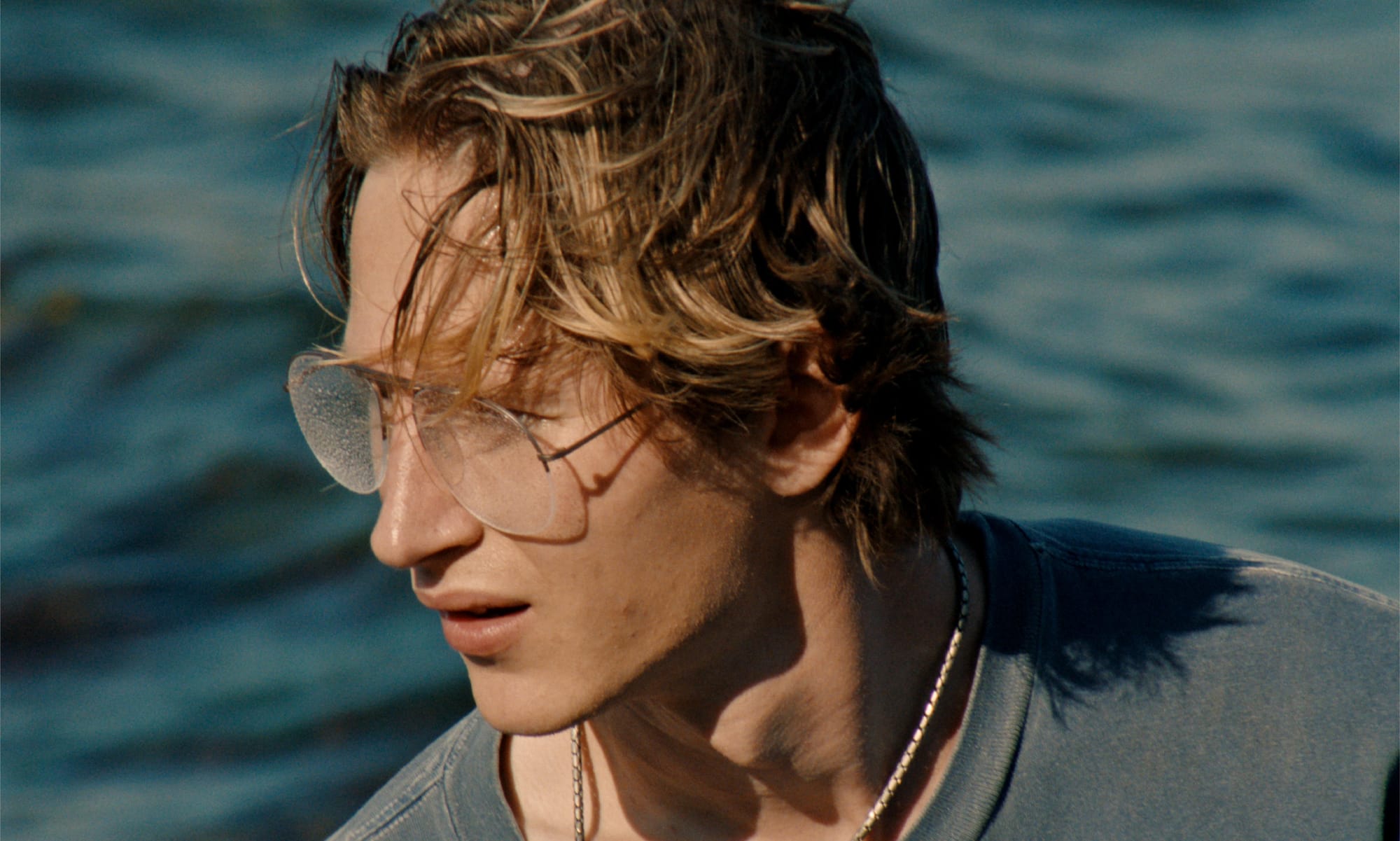
Although there’s some tension in wondering if a shoe is going to drop, Blue Heron is about searching for answers that don’t exist. We feel this acutely as the film moves to the perspective of Adult Sasha. It’s one of Romvari’s most impressive moves, shifting time and tone without ever announcing it. The brief notice we get that we’re now ahead in time is that we see a woman using an iPhone. While Sasha is now older, she’s still grappling with the past, so this can’t be a story about how the world has changed since Sasha hasn’t fully moved with it. Romvari doesn’t call attention to the shift, but the way the camera moves, the way we’re up a little higher now, rather than down at the level of a child, allows us to subliminally grasp both Sasha’s maturity as well as the confines of a world where she now works as a filmmaker seeking to understand mental illness.
As the movie patiently moves to a stunning climax, you appreciate how much Blue Heron sneaks up on you. The boldness of its narrative choices belies the quiet humanity of its characters. The story speaks to so many families who have had to face incurable mental illness, and there are no good options. No one is to blame, and yet there’s so much guilt and pain crying out for some kind of understanding. We don’t see the wreckage of the storm, but we know it’s going to hit, and in her own fractured way, Sasha attempts to speak to the fallout. No one abhors Jeremy; they also know they can’t save him.
There were moments in Blue Heron when I felt almost like a voyeur, digging alongside these deeply personal moments, but this is what Romvari is choosing to share. It doesn’t feel like therapy as much as it is a rough road to acceptance, and also an embrace of Jeremy as more than just a fracture point for Sasha’s family. To see someone as flawed, but recognizing that beneath the mental illness, as scary as it can be, there’s still a person. Someone who would draw maps or bake with his siblings. It’s a portrait of a family, and the portrait isn’t one thing, nor can it fully encapsulate any single person. The beauty of Blue Heron is the work of compassion, understanding its cost, and continuing to reflect on what cannot be changed.
Blue Heron is now playing in theaters in limited release and will expand in the weeks ahead.
Want to support this newsletter, but don't feel like a paid subscription at this time? Consider making a one-time donation.