‘The Christophers’ Is a Stunning Depiction of Creativity and Destruction, Intertwined
Ian McKellen and Michaela Coel are terrific in Steven Soderbergh’s art drama.

Understanding art is, at times, a skill only available to artists. As much as critics and casual observers can poke and prod at a work, there’s something to be said about knowing the craft by having engaged in it. You know painting because you’ve used the brushes, the canvas, the linseed oils, and so forth. You understand what’s being built because you could also take it apart. Art isn’t only a matter of creation, but also destruction, and pulling away what’s been done before. Steven Soderbergh’s The Christophers brilliantly dives into that dichotomy with Ed Solomon’s sharp, wry script of a forgery that becomes a path to creative rejuvenation. What at first seems like a simple protégé-mentor relationship or a shifty heist thriller gives way to a richer tale of stagnation, rebirth, and reevaluation.
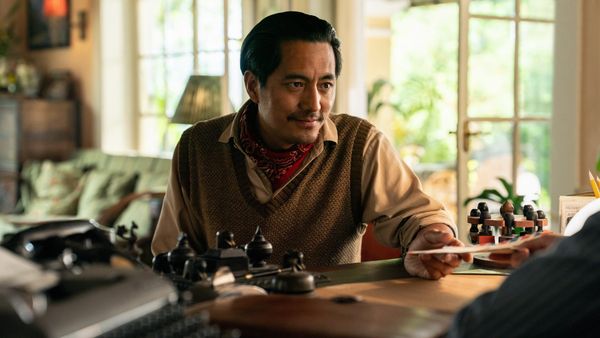
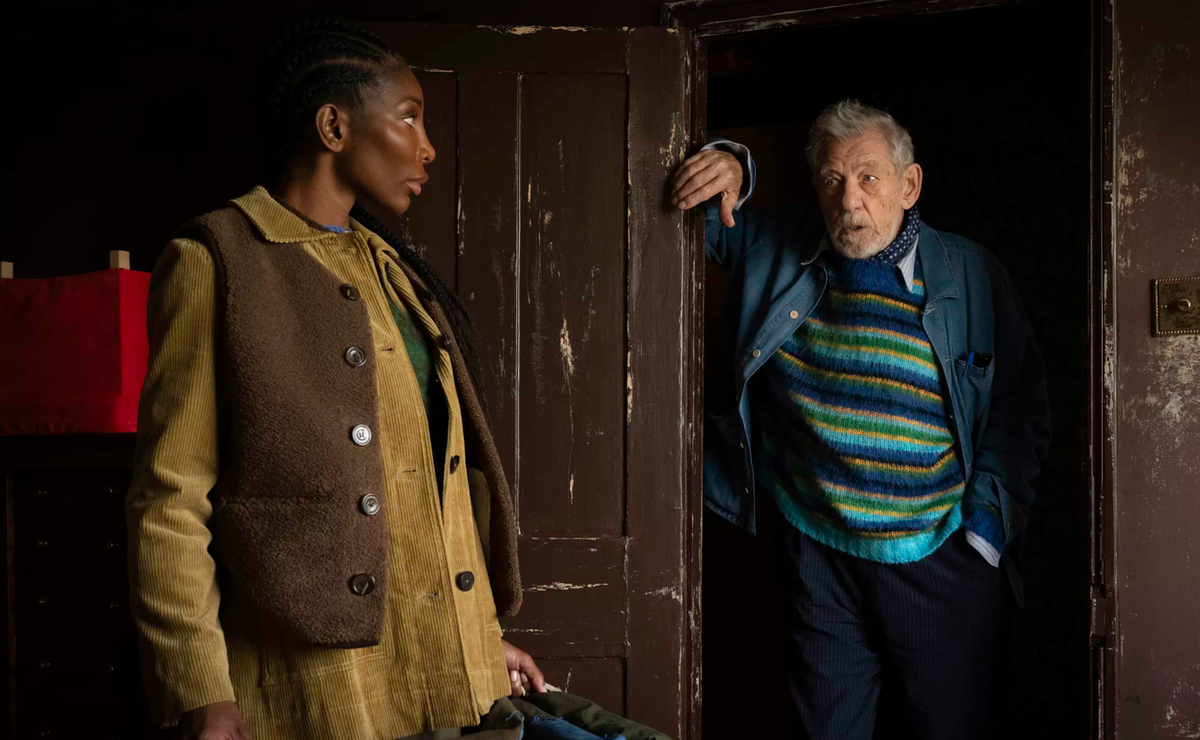
Lori Butler (Michaela Coel) is a former artist and part-time art restorer who pays her bills working in a food truck in London. Her old classmate from art school, Sallie (Jessica Gunning), and her brother Barnaby (James Corden) come calling with an offer. Their father, Julian Sklar (Ian McKellen), has hidden away a set of valuable, unfinished paintings known as “The Christophers.” They need Lori to pose as Julian’s assistant, sneak the paintings out, finish them under the auspices that they were Julian’s work, and so when he passes away, the children will have a rich inheritance to be “discovered.” Lori agrees, but when she meets Julian, she has to confront not only the artist who inspired her, but the bitter, faded figure who disappointed her. A man who both instigated and negated her life as an artist, Julian now sees through Lori that what he created is more than just his paintings or his resentment at the establishment that left him behind.
A lot is happening in The Christophers despite most of the action being confined to conversations in rooms. Were it not for Soderbergh’s skilled, patient direction, you could almost see this as a stage play, but you need the tactile nature of painting with the closeups of the canvas, paints, etc., to make Lori and Julian’s world come alive. It’s a movie where the work of painters feels lived-in (Solomon’s mother, Maxine, was a painter) and thoughtfully engaged with how they work. There’s real grit in the conversations between Julian and Lori because they’re both wrestling with what it means to be an artist, especially when you feel like the creative spark has left you. Like a fire, something has to be destroyed in order to create something new, and that fire simmers and roars in the conflict and camaraderie of the two main characters.
Watching Ian McKellen, I considered that it was possible any movie he was in couldn’t be truly bad. This is, of course, nonsense as he’s in Cats, but when you listen to him talk, it’s like sinking into a warm bath (also, his number in Cats is arguably one of the film’s few bright spots). He really is in that rarified “I can read the phone book and entrance you,” level of skill, and so when you give him a rich, complex character like Julian, it’s magic. His magnetic nature is able to lure us in even when Julian is being a selfish, conceited bastard. The character has essentially given up on painting, spending his time making Cameos for a few hundred bucks a pop, but even here, McKellen invests this gig economy work for an aging artist with comedy and pathos.
It’s said that great acting is reacting, and a perfect case study of that is Coel’s work here. A lesser actor would likely vanish under the shadow of McKellen’s towering performance, but Coel is perfect, not trying to win the scene, but quietly engaging with Julian’s rants and protestations. Through Coel’s steady gaze, we see Lori always observing, unpacking, and studying Julian like an artist examining a still life. But rather than a predator, Lori’s look is a defensive mechanism, a steely slit through battle armor where, having been wounded in her artistic pursuits, she now requires total confidence in her critical eye. While McKellen has the splashier, more loquacious character, this is a two-hander that doesn’t work without Coel’s resolute foil.
Some may have trouble parsing The Christophers. It defies easy genre classification, and those who think it may be a kind of art-heist/deception thriller will be puzzled by how Solomon’s script keeps pushing back against those expectations. At its core, The Christopher is truly one of those increasingly rare, “Movies for Adults” because it requires the maturity to engage with what makes art “art,” and why the process of creativity is one that also requires destruction. The most disheartening element of the movie exists outside its framework as Soderbergh recently admitted to outsourcing “psychedelic” elements of his upcoming John Lennon documentary to A.I., which has nothing to do with artistry but engineering prompts. The Christophers makes it crystal clear that Lori may be a forger, but she’s not a fraud. While I hope that the film’s insights into artistry won’t be lost on the audience, they sadly may have been lost on the film’s director. But perhaps A.I. is how Soderbergh has to destroy some of his credibility before reconstructing it into something new.
The Christophers is now playing in theaters in limited release and will expand into more locations in the weeks ahead.
Want to support this newsletter, but don't feel like a paid subscription at this time? Consider making a one-time donation.