James L. Brooks Is a Legend. That’s Probably Why No One Told Him ‘Ella McCay’ Is Abysmal.
The Oscar-winning filmmaker’s latest (and likely last) picture is a stunning failure on almost every level.

James L. Brooks was a titan of the second half of 20th-century Hollywood. He co-created The Mary Tyler Moore Show, Taxi, and The Simpsons. His directorial debut feature, Terms of Endearment, won him three Oscars (Picture, Director, and Adapted Screenplay), and his follow-up, Broadcast News, was even better. So in the scope of Brooks’ accomplishments, the fact that his latest movie, Ella McCay, is unwatchable dreck, doesn’t really matter, just like it didn’t matter that his previous movie, 2010’s How Do You Know, was also unwatchable dreck. If anything, it highlights how his grand accomplishments in interpersonal dramedy were high-wire acts. But for whatever reason, whether Brooks is too ensconced in his success or lacks meaningful voices to constructively critique his script, Ella McCay is an utter mess with only the faintest glimmers of what a workable movie would have been.
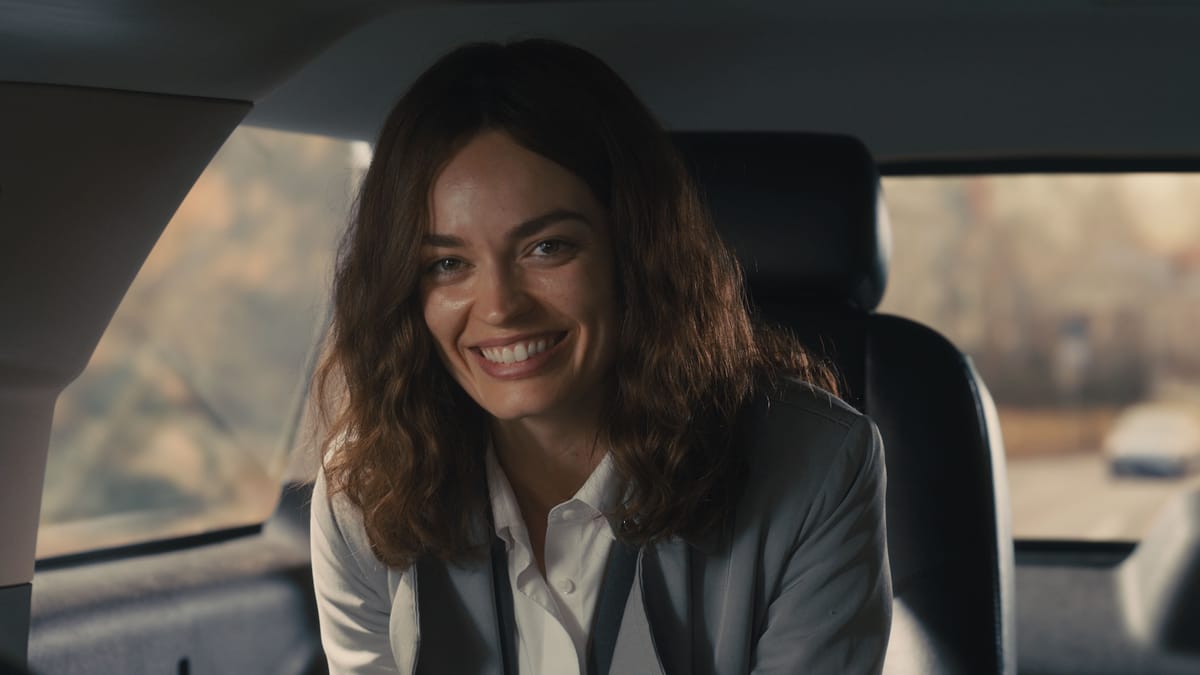
Ella McCay’s (Emma Mackey) life is marked by trauma. We know this because, like everything else in the movie, characters announce it rather than trusting the audience to come to an independent conclusion. Her father, Eddie (Woody Harrelson), is a serial philanderer whose misdeeds were going to relocate the family, but Ella decided to stick with her salt-of-the-earth aunt, Helen (Jamie Lee Curtis). Flash forward 18 years to 2008, and Ella is now the Lieutenant Governor of an unnamed state, and about to land in the governor’s chair since her boss, Governor Bill (Albert Brooks), got promoted to serve as the Secretary of the Interior. Ella lacks any kind of political acumen, but she’s supposedly a brilliant technocrat and policy wonk who knows how to improve the lives of others. She then spends the first three days of her term wrestling personal problems, including the return of her father, reconnecting with her wayward younger brother Casey (Spike Fearn), and dealing with her overly ambitious husband Ryan (Jack Lowden).
The movie kicks off with Ella’s secretary, Estelle (Julie Kavner), telling us that she’ll be our narrator, but she’s biased because she’s crazy about Ella. We never learn why this is because Estelle has no interiority or individuality, and her inclusion feels like a crutch to make us root for Ella because Brooks doesn’t think we’ll like his title character unless someone is actively telling us we must like his title character. Brooks compounds his problems by using Estelle to tell us about Ella and her life (but again, with no reason why Estelle, rather than say Casey or Helen, would tell us this) and then throwing in flashbacks featuring some horrendous digital de-aging to explain Ella’s chaotic teen years. This is the kind of overwritten nonsense that would get tossed out of a screenwriting 101 class, but because Brooks is Brooks, it gets to be in a major theatrical release.
The 2008 setting also makes it feel like this is a movie that’s been sitting in a drawer for some time, and yet Brooks’ awareness of politics, both now and then, seems about as cloistered as one would expect from someone who has spent most of his life as a Hollywood luminary. That’s not to say that those in Hollywood don’t know what’s happening in the world, but I think there’s a reason guys like Scorsese and Spielberg are making period pieces based on acclaimed works rather than trying their hands at original screenplays. It’s strangely admirable that Brooks is still plugging away at original dramedies, a feature genre that’s almost completely dead, but these movies only work if the figures in them are recognizable as people. Brooks once excelled at unpacking the absurdities, vulnerabilities, and foibles of his characters, but now everyone reads as either a caricature or a sketch with nothing real or thoughtful to undergird their motivations.
The concept of Ella as a well-meaning government do-gooder whose personal life is a disaster is a rich idea for a story (you could probably get seven seasons of a show out of it), but Brooks seems unaware of how much Ella sucks as a person. Consider that she’s supposed to be a brilliant technocrat, but one of her big ideas is for “tooth tutors” (something that’s “fun to say,” according to the characters, although I find it fun in the same way that “rural juror” is fun to say). Dentists are difficult to find in rural areas, so the government could send social workers to the households of poor people and give them toothbrushes and tips on dental care. If that sounds both idiotic and degrading to you, then you’re not alone. Furthermore, for someone who supposedly cares so much about others, Ella’s ascendency to the governorship is marked by not working at all. She instead runs between all her personal problems, which include checking in on Casey and accidentally getting stoned because Brooks seems unaware that the “I got accidentally stoned” joke was a tired sitcom subplot 20 years ago. Furthermore, none of this reveals anything about Ella beyond the gap of who the movie wants us to think she is and how her character behaves.
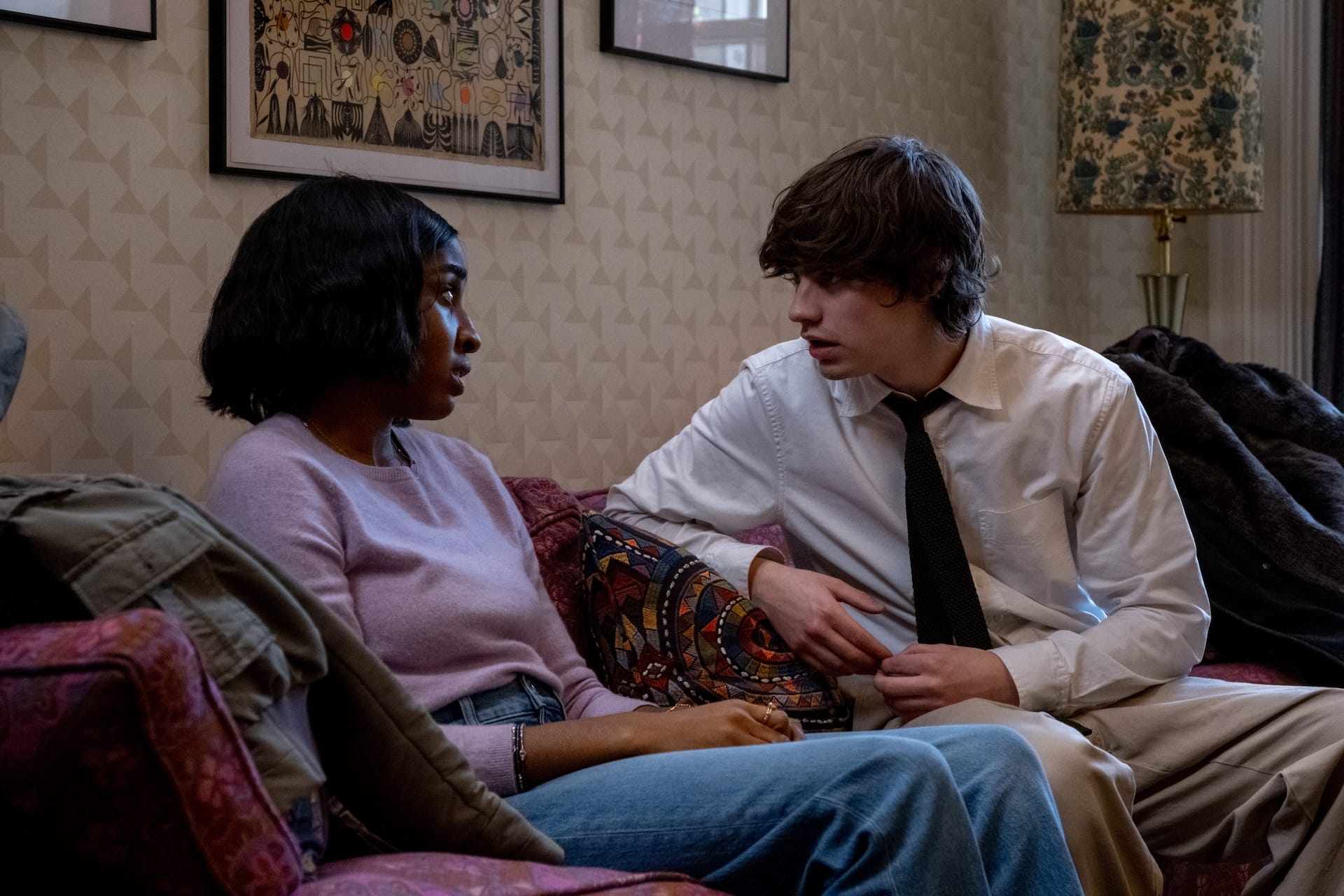
These kinds of bizarre choices slosh all around the movie’s bland surface like the time Brooks devotes to a subplot involving Casey and his obsession with his ex-girlfriend Susan (Ayo Edibiri). In Brooks’ view, Casey is probably somewhere on the spectrum, but if he can just express his feelings to Susan properly, she will take him back despite not having spoken to him in years. It’s a tossed-off plotline that means nothing beyond some vague theme of how people stumble through their conflicted emotions, but everything with Casey reeks of him being a future incel. However, since Brooks has no idea how any young person would behave in the 21st century, he’s happy to put a cutesy little bow on it and then return to the chaos of Ella’s life.
What’s most frustrating is that Ella McKay isn’t an irredeemable mess, but rather one that could have been decent if anyone had pushed Brooks to zero in on the story’s strongest aspects. You could cut the Estelle and Casey characters completely, and the movie would be fine. There’s a hint of how Ella’s tortured relationship with her father has now manifested itself in her unhappy marriage with Ryan, but the film is too scattershot to land that arc. You have great bits from Harrelson, Curtis, and Brooks, but all that shows is how Brooks is clearly more adept at writing for actors closer to his age than anyone who’s a millennial or younger.
Ella McCay is the work of a storyteller long past his prime, but without anyone to tell him so. But late works from acclaimed directors have a way of fading into obscurity or esoterica. We celebrate Billy Wilder for Sunset Boulevard and The Apartment, and forget the existence of Fedora and Buddy Buddy. Ella McCay will stand as a bizarre curiosity from a storyteller who once was able to plumb the depths of our inherent contradictions to find beautiful connections. James L. Brooks once showcased our universal humanity. He now makes us wonder if he’s ever met another person.
Ella McCay opens in theaters on December 12th.