Road Trips Are a Time for Existential Dread in the Riveting ‘It Ends’
Alex Ullom takes a simple premise and pushes it to maximum effect in his captivating thriller.

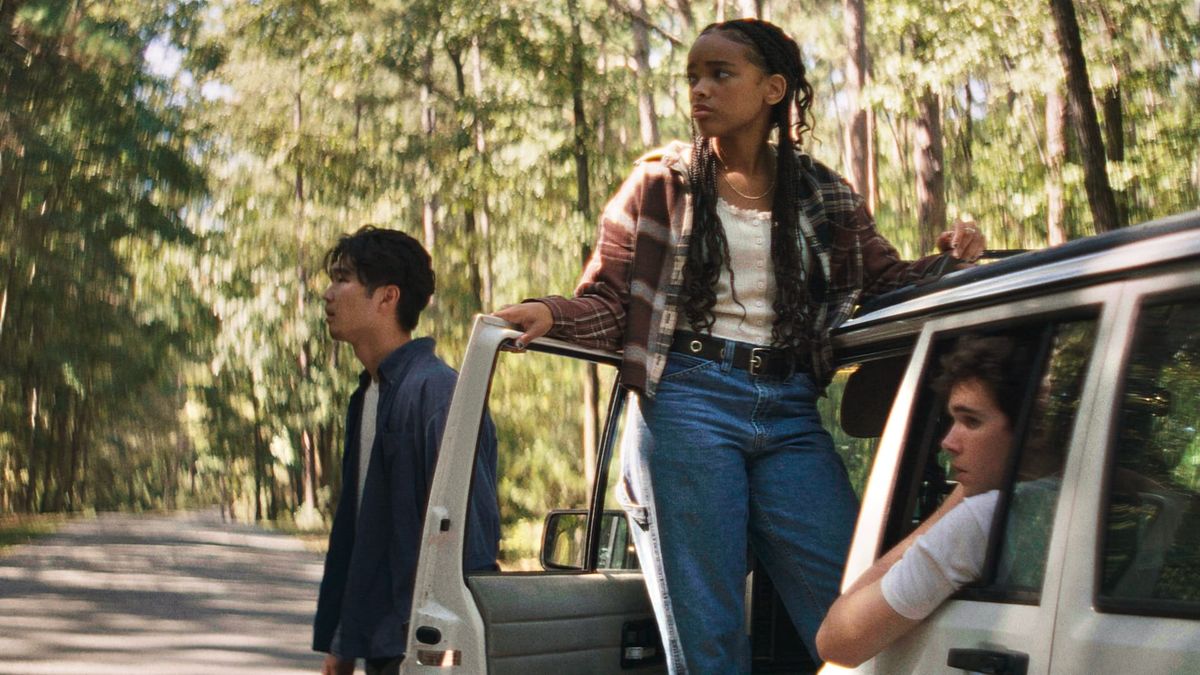
I’d heard that after Backrooms, the 2025 feature It Ends (which, after premiering at SXSW 2025 and then playing on Letterboxd Video Store, will finally make its way to theaters) should be called “Backroads.” They share the idea of a nightmarish liminal space where there are no explanations, but the environs parallel the angst and trauma of the main characters. However, while Kane Parsons’ hit movie felt more in tune with a particular kind of space formed by the Internet and gaming, the rural setting of It Ends gives it an almost timeless quality, tying it to something like The Texas Chain Saw Massacre but with psychological dread instead of gore. The idea of a space you cannot exit and searching for an explanation, and therefore meaning with it, resonates wonderfully within the tight confines of a Jeep Cherokee bearing four characters and the undifferentiated wilderness beyond. Both Backrooms and It Ends speak to the horror of a world that makes no sense, but It Ends lingers by marinating in a lack of explanations and the emotional limitation of exploration.
Tyler (Mitchell Cole) has come to pick up his buddies James (Phinehas Yoon), Day (Akira Jackson), and Fisher (Noah Toth) for a late-night food run. Their trip takes them onto some back roads that lead to a dead end even though Tyler didn’t make any turns. Their phones cease to work, and when they get out to check where they are, a horde of strangers come out of the woods to attack them. The friends discover that if they stop moving for more than ninety seconds, the horde will attack. They also realize that in the car, they won’t get hungry or need to use the facilities, nor can the vehicle run out of gas. Moreover, the backroads have no end, so to stay alive, they must drive constantly. Trapped in this purgatory, the group begins to fracture as each wrestles with the eternity before them.
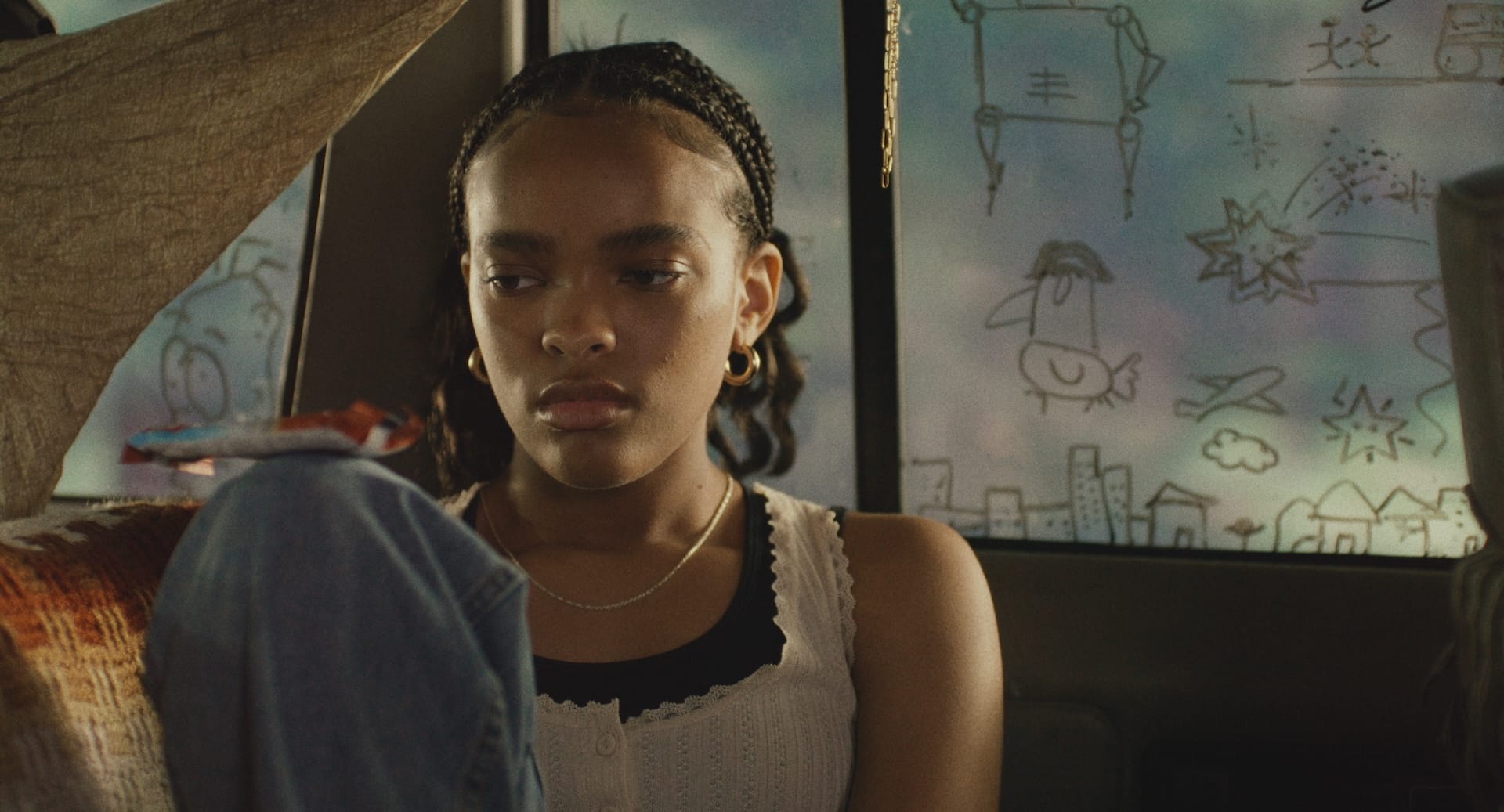
What makes It Ends particularly clever is how writer-director Alex Ullom does enough to distinguish these characters with enough information and shading before the premise kicks in; he then manages to hold tension without adding new complications. The quartet are not mere ciphers we can project our own beliefs onto but instead provide different approaches. James keeps thinking that there’s something that can be solved if they drive for long enough or find something different on the road. By comparison, Day and Fisher are more invigorated by how they lean on each other and embrace the emotions of the situation. These contrast with Tyler, whose stoic nature shows his desire to greet the purgatory with steely tenacity. The naturalism of the performances helps to sell the reality of the situation and invites us to care about these four people while still musing how we would react to the endless backroads.
From there, it’s not a bad parable about the daunting nature of life itself, especially for the post-college age of our characters. You’ve exited the last piece of your life that has any larger structure—school—and now it’s up to you to figure out the rest. Moreover, the choices feel fraught, as the characters discuss how certain choices may map out the rest of their lives. There’s a “Monkey Paw” element here where, rather than committing to any choice, the characters are now trapped in a situation where nothing can happen. They can’t age, they can’t do anything except move forward, and they’re stuck with their peers—people who have the same amount of information and life experience. It carries the terrifying banality of a nightmare where you run and run and still go nowhere. For those in the car, avoiding the unknown—to exit the vehicle and take whatever comes—is also a choice.
Some may find themselves frustrated at Ullom’s unwillingness to provide answers, but it’s the ambiguity that provides It Ends with its distinct spark. The “how” of the backroads is ultimately unimportant to how our characters react and their limited options in responding. It’s notable how Ullom centers the analytical and remote James as the one who thinks he can “solve” the scenario while missing the camaraderie with his friends. It would be nice if life were a solvable problem, but life thrives on uncertainty and the bonds you make along the way. Otherwise, you may as well be on a road trip going nowhere fast.
It Ends opens in limited release on Friday before expanding wide on August 28.