‘Jay Kelly’: When a Lifetime of Regrets Eclipses Stardom
Noah Baumbach’s bittersweet character study looks at how life always feels incomplete no matter how many roles you play.

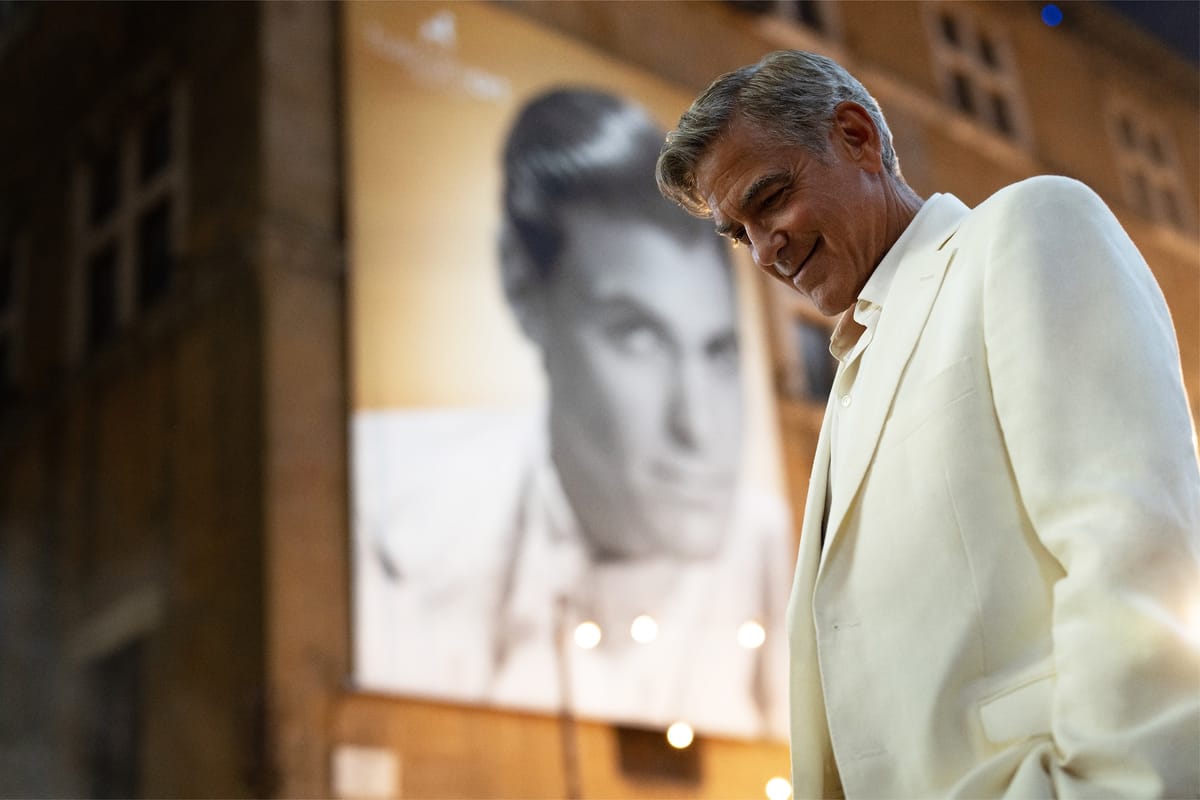
Although celebrity preceded the movies, cinema stardom is a unique beast in how it renders actors as literally larger than life. As much as actors work to channel the human experience, film actors are both exaggerated and endearing. They pull us in with their charisma, and we see their faces thirty-feet-high. Movie stars appear to have hit the jackpot, achieving wealth and fame in a society that highly values both. But as Jay Kelly observes, there is no life without regret, even at the pinnacle of what many would dream of accomplishing. Noah Baumbach’s new film works to drill down to not only the core of film celebrity but working to understand the sacrifices everyone makes, and that while we wish to define our lives by our successes, we’re inevitably defined by our regrets as well. Funny and heartbreaking in equal measure, Jay Kelly shapes a unique identity by channeling European New Wave cinema combined with outstanding performances from George Clooney and Adam Sandler as men wondering if there’s something more to lives that feel like a zero-sum game.
Aging movie star Jay Kelly (Clooney) has just wrapped on his latest feature and is looking forward to spending the summer with his youngest daughter, Daisy (Grace Edwards), before she goes off to college. However, she tells him she’s leaving early because she wants to travel around Europe with her friends. Jay’s sense of alienation only grows after losing his friend and first director, Peter Schneider (Jim Broadbent), and then absorbing the resentment of his former acting pal Tim (Billy Crudup) when the two have drinks after Peter’s funeral. Seeking to avoid more regrets, Jay bails on his upcoming movie to try and meet up with Daisy in Paris and Italy, which leaves Jay’s manager and best friend, Ron (Sandler), and the rest of the entourage to pick up the pieces. As Jay makes his way through Europe, he’s beset with memories of all the choices he made and how isolated he’s become.
Baumbach knows he’s operating in a classic mold here. The clearest antecedent is Federico Fellini’s 8½, where a famous director, struggling with writer’s block, goes wandering through his memories to make sense of his life. The European setting not only adds texture to Jay’s journey, removing it from the confines of Los Angeles and accentuating these existential crises into an older mode, but also helps draw from a longer tradition. There are times when you can see this fitting easier into an foreign/arthouse vibe (and, from what I’ve heard, this year’s Sentimental Value is that movie, although I have yet to see it), and yet I admire that Baumbach is consciously moving away from the Fractured Mirror of Hollywood and into the unique set of the ways film both bonds people and keeps them apart.
Celebrity is a bizarre, lonely world where everyone thinks they know you and yet nobody knows anybody (not that well). The movie leans into Albert Camus’ idea of the actor as the ultimate absurd man because the actor can live many lives through their work, but Jay can’t help but wonder who he is beyond those ersatz existences. As he starts thinking back on his life, he sees that he may have been a deeply selfish man, one who pursued his dream of stardom at the cost of all else, and now the taste of success has turned to ash in the face of estrangement from his eldest daughter Jessica (Riley Keough), his father (Stacy Keach), and perhaps now Daisy. All that’s left are the people he employs, and as they start peeling away from him on the European trip to take care of other obligations, the less there is of Jay Kelly as a man. All that remains is Jay Kelly: Movie Star, an economy that feeds strangers but never those closest to him.
Clooney is, of course, perfect for this role, not only because of his 20-plus years of movie stardom, but because he also evokes classic Hollywood. He reminds us of Cary Grant, who retired from acting in his 60s and whose real name wasn’t even Cary Grant (it was Archibald Leach). He reminds us of Clark Gable, who died before even reaching his 60s. These stars never graced screens when they were ravaged by age and discarded by the industry, so they never grow old. They become like statues of the gods, connecting us to big emotions while the texture and nuance of their lives dissipates and, despite their celebrity, remains as unknown as anyone else’s history. The George Clooney we know is outgoing, affable, and socially conscious, but we don’t know him. He conveys the innate charisma and majesty of stardom, but celebrity is also a profession. It’s what sells tickets, brand deals, etc. Clooney knows how much he could just coast on that charisma for any performance, but Jay Kelly allows him to explore the sadness and regrets that have made his finest dramatic roles sing. It takes an actor not only of Clooney’s stature, but of his talent, to convey his obliviousness and selfishness that lets Jay be a successful actor but also a deeply flawed individual.
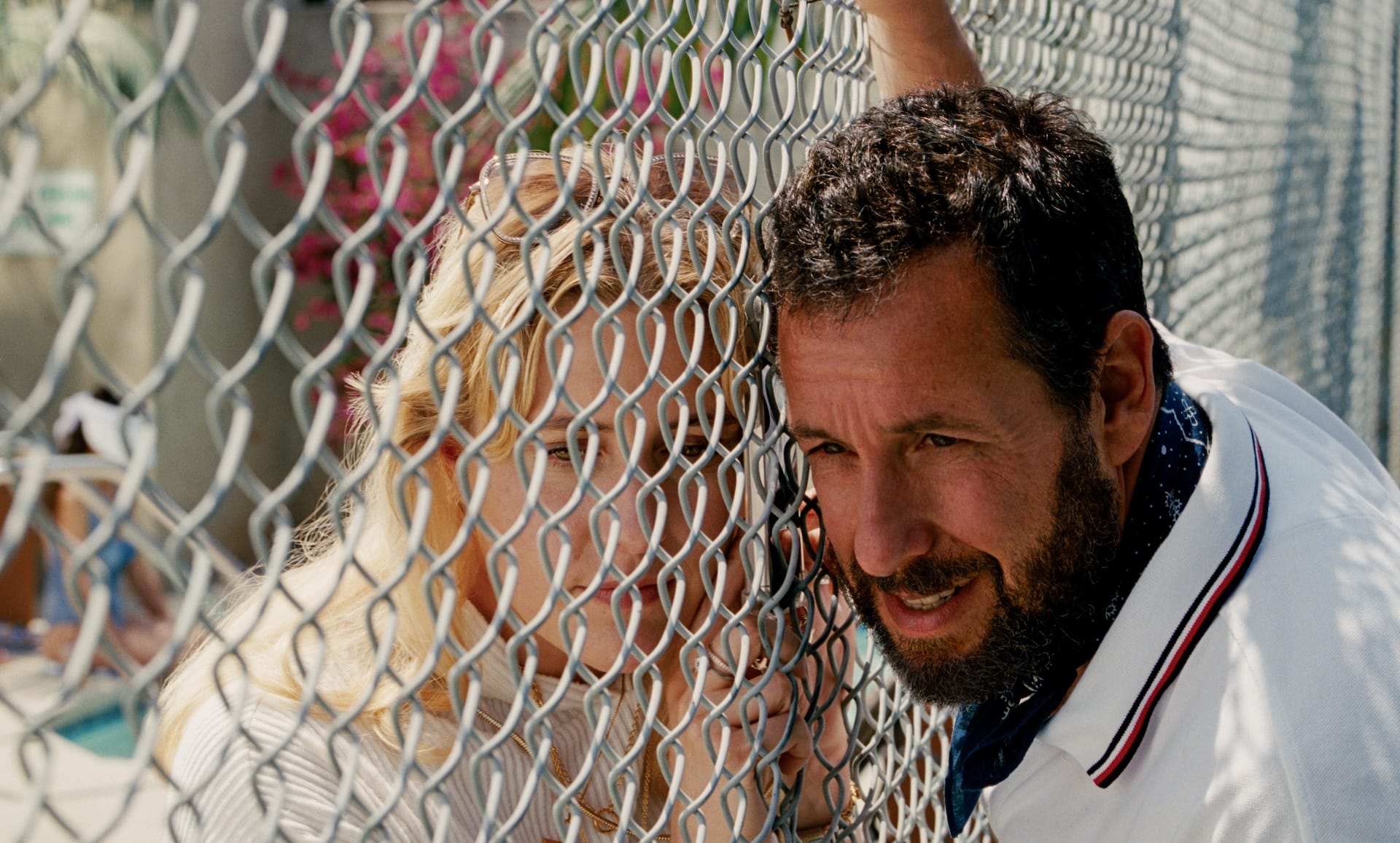
Balancing out Clooney is Sandler, who once again delivers one of the best performances of his career in a Noah Baumbach movie (the other being 2017’s The Meyerowitz Stories). While people relish the dark energy humming off his performance in Uncut Gems, I find Sandler a far more compelling dramatic actor when he’s forced to be quiet and find the wounded humanity in his characters. Ron is also burdened with regrets of how much he’s given over to Jay’s career, rushing away from his family and even a potential romance with Jay’s publicist, Liz (Laura Dern), all in service of this movie star. But are Jay and Ron really friends? We see from Jay’s selfishness how cheaply he holds all relationships when they interfere with his desires. In some unsubtle symbolism, Ron wears a handkerchief around his neck belonging to Peter. Peter bequeathed it to Jay, but Jay didn’t want it, pawned it off to Ron, and now it hangs around Ron’s neck as a symbol of how Jay’s largesse is ultimately limited even to those closest to him. Sandler gets to play almost a heartbroken former lover here, using the pet name “Puppy” for Jay even though it’s Ron who’s at the actor’s beck and call.
As sad as the relationships can be, Baumbach and co-writer Emily Mortimer (who also co-stars as Jay’s makeup artist) load the film up with jokes and absurdities, finding the strange space that actors occupy as an economic force and public icons. They mean so much to so many people, but they can also be overgrown infants, unable to make their way in the world without the unseen work of countless others. As Baumbach conveys in the film’s opening, audiences only see the actor, but countless people are humming behind the scenes, each with their own lives and difficulties, yet committed to making the performance as real as possible. Jay Kelly lives in the sad absurdity that once all these people pursue other jobs and the roles become harder to get, what is left? It’s not necessarily a matter of fleeting fame as much as an unexamined life.
There are some clunky bits of writing (especially in terms of the relationship between Ron and Liz), and others where Baumbach has a character articulate what the audience already understands. But these issues fall away when Jay Kelly hits the sweet spot between the unique life of movie stardom and the universal understanding that all lives are made up of countless regrets. The actor gets reshoots, new characters, more takes, and plenty of options. But every choice has fallout, and as much time as Jay spends trying to reconnect with his father or his daughters, those bonds can’t be rebuilt as easily as a phone call to those in his employ. The people closest to Jay will never fully adore him like the countless fans who love his performances. Like Jay, we perform every day for those around us, but our regrets have an audience of one.
Jay Kelly opens in limited release on November 14th and arrives on Netflix on December 5th.