‘The Samurai and the Prisoner’ Review: War and Crimes in Feudal Japan
Kiyoshi Kurosawa’s film is a clever critique of competing narratives wrapped in a series of procedurals.

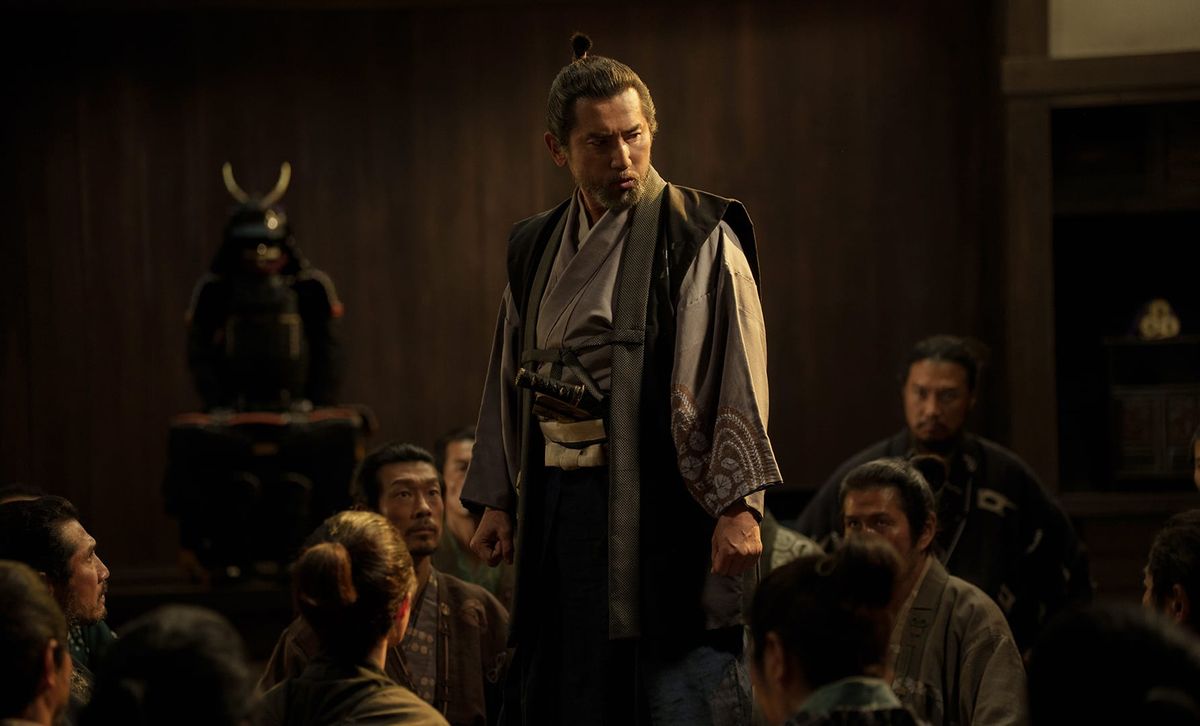
Kiyoshi Kurosawa is a filmmaker who clearly loves digging into the psychology of his characters, particularly where violence is concerned, so perhaps it should come as no surprise that his latest film, The Samurai and the Prisoner, feints at being a war film, but is far more concerned with what it means to try and find peace in a warrior culture. Using real historical figures as a springboard, as well as the novel by Honobu Yonezawa, attempts to untangle the use of violence as a matter of war versus violence as a crime that must be resolved in order to prevent further bloodshed. And yet, despite the heavy themes, The Samurai and the Prisoner feel lighter than previous Kurosawa movies like Cure and Cloud by relying on procedural mysteries that show war turning not on the amount of bloodshed, but on stratagems, ploys, and narrative. Combined with compelling lead performances from Masahiro Motoki and Masaki Suda, the thoughtful tone and approach make The Samurai and the Prisoner a distinctive entry among samurai movies.
Araki Murashige (Motoki) has turned against the warlord Oda Nobunaga in the year 1587 and operates from the stronghold of Arioka Castle in Settsu. Oda sends his brilliant envoy Kuroda Kanbei (Suda) to try and talk Murashige out of his rebellion, but Murashige refuses. He then imprisons Kanbei even though Kanbei pleads to be killed instead, not just as a matter of samurai honor, but so that Oda will know Kanbei didn’t turn traitor and thus spare Kanbei’s young son. However, Murashige is a warrior who prefers not to kill, constantly showing mercy, possibly as a matter of morality, but arguably for the practical reason that he can get more from a live prisoner than a dead enemy. This strategy proves somewhat correct as, over the course of the next four seasons, crimes emerge inside the castle grounds, and Murashige calls on Kanbei to help him find the culprit.
From its outset, Kiyoshi frequently pits the traditional against the modern with Murashige representing a modernity that sits uncomfortably within the bushido code. As Kanbei notes, there are practical reasons for keeping the code intact even if Murashige believes killing to be pointless. And yet Murashige may also be a fool; running contrary to the customs of his time frequently leaves him vulnerable, undermined, and at a loss with how to keep his rebellion intact. Moreover, there’s the larger incongruity of how war is based on killing, but murder can disrupt Murashige’s war plans. Each “case” at first appears to be the work of “divine punishment,” and yet the modern Murashige refuses to accept the work of supernatural forces. He is a man who believes in reason while surrounded by those who believe in Buddhism, Christianity, or bushido. Kiyoshi appears to ask what good is reason when surrounded by competing belief systems, especially one such as mercy in times of war.
And yet the structure and plotting ensure The Samurai and the Prisoner never feels bogged down as a philosophical exercise. Instead, it’s surprisingly fleet-footed, and we’re set alongside Murashige trying to figure out the particulars of a crime before he inevitably comes to Kanbei for help. It’s an enjoyable premise that could honestly make for a terrific ongoing series where a guy has to solve crimes in Azuchi-Momoyama-era Japan (it would be the real Samurai Cop). But within the bounds of this film, there’s the dramatic irony of a man driven to find reasonable explanations as a means of controlling the stratagems of war without seeing war as inherently insane.
The movie never plays this for comedy, instead coming to frequently bittersweet conclusions about how, despite Murashige’s emphasis on reason, he’s surrounded by acts of faith that are far more powerful. Every visit to Kanbei, which is the heart of the movie and where the performances from Motoki and Suba shine brightest, highlights how Murashige seeks a story to make sense of the inexplicable so he can keep his meta-narrative—reinforcements are coming, and his rebellion can beat Nobunaga—alive. In this way, The Samurai and the Prisoner is not about the conflict between soldiers, but a conflict between narratives. The war isn’t won by soldiers, but by what people choose to believe, and if there’s a leader who can hold those beliefs together.
Although the thrill of the mystery diminishes in the final act with a somewhat clunky resolution, Kurosawa never loses sight of the larger emotional stakes for Murashige, a man whose righteousness and moral compass are worn away by those who refuse to embrace his acts of mercy or patience. The film lets us witness his transformation from overconfident upstart to his slow realization about the difficulty of holding power once stories begin to break down. It’s a movie that examines how the battle has been fought before a single soldier even steps foot on the field, and if such rationalizations and stories are mere pretext for further brutality. As with other Kurosawa movies, he keeps the answers out of reach, preferring to keep us locked into the psychological drama that’s as captivating as any battle charge.
The Samurai and the Prisoner is now playing in theaters in limited release.
 Matt Goldberg