‘Wake Up Dead Man’ Sleeps on Benoit Blanc
In trying to throw a tonal change-up into his ‘Knives Out’ series, writer-director Rian Johnson loses some of its core identity.

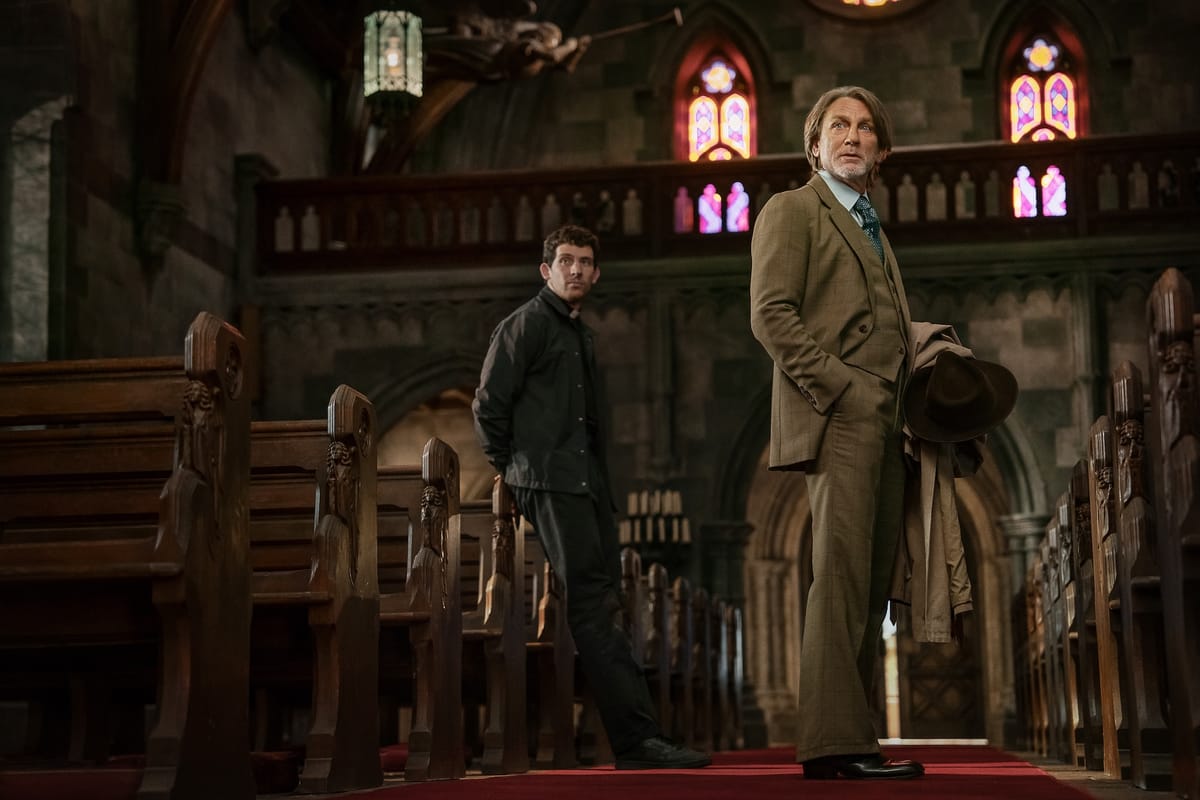
It’s a bold move to spend the first act of your Benoit Blanc movie without Benoit Blanc. It’s also a bold move to try and pull back from some of the comedy to provide a heavier examination of faith as a force of division and damnation rather than unity and redemption. But while Wake Up Dead Man: A Knives Out Mystery is a mystery film (that part of the title is not misleading), the bigger question than the “whodunnit?” is why make it a Knives Out movie at all. While Blanc is always the supporting figure to the world he enters, he’s so minimized here that he feels extraneous to the overall plot. That makes Wake Up Dead Man more rewarding as a feature for its true lead, Josh O’Connor’s troubled priest, but also clunkier both as it attempts to integrate Blanc as well as Johnson’s forthright right-wing critiques in ways that feel pedantic rather than satiric. There’s still plenty of excitement to be found in Wake Up Dead Man, but it’s also the weakest of the Knives Out movies thus far.
Reverend Jud Duplenticy (O’ Connor) is a former boxer who became a priest but hasn’t fully set aside his pugilistic ways. After punching out a deacon, he’s punished by being sent to Our Lady of Perpetual Fortitude, a parish in upstate New York run by Father (sorry—Monsignor) Jefferson Wicks (Josh Brolin). Wicks is a fire-and-brimstone preacher whose congregation has severely dwindled to those who have an appetite for his accusatory, unforgiving sermons. When Wicks is stabbed to death after his Good Friday sermon, suspicion rests on Jud, who publicly derided his fellow priest. Blanc (Daniel Craig) comes in to investigate and see who really murdered the controversial Monsignor.
But to get to Blanc’s entrance, the first 40 minutes of the movie are narrated by Duplenticy through a letter he’s writing to Blanc. I suppose the intent is to not only change the structure from the first two movies but also to build anticipation for Blanc’s arrival. The problem is that once Blanc comes on the scene, it’s a little underwhelming because we’ve grown so attached to O’Connor’s Jud. We’re not unhappy to see Blanc, but his presence now feels like an odd compromise and almost a bit random. The story is so firmly Duplenticy’s that Blanc feels diminished in a way that didn’t occur in the first two movies.
Furthermore, Blanc promises the thrill of discovery, but Johnson largely denies us that by being so overt this time around. The “how” of the whodunnit has its crescendo, but the who is somewhat obvious, especially when thinking of how Johnson casts his Knives Out pictures. The performances are great, but you can also discern who’s filler and who’s likely the killer. Thrown on top of that is how Johnson flattens out his characters, and while such flattening created some great comic moments in the first two movies, here it feels like he’s working with sketches like Lee Ross (Andrew Scott), an author whose decline in popularity leads him to embrace right-wing evangelical Christianity or Simone Vivane (Cailee Spaney) the cellist suffering from auto-immune pain who believes that Father Duplenticy can deliver her a miracle if she donates enough money.
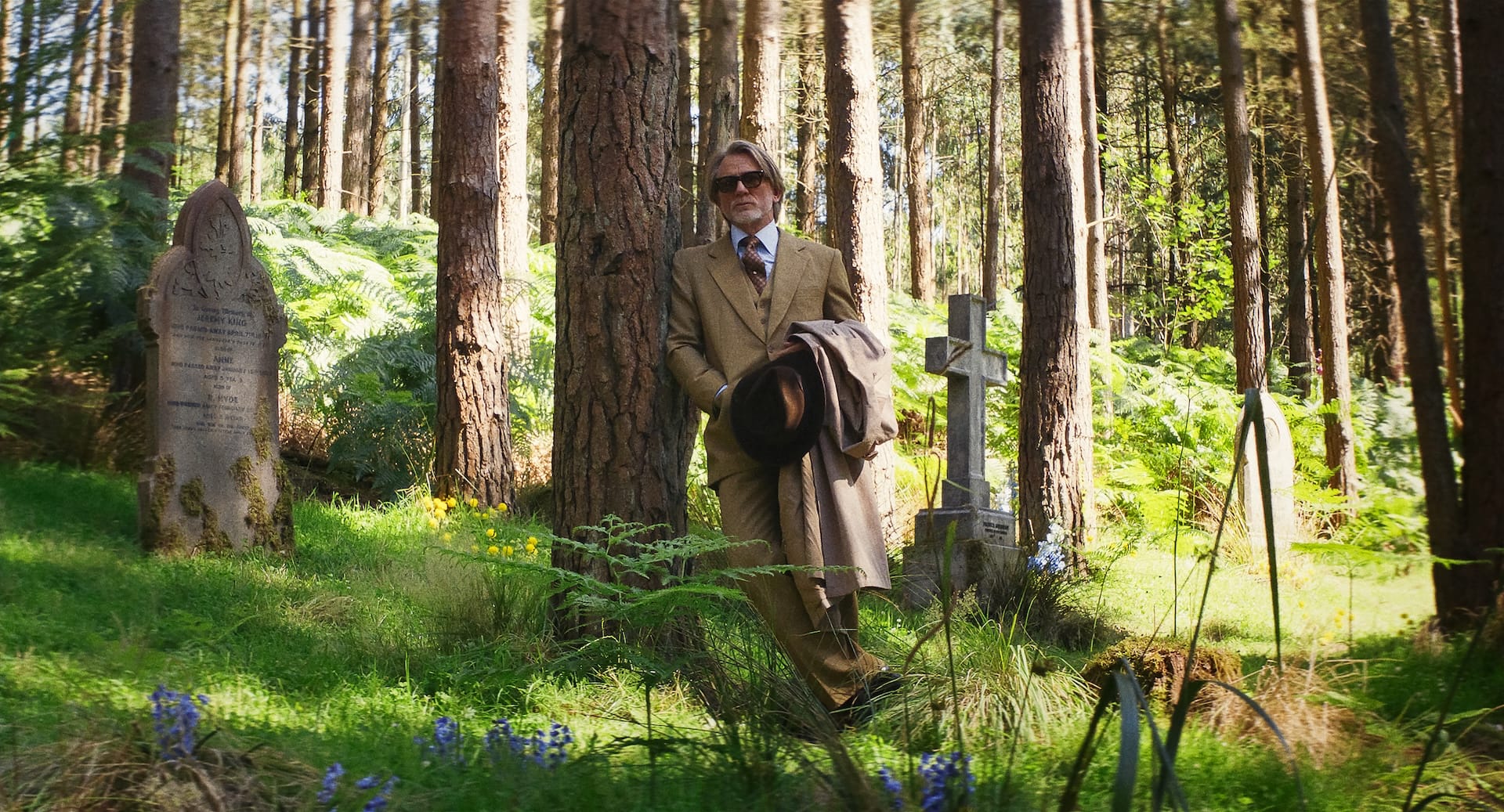
While these avatars of encroaching right-wing forces have never been subtle in the Knives Out movies, they at least felt natural in their hypocrisies. The liberalism in the wealthy Thrombey family in Knives Out vanishes the second they think the child of an immigrant may inherit their father’s fortune. The elites in Glass Onion refuse to call out their dumbest member because they’re literally and figuratively playing his game, and the audience gets the satisfying blowback of calling them out as frauds. But here, the criticism is one-dimensional as we understand the threat of Christian Nationalism, and Johnson makes no effort to disguise it as such. This renders his suspects as window dressing to Brolin’s hilarious but basic theocrat. It’s not that Johnson’s observation—that the right-wing has hijacked Christianity for wealth and power rather than service and humility—is incorrect, but it’s also a well-worn critique. Perhaps Johnson thought he was dodging an obvious hypocrisy by making Wicks an openly odious country preacher rather than a smiling pastor of a megachurch, but this only demonstrates how little space the story has to operate.
All of this leads to a Knives Out movie that feels unpolished. It still has the great jokes, the style, the incredible craftsmanship, and the amazing cast, but it’s a clear step down, as if Johnson didn’t give this script the full attention it needed before putting it in front of cameras. Perhaps that’s the result of being worn out on making whodunnits for the last six years, with not only Knives Out movies but his TV series Poker Face. Nevertheless, Wake Up Dead Man comes off as both bloated and thin. You start to feel the 140-minute runtime when the story isn’t firing on all cylinders, and Blanc’s awkward presence leaves us wondering if he truly is the plug-in-Poirot the original movie promised he could be.
I think there’s still plenty of life left in Johnson and Craig’s Gentleman Detective, but Wake Up Dead Man shows the dangers of sidelining him too long and giving him a case where he doesn’t seem particularly invested or interested in its outcome until it’s time for the grand reveal that plays as perfunctory rather than revelatory. There’s a stronger story buried somewhere in here, and it’s still far superior to most of Netflix’s forgettable original features. But hopefully the next time we see Benoit Blanc, he’ll be at the center of a far more intriguing mystery.