‘Wicker’ Delivers Sharp Satire but Occasionally Loses Sight of Its Love Story
Alex Huston Fischer and Eleanor Wilson’s film crackles with sex and dark comedy but can't weave a satisfying finale.

Marriage is a strange dance between love and economics. Its intangibles of emotion, loneliness, and love are as real as financially supporting a household. Wicker, Alex Huston Fischer and Eleanor Wilson’s adaptation of the fable “The Wicker Husband” by Ursula Willis, tries to fit itself between these concepts, telling a story about romance and respect as well as what society asks of men and women. For its first two-thirds, Wicker works wonders, presenting love separate from gendered work as a miracle in and of itself. However, in trying to come to some sort of dramatic denouement, the satiric aspects start to break down, leading to odd twists and creations that take us away from the strong centerpiece of a man and woman in love, even if the man happens to be made out of wicker.
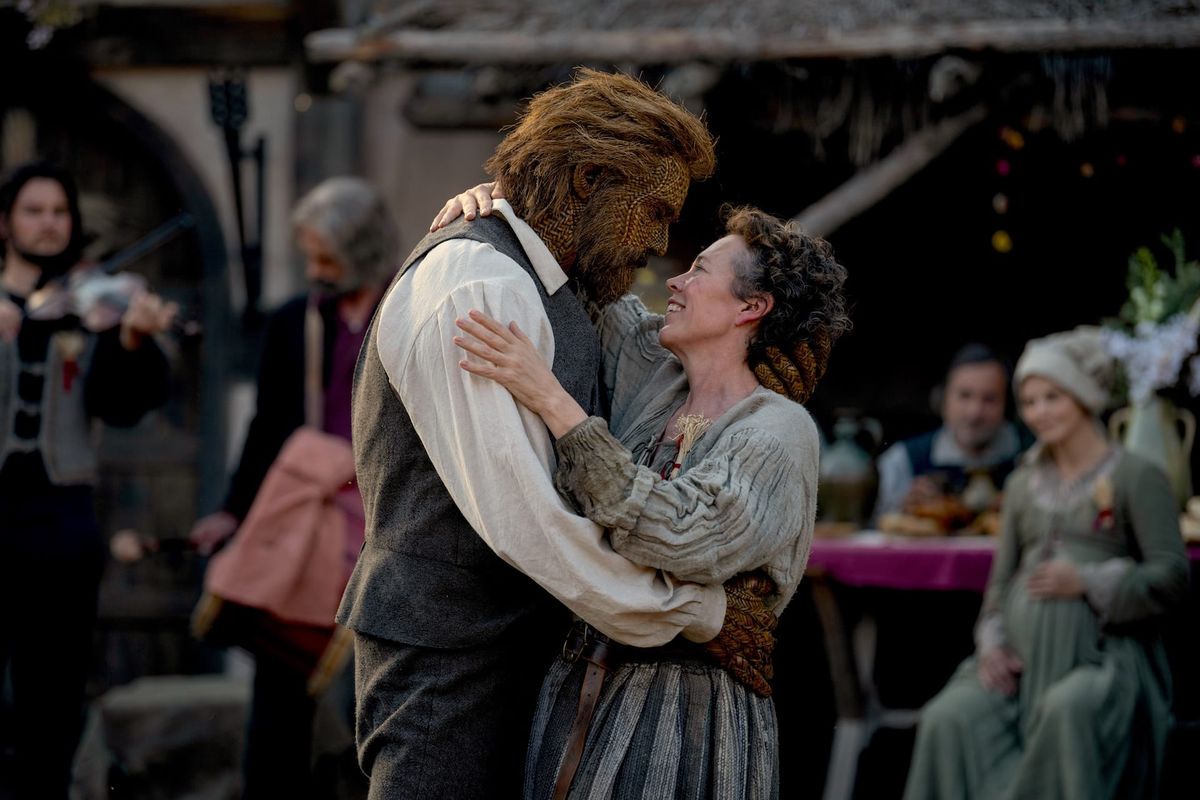
Set in a small medieval village, the Fisherwoman (Olivia Colman) lives a productive but isolated existence due to her age and self-sufficiency. The people of the village take pleasure in their current social order where men have jobs, women support those husbands, and the queen bee of the village, the Tailor’s Wife (Elizabeth Debicki), makes sure that this domestic arrangement runs smoothly for the town’s economic ends. Frustrated with this imposed loneliness and the casual cruelty of the town, the Fisherwoman goes to the Basket Weaver (Peter Dinklage) and asks him to make her a husband. One month later, he delivers a Wicker Husband (Alexander Skarsgård), and he and the Fisherwoman have a romantic relationship so healthy that it throws the town into chaos.
Wicker is at its best when it's leaning into a dry wit, prodding the social order where men can be lazy oafs, and women handle the real work. Fisherwoman is unique in that she’s not only self-sufficient but isn’t snookered by the idea that any man will do as the cure for loneliness. When the Wicker Husband comes on the scene, his decency is as unusual as his appearance. He’s polite, thoughtful, and most importantly, never takes his wife for granted. It’s an arrangement that feels particularly potent in a time when men can’t stop whining about how lonely they are at the same time that women have decided they’re fine living without a useless spouse. The Wicker Husband is magical because of how he views his wife as an equal partner, less so because he happens to be made of wicker.
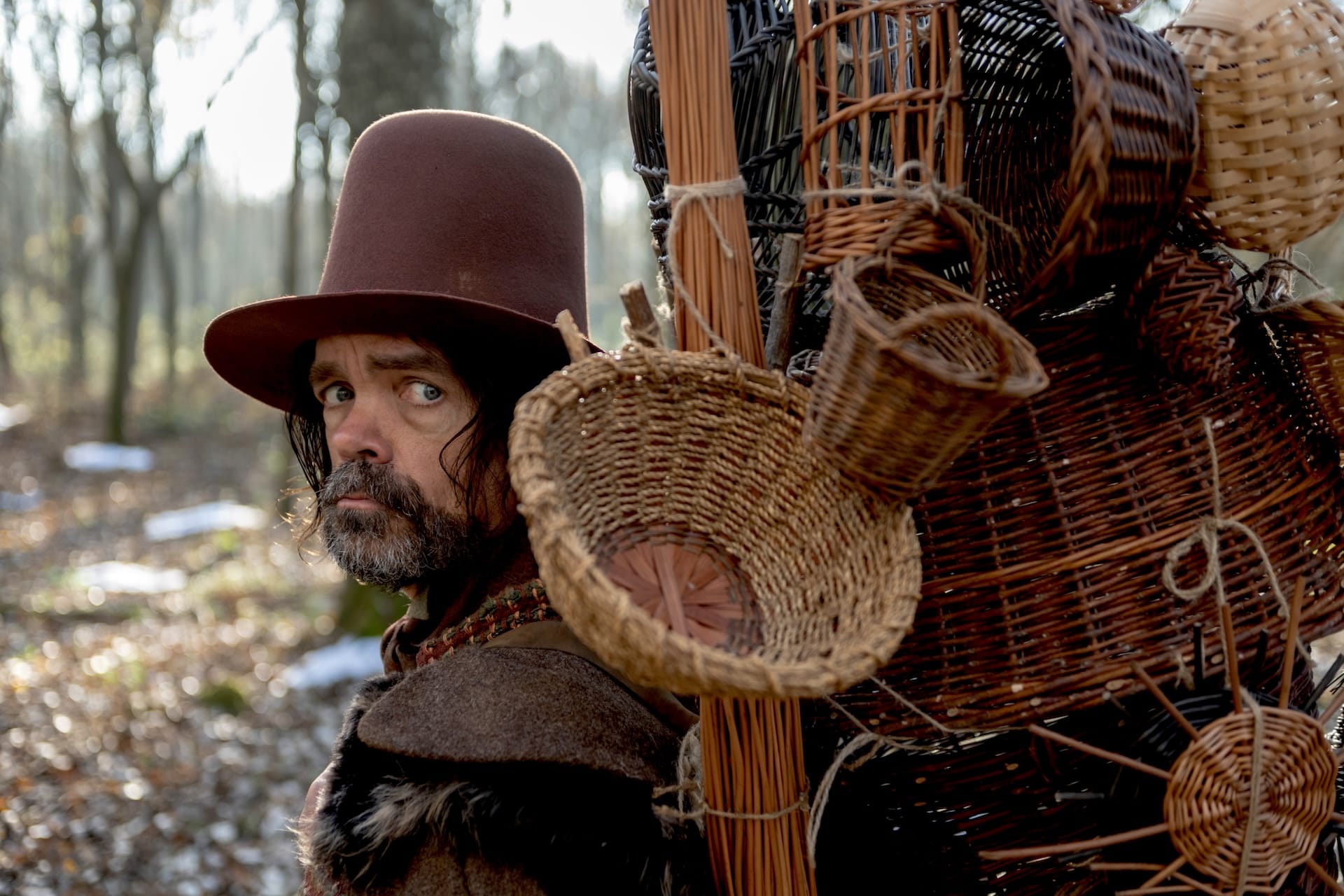
This balancing act between social critique and love story plays well for the first two acts of the movie. The script doesn’t bother loading up with why the Basket Weaver can animate life, if this is a Frankenstein’s Monster situation, why all the other women wouldn’t leave their useless husbands for Wicker Gentlemen, etc. Instead, he exists, and that’s good enough given the chemistry between Colman and Skarsgård. Debicki is also terrific carrying the social weight of the scenario, losing her grip on an artificial hierarchy where she’s not even at the top of the pyramid. It’s a strong note about how some women will uphold unequal social structures even if it denies them the full rights and power of men because at least there are women beneath them. It turns the Fisherwoman’s happiness into a personal affront to the Tailor’s Wife even though it has nothing to do with her.
Unfortunately, the filmmakers appear at a loss for where to take the story in its third act. They want to challenge the bond between the Fisherwoman and the Wicker Husband, but there’s little groundwork to make such a rift feel credible. Moreover, new elements relying on the fantastical only further separate us from the human follies that had provided such color and life to the movie. The plot developments feel like a story looking for a punctuation mark and struggling to find it, so it all gets wrapped up in a fairly unsatisfying manner that still makes the townsfolk look ridiculous, but moves the agency away from Fisherwoman and more towards the Basket Weaver, who previously was more of a plot device (although Dinklage being Dinklage, he makes the character endearing despite having little to work with).
There’s enough weirdness and wit to make Wicker a unique romantic-comedy blended with satire, and that’s before you get to the outstanding makeup work by Weta to make the Wicker Husband come to life (his look is entirely practical and made from 3D-printed elements). But there’s always a difficulty in translating the simplicity of fable to a full narrative of human desires, and that’s where Wicker starts to unravel. Thanks to the performances and the strong comedy, there’s enough to keep the film intact, even if it’s a little worse for wear by the end.
Wicker opens in theaters on October 23. Also, in case you missed it, check out my review of Wildwood, which also opens in theaters on October 23.
 Matt Goldberg