John Malkovich Is at His Best in the Funny, Tragic, and Insightful ‘Wild Horse Nine’
Martin McDonagh examines the slow, bitter death of the American Empire in his latest story of hitman buddies.

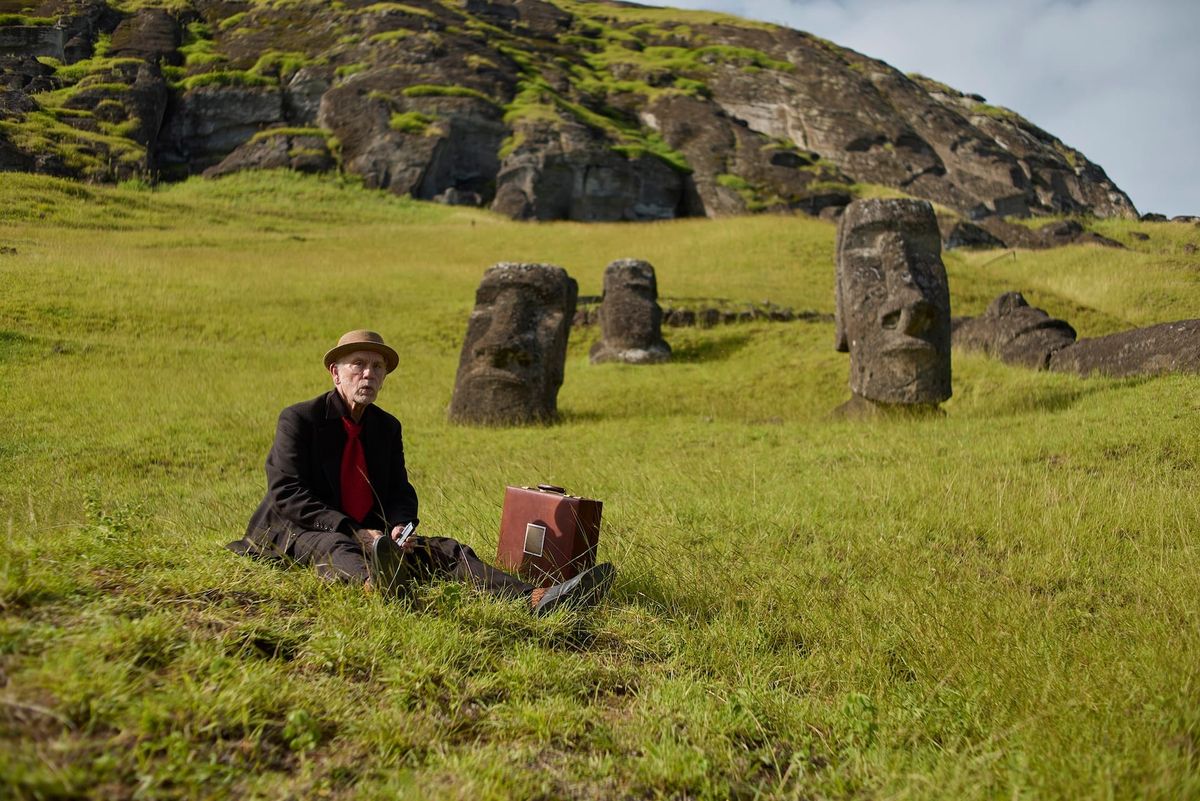
There is a way in that Martin McDonagh movies are the same. They tend to be two-handers; they feature biting, pitch-black comedy and embrace a tragic, lonely undertone beneath the surface. And yet, as a filmmaker and storyteller, he has grown since his terrific 2008 feature debut, In Bruges. Although that film features plot and character similarities to his latest work, Wild Horse Nine, you can see him pulling back his lens beyond the immediate conflict to examine a historical problem, similar to how The Banshees of Inisherin was about a broken friendship but also about the Irish Civil War. Here, he turns his attention to America’s bloody machinations through the CIA destabilizing the world. However, it’s still rooted in character, and here he has John Malkovich giving one of the best performances of his long career opposite a brilliant Sam Rockwell as two assassins in the final days of their friendship.
Set in 1973 in the months leading up to the American-orchestrated coup d’etat in Chile, CIA operatives Chris Carlisle (Malkovich) and his partner Lee Chesterfield (Rockwell) are taking a little trip to Easter Island. Chris has brain cancer, and he’s asked Lee to kill him on their trip, but Chris is having trouble remembering that request. Instead, he’s started recording his memoirs with memories of other coups as well as his participation in the assassination of John F. Kennedy. This is much to the consternation of not only Lee, but also their boss MJ (Steve Buscemi), who wants Chris dead and the memoir tapes confiscated. As Lee struggles to honor his friend’s forgotten wishes, acquiesce to his boss’ demands, and deal with his demanding wife Marge (Parker Posey), Chris muses on his last days while taking an acerbic tone with two local college students, Monica (Mariana di Girolamo) and Alicia (Ailín Salas), who are fans of Chile’s democratically elected President.
Although there’s a similar outline here to In Bruges, Wild Horse Nine is the richer movie. Chris’ cancer and loneliness (he’s estranged from everyone short of Lee, and even Lee is frequently annoyed with his pal) play as manifestations of the American empire, callously cruel and with its violence coming back around to take what remains. Chris, an experienced CIA operative, knows all the ins and outs of the business, but to what end? Has it enriched his life? Has it made the U.S. stronger? His memoirs play as an attempt to figure out what it was all for, and frequently come back to wry bitterness and shades of regret.
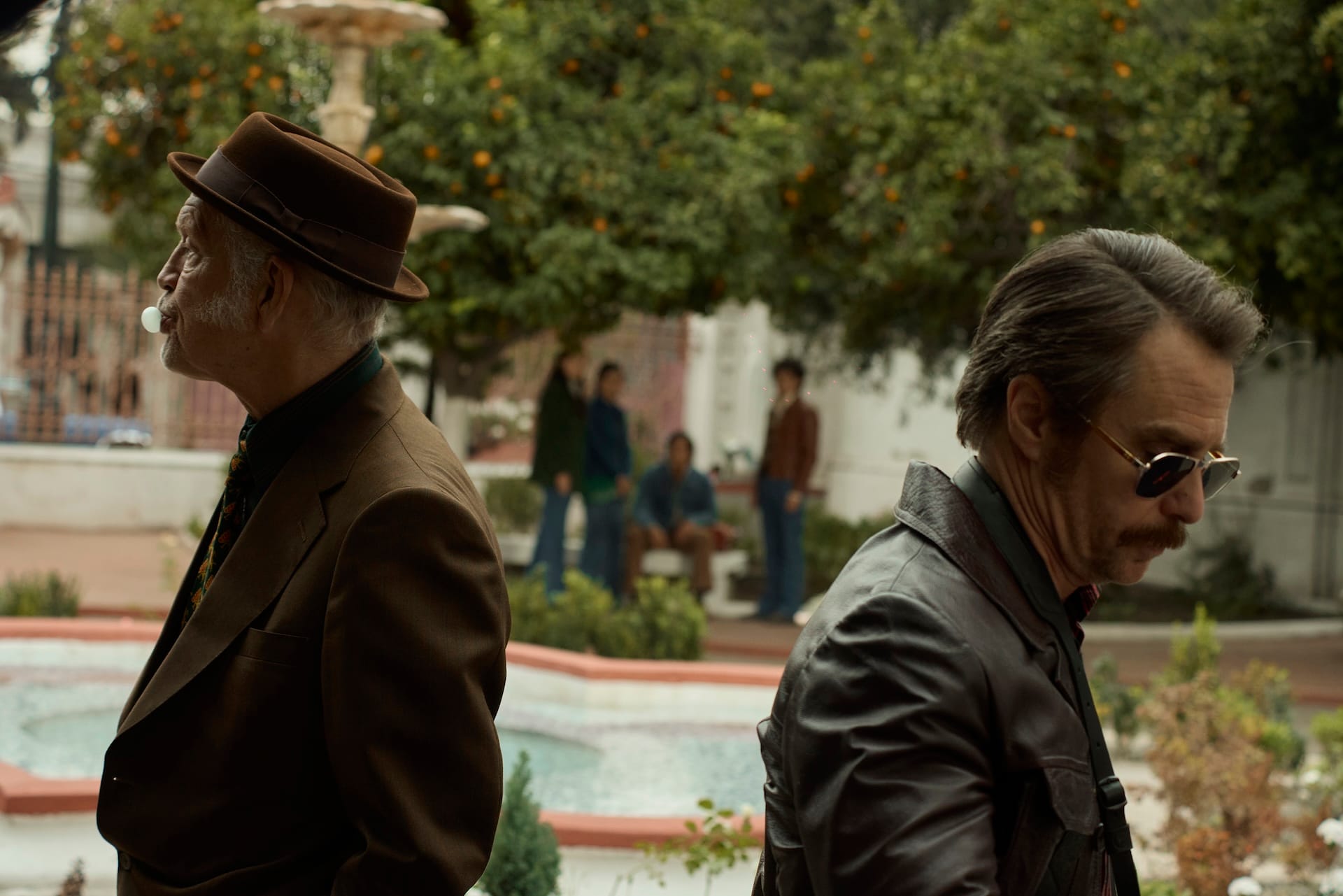
These emotions play beautifully through Malkovich’s performance, one of his best in a career that has spanned decades and never rested into easy categorization. Despite being born and raised in Illinois, the European coding of Malkovich’s persona renders him almost as a man without a country, a citizen of the world who can easily slip into various nationalities (useful for a spy!), and McDonagh utilizes that brilliantly to show Chris not as an all-American true believer, but a man unto himself. The sharpness that Malkovich has brought to some of his most memorable characters like Valmont in Dangerous Liaisons and Mitch Leary in In the Line of Fire blends here not only with some hilarious dialogue but with a deep sadness of a man who knows he’s going to hell and all that’s left to do is die.
He also has an amazing foil here in Rockwell. Although he’s co-starred in half of McDonagh’s previous efforts, Lee doesn’t feel like a retread nor a copy of Brendan Gleeson’s character from In Bruges. Instead, Rockwell showcases his gift for blending edginess with a surprisingly gentle center, and it works perfectly as he wrestles with killing the only person who matters to him (contrasted against his loyalty to Marge, whom he endures but clearly doesn’t love). Rockwell’s facial expressions in particular get some of the biggest laughs as he has no problem ceding a scene to Malkovich’s dry delivery and then looking dumbfounded or stunned afterwards.
The core relationship between Chris and Lee allows everything around them to sing, from the gorgeous Easter Island vistas to the larger political subtext of America’s actions. Chris and Lee casually mentioning to Monica and Alicia that they’re visiting Easter Island is met with, “Actually, the indigenous name is Rapa Nui,” and Chris is immediately dismissive in the way that Americans tend to be, but also speaks to his larger stubbornness. The American way must be the only way (it also highlights America’s brutal treatment towards its own indigenous population), and that combination of malignant narcissism, steadfast ignorance, and casual use of violence is how we got to our sclerotic nation. We’re not meant to mourn Chris as much as we see him as pathetic. He has been an instrument of the American empire, changed the world, will have it change further even in his absence (Pinochet’s brutal regime is only a few months away from the story’s events), and it’s all turning to ash in his mouth.
This immediacy, where we see how fast and how far America has fallen in the past fifty years, gives Wild Horse Nine its greatest punch. You don’t need to carry political and historical consciousness into the movie to appreciate it, but it helps extend the film beyond the delightful repartee between Lee and Chris as well as the strong supporting performances from reliable actors like Buscemi and Posey. I don’t know much about the Irish Civil War, but Banshees of Inisherin is still a powerhouse of a picture because it invests so much in the central relationship and the fatalism that hangs over it. McDonagh captures all the beauty of the surroundings and the love between Lee and Chris, and then splatters it with blood and hardship, showing not the violence of the carnage, but what eats away at us because we were too callous and cynical to care. As it goes in a McDonagh movie, you have to laugh to stop from crying.
Wild Horse Nine opens in theaters on November 6.
Over at Decoding Everything, I reviewed You Can See Everything, which opens in theaters on October 16.
 Matt Goldberg