‘Lanterns’: Will Anyone See John Stewart’s Light?
Is the HBO superhero series reinforcing or critiquing uplift suasion?

[This article contains spoilers for the first three episodes of Lanterns]
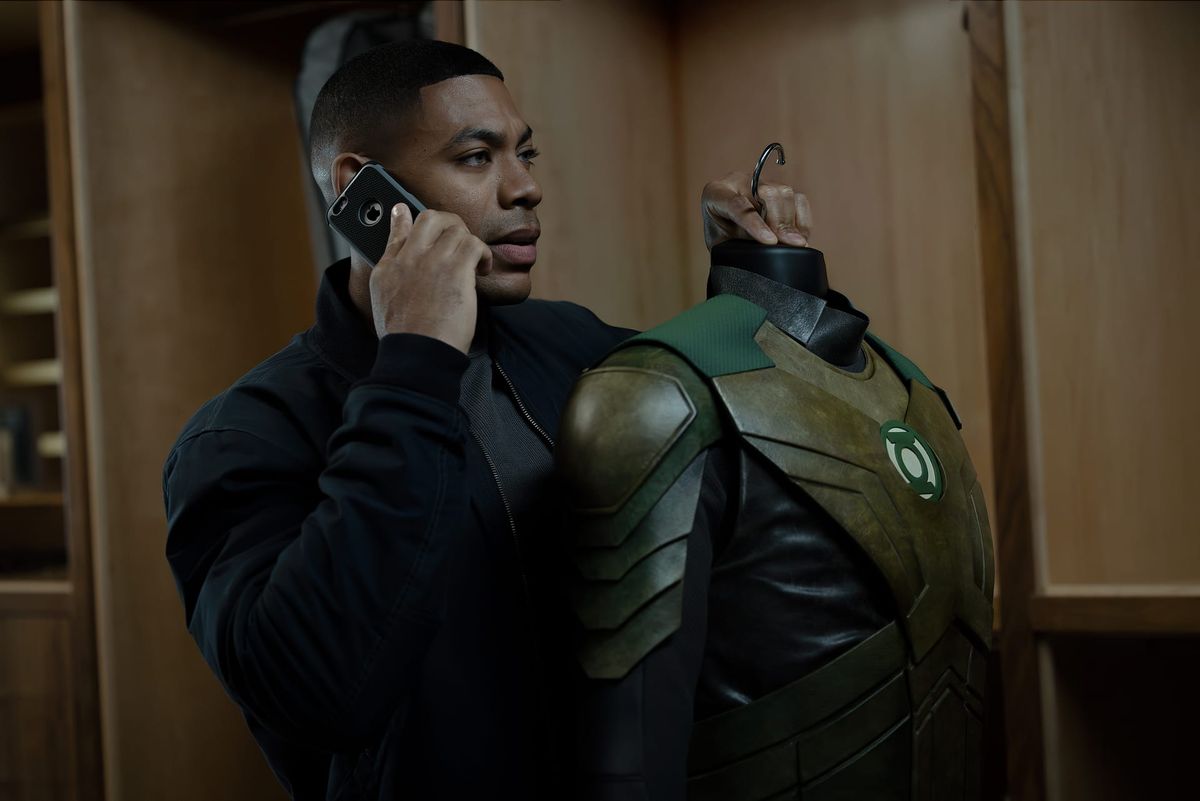
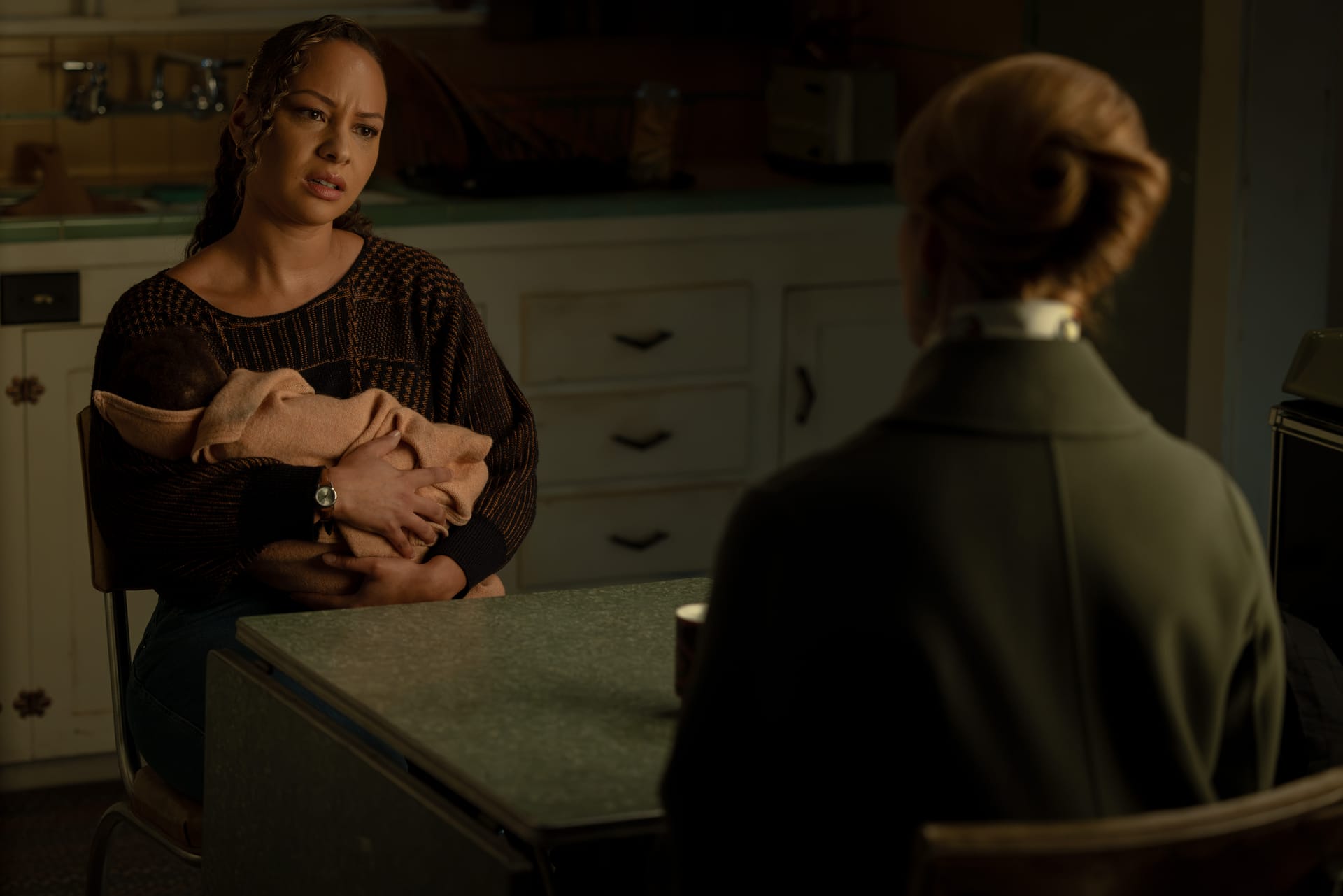
In the third episode of HBO’s new superhero series Lanterns, we got the backstory for aspiring Green Lantern, John Stewart (Aaron Pierre). We learned that his father, John Stewart, Sr. (J. Alphonse Nicholson), was considered by the Guardians of the Universe (an interstellar law enforcement agency) for being Earth’s first Green Lantern (essentially a space cop), but they rejected him for being afraid because Green Lanterns must be fearless. After meeting with the Guardian Lianna (Laura Linney), John's mother, Bernadette (Jasmine Cephas Jones), resolves that she and John’s infant son, John Jr., must be raised to be fearless so he can become Green Lantern one day. This leads to a lot of, shall we say, questionable parenting choices like shooting apples off his head in the backyard and dropping him off in bad neighborhoods. When John finally gets called up, it’s because the Guardians are considering him as a replacement for the current Green Lantern, Hal Jordan (Kyle Chandler), but Hal thinks it’s only to have a trainee/protégé. He’s not happy about the idea, but John feels confident that his life’s work will finally pay off.
Bernadette’s decision to subject her young child to such rigorous and demanding training stems from a desire to be seen. As she tells Lianna, “Even in space, y’all don’t consider us.” Bernadette is the episode’s voice of racial awareness, talking about what it means to be afraid as a Black person in America and continuing to show up and fight. Midway through the episode, she explains to the young John why she and his father push him so hard. “Sometimes, a Black man has to raise his own hand,” she says. “Doesn’t mean you’re not good enough; doesn’t mean you’re not better. It just means they don’t see us. So we make ourselves seen.”
In his 2016 book Stamped from the Beginning, author and historian Ibram X. Kendi explains “uplift suasion” and why it has failed:
Historically, Black people have by and large figured the smartest thing we could do for ourselves is to partake in uplift suasion—a strategy as unworkable as White self-sacrifice. Beginning around the 1790s, abolitionists urged the growing number of free Blacks to exhibit upstanding behavior before White people, believing they would thereby undermine the racist beliefs behind slavery. Black people would acquire “the esteem, confidence and patronage of the whites, in proportion to your increase in knowledge and moral improvement,” as William Lloyd Garrison lectured free Blacks in the 1830s.
The history of racist ideas shows not only that uplift suasion has failed, but that, generally speaking, the opposite of its intended effect has occurred. Racist Americans have routinely despised those Black Americans the most who uplifted themselves, who defied those racist laws and theories that individuals employed to keep them down. So upwardly mobile Black folk have not persuaded away racist ideas or policies. Quite the contrary. Uplift suasion has brought on the progression of racism—new racist policies and ideas after Blacks broke through the old ones. (p. 505)
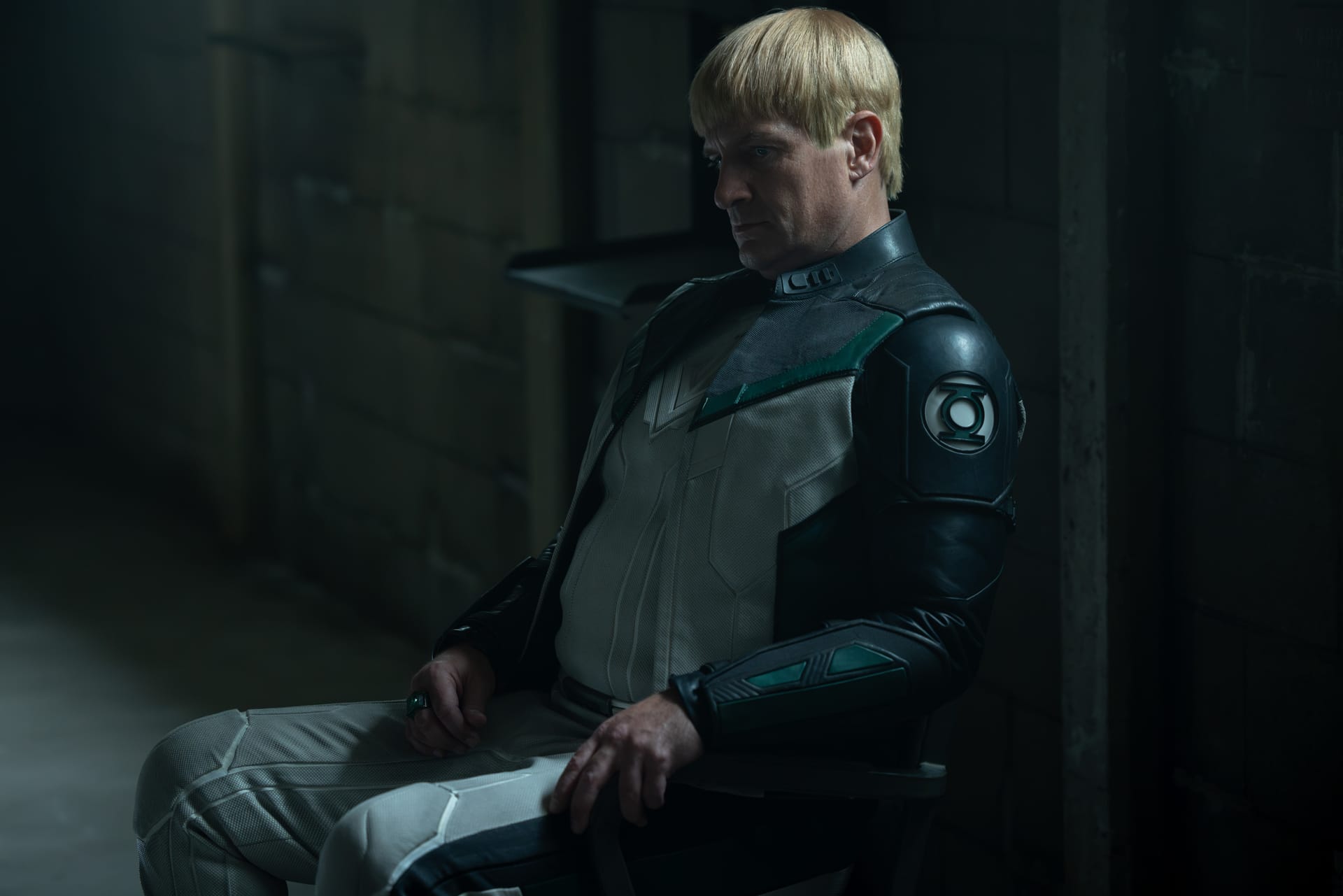
The question for Lanterns is if the showrunners know this too. It’s possible that it does. Kendi notes how the racist backlash to Barack Obama’s presidency illustrates this point, and it doesn’t feel accidental that Lanterns has mostly taken place in 2016, with the majority of young John’s training occurring before Obama’s election in 2008. Furthermore, the brief glimpse we’ve seen of the show set in 2026 reveals that John Stewart still doesn’t have the Green Lantern ring. However, we do know of another guy who does—Guy Gardner (Nathan Fillion), a guy who appears fearless in the same way a meathead jock would be fearless. From what we’ve seen of that character in James Gunn’s Superman, he doesn’t know fear because he’s too dumb to be afraid. Imagine working your whole life to be the perfect Green Lantern, and then this guy has a ring.
However, the show could also bail, reinforcing uplift suasion or simply abandoning any insightful observations whatsoever. We saw that happen with Marvel when the series The Falcon and the Winter Soldier wrestled with what it would mean for a Black man to be Captain America. The series gets into a complicated past with the buried history of a Black man, Isaiah Bradley (Carl Lumbly), who had Captain America's super-soldier powers. Moreover, after the retirement of Steve Rogers (Chris Evans), the government gives the shield and title to the morally gray John Walker (Wyatt Russell) simply because he’s white. Sam Wilson/The Falcon (Anthony Mackie) does become the new Captain America, but then Marvel decided to do nothing with that in Captain America: Brave New World. Similarly, they’ve bailed on a second season of the acclaimed show Wonder Man as well as the movies Blade and Armor Wars, all of which would have featured Black superheroes. They still have Black Panther III coming, but as Wonder Man star Yahya Abdul-Mateen II noted on these cancellations, “the optics are obvious.”
My hope is that Lanterns leans into the limits of uplift suasion because that feels true to our reality. The more that Black people in America fight to be recognized by white Americans, the more their concerns and identities are dismissed. The Hal Jordan of Lanterns isn’t overtly racist, but you feel like he’s about two seconds away from muttering something about “affirmative action.” White society demands a Black person must be perfect to receive any recognition, but someone as sloppy as Hal Jordan can do what he pleases. And as Kendi points out, even if you succeed, racist forces will diminish and ignore you.
We saw this only a few weeks ago in the New York Times during a discussion about the “excesses of woke and MAGA” (perfect NY Times subject, no notes). During the discussion, columnist Jamelle Bouie, an expert on American history and the treatment of Black people, explained to moderator Michelle Cottle how “woke” was a term with real meaning in the Black community that had been appropriated by racist forces:
I want to say two things, just to establish them right now and kind of to say where I stand on some of this stuff. The first thing is: “Woke” is a term that comes from African American vernacular. It has its origins in the 1930s, and it has traditionally meant something along the lines of: Be aware of the ways that this society is not built for you. Be aware of the ways that you may face disadvantage and oppression in this society. Again, this is a term that emerged in Black vernacular in the 1930s. And that is, as far as I’m concerned, what the term means.
Before he can continue, Cottle fires back, “You are exactly one of about 20 people who think that’s what the term means…I always love the historical reference, but that ain’t where it’s gone.”
It’s a telling moment where Cottle (who is white) is being told by a Black man the history of a word and what it means to Black Americans, and for her, those people don’t count. There are only 20 of them. What it means now is what white conservatives say it means, which is basically “bleeding heart liberalism.” And once you confine it to that sphere, it’s no longer a real concern, but about the excesses of the left no different than the excesses of the right, regardless of what those things look like in practice.
I didn’t want to make too big of a political digression, but I do think it’s important to understand where we are now and how an expensive TV series is meeting the culture. Lanterns explicitly asks viewers to examine the racial understanding of John Stewart, but we don’t know if that racial understanding exists as a critique of our current moment or a reiteration. The episode’s writer, Vanessa Baden Kelly, is a Black woman, and during the “Inside the Episode” featurette, she acknowledges that the Bernadette character is a bit of a mouthpiece for her concerns as a mother of a Black boy. But the episode itself seems constrained by generalities. Bernadette explains to Lianna what it means to be brave as a Black person in America, but she also wants John to be an icon to all by becoming Green Lantern. Where do those ideas meet? To put it another way, knowing what we’ve seen in America lately, do we think people would automatically embrace John Stewart as Green Lantern, or would they question if he was really born on Earth?
There are still five episodes left in this season, and we know the show’s co-creator, Damon Lindelof, isn’t afraid of addressing race in America as we saw in his adaptation of Watchmen. But much has changed since that show aired in 2019. The energy of the left and protests over the murder of George Floyd contributed to Joe Biden’s election in 2020 but are now seen by centrists like Cottle as “excesses” that led to Donald Trump’s reelection in 2024. Will Lanterns meet the challenge of its racial commentary, or will it, like Marvel, abandon that complexity and recognition in favor of vague homilies about mutual respect? Will John Stewart get to shine in all the intricacies of what it means to be a Black man in America, or is this a story about Hal Jordan, a deeply flawed white guy, coming to appreciate an exceptional Black man? Here’s hoping we get a good story about Green Lantern and not another Green Book.
Lanterns airs Sunday nights at 9pm ET on HBO.