‘Raise the Red Lantern’ Returns to Theaters as Potent and Stunning as Ever
Zhang Yimou’s classic 1991 film has a new 4K transfer that highlights its powerful visuals.

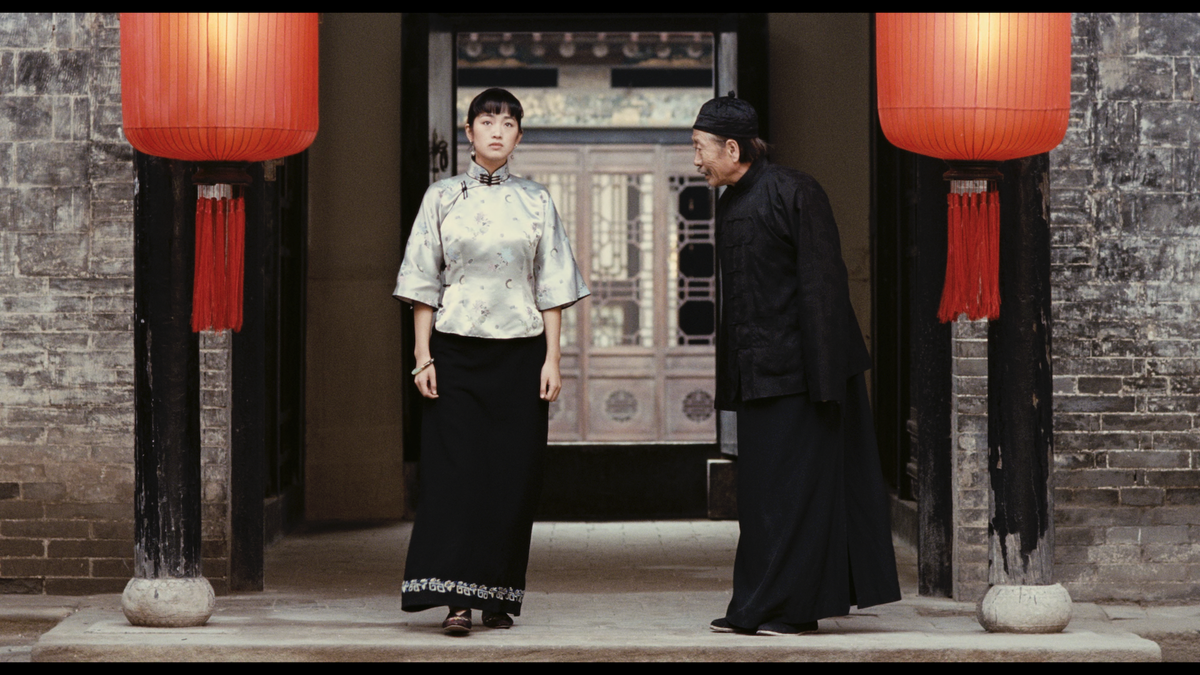
When you watch Raise the Red Lantern, one of the striking elements is how director Zhang Yimou limits his camera movement. Although he would go on to helm the flowing wuxia pictures as Hero and House of Flying Daggers, his acclaimed 1991 feature is fittingly static, highlighting the lack of mobility for its female characters. The filmmaker constructs a series of exquisite dollhouses, contrasting these wealthy interiors with the stifling power dynamic and lack of individuality of the inhabitants. It’s a movie that, especially with its new 4K transfer, highlights how much visual storytelling you can do with basic composition rather than elaborate Steadicam or dolly shots.
The film follows Songlian (Gong Li), an educated woman in 1920s China, who is forced to marry into the wealthy Chen family after her father's death and the loss of the income his tea shop provided. She is Chen’s fourth mistress, following the elderly first wife, Yuru (Jin Shuyuan), the disarming second mistress Zhuoyun (Cao Cuifen), and the temperamental third wife Meishan (He Saifei). Although Songlian tries to assert her place in the hierarchy of Chen’s mistresses and, she soon comes to realize she is little more than an outfit pleading for her master’s attention. Every night, he sets out a lantern denoting which wife will get his affections. The more affection a wife receives, the more attention she gets from the servants, and thus the greater comfort she enjoys. Even Songlian’s minor attempts to assert her individuality like eating her preferred vegetarian dish of spinach and tofu or playing the flute that belonged to her father, are subject to the machinations of Chen and the other wives.
The American version of this movie is easy to see. Songlian, although she experiences friction with the other wives as well as her servant Yan’er (Kong Lin), soon wins them over or defeats them, and then, in a show of feminist heroism, realizes that true freedom comes from leaving Chen and embracing her strength. That’s a fine tale, and one that fits with a traditional American fable of gathering community strength for individual expression. That is also…not this movie, and Raise the Red Lantern is far more interesting for what it doesn’t do and where it continually thwarts and frustrates Songlian.
Neither Zhang nor Gong forget that Songlian is a 19-year-old woman with limited knowledge of the world or even herself. The fickleness of her character, who can be both protective as well as domineering, speaks to a journey of self-discovery she’ll never get to take within the confines of Chen’s estate. Her precarious financial situation has already curbed her education with characters noting how she went to university only for Gonglian to reply she only attended for six months before her father’s passing forced her to withdraw. She is an educated woman compared to women who never went to college, but a far cry from the self-actualization that was promised before she reluctantly sought the stability of being Chen’s fourth wife (the film observes that with her father dead and now in the care of an indifferent stepmother, Songlian is effectively an orphan). Her limited range of options are reflected in the tight confines of the surroundings, with Zhang rarely showing anything, even sky, outside the walls of the estate.
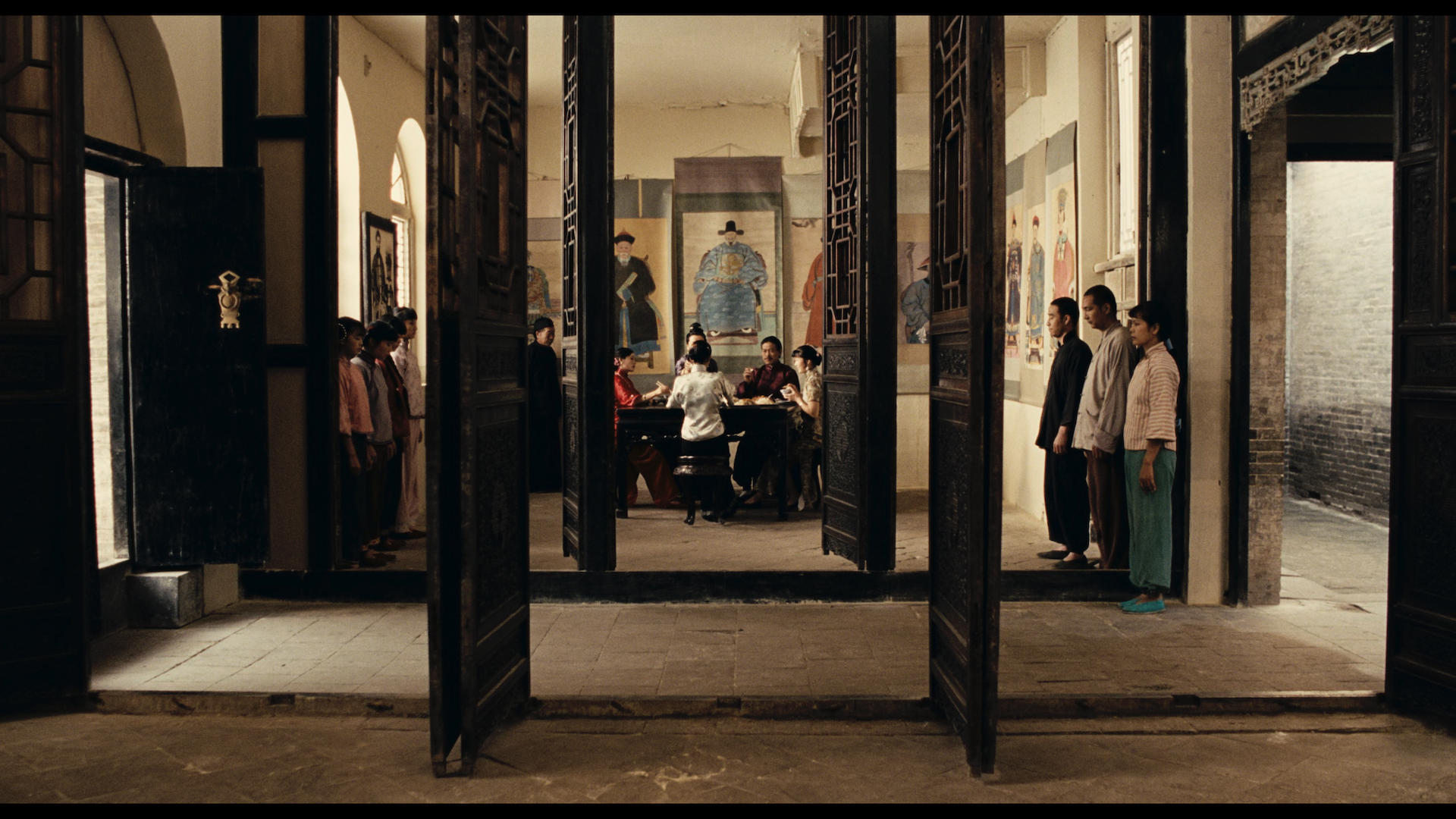
It’s a clever inversion of visual longing. While other movies express such desire as a small figure contrasted against a great landscape, juxtaposing their agency against an expansive world, Zhang takes the opposite approach, imprisoning his characters and showing their limited room to maneuver. Meishan, a former opera singer, can perform in the courtyard every morning, but there is no audience except for the other inhabitants of the castle. Their highest aspirations now exist in competing for the attention of the master, whom Zhang wisely avoids showing in close-up or even with a clear look at his face, signaling him as more a banal force of nature (he and the servants often speak about centuries-old “traditions,” thus absolving themselves of making any choice) rather than a potent individual. In a sense, even he is trapped in this world, although he is at the top of the food chain.
The trick of Raise the Red Lantern is showing all these beautiful interiors and turning them to ash. It’s not a film that’s anti-comfort as much as showing the repressed passions of everyone inside the walls. There are flickering moments of beauty, like when Songlian hears the flute of Chen’s son Feipu (Chu Xiao), but these are few and far between. More often, Songlian is a bird fluttering around in a gilded cage, both eager for attention and yet infuriated that she should have to fight for such affection from such a nonentity in the first place. Those passions end up flaring outward, striking other characters regardless of whether or not they deserve such treatment.
In the thirty-five years since its release, Raise the Red Lantern has lost none of its power, and now with an opportunity to see it on the big screen, you can appreciate the fullness of Zhang’s skill, especially at this relatively early point in his career (the film was only his fourth feature). It remains a towering work of world cinema that impresses on its audience not through epic landscapes or technical virtuosity, but through stillness that burns away at the viewer and the characters.
Raise the Red Lantern opens in limited release this weekend before expanding to more cities in the weeks ahead.