You Can’t Fake ‘The Furious’
Kenji Tanigaki’s action film showcases the unique, violent thrills of incredible martial arts choreography.

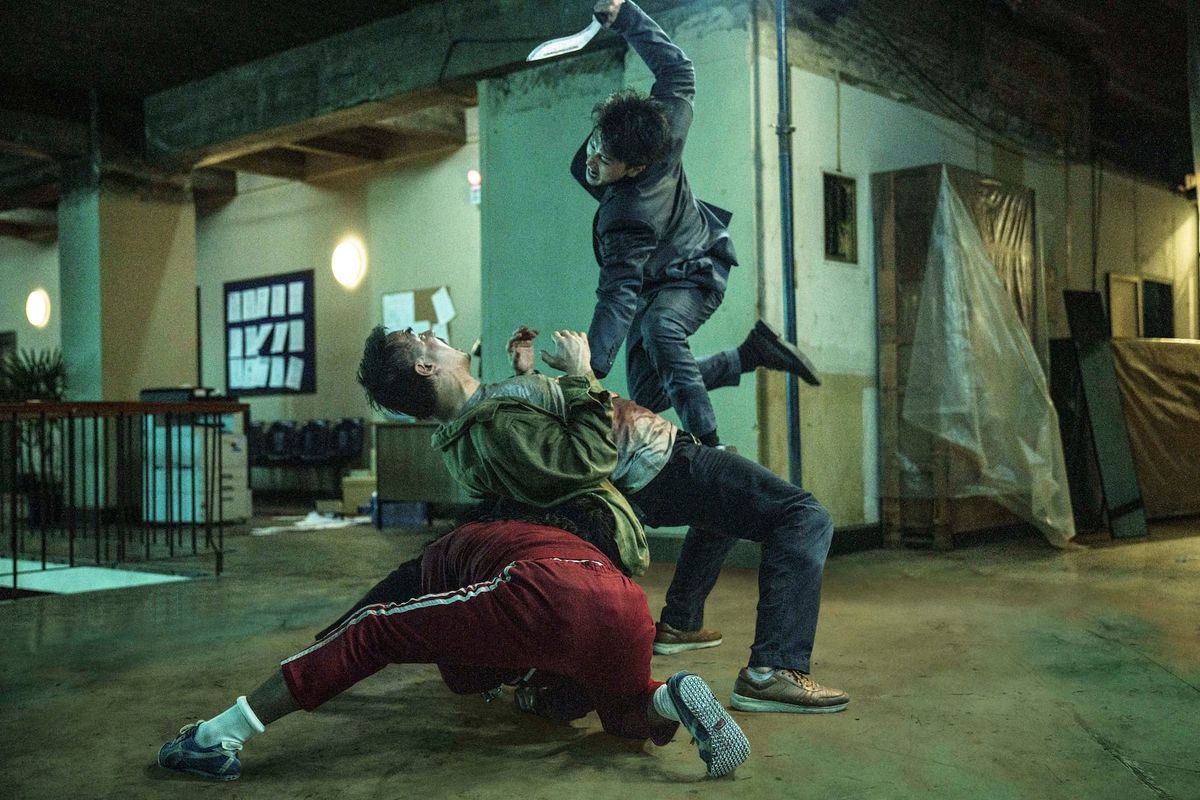
I don’t know if audiences will ever be impressed by another advancement in visual effects. Even when you know and understand the technical difficulties behind CGI, the general understanding of the craft is “They worked on the computer.” We now take that work for granted, and at times even dismiss it for looking “fake,” despite VFX artists working with low budgets and severe time constraints. But even the most incredible VFX pale in comparison to expert fight choreography, an art that’s been around far longer than computer-animated effects. Despite a far smaller budget than Hollywood’s blockbuster, Kenji Tanigaki’s new action film The Furious wowed me far more than any deluge of pixels. The skill of his performers combined with the terrific choreography makes for one of the finest martial arts films of the 21st century.
“Somewhere in Southeast Asia” (to quote the film’s title card), children are being abducted and trafficked. Matia (JeeJa Yanin), a reporter on the case, goes missing, and her husband Navin (Joe Taslim) begins an undercover investigation through a criminal organization to find her. Meanwhile, Wang Wei (Xie Miao), a mute handyman, begins looking into the same case when his daughter Rainy (Yang Enyou) is kidnapped off the street. The two men team up and fight their way through the underworld to save the children and bring down the bad guys. This involves lots of punching, kicking, and assorted weaponry.
A particularly shocking prologue tells us that Tanigaki is not going to pull his punches, narratively or physically. The Furious manages to be both brutal and fantastic, a film where people can be hit with sledgehammers, cough up blood, and still keep going. The movie is firmly in the fantastical realm of martial arts cinema where fights are beautifully choreographed moves and countermoves. No real fight looks like this, and we wouldn’t be interested if that’s what Tanigaki thought to convey. Instead, we want to see dudes sliding around on the ground, getting dropped from three stories up, and bashed with any implement lying around, whether it’s a real weapon like a machete or something as random as a trolley wheel.
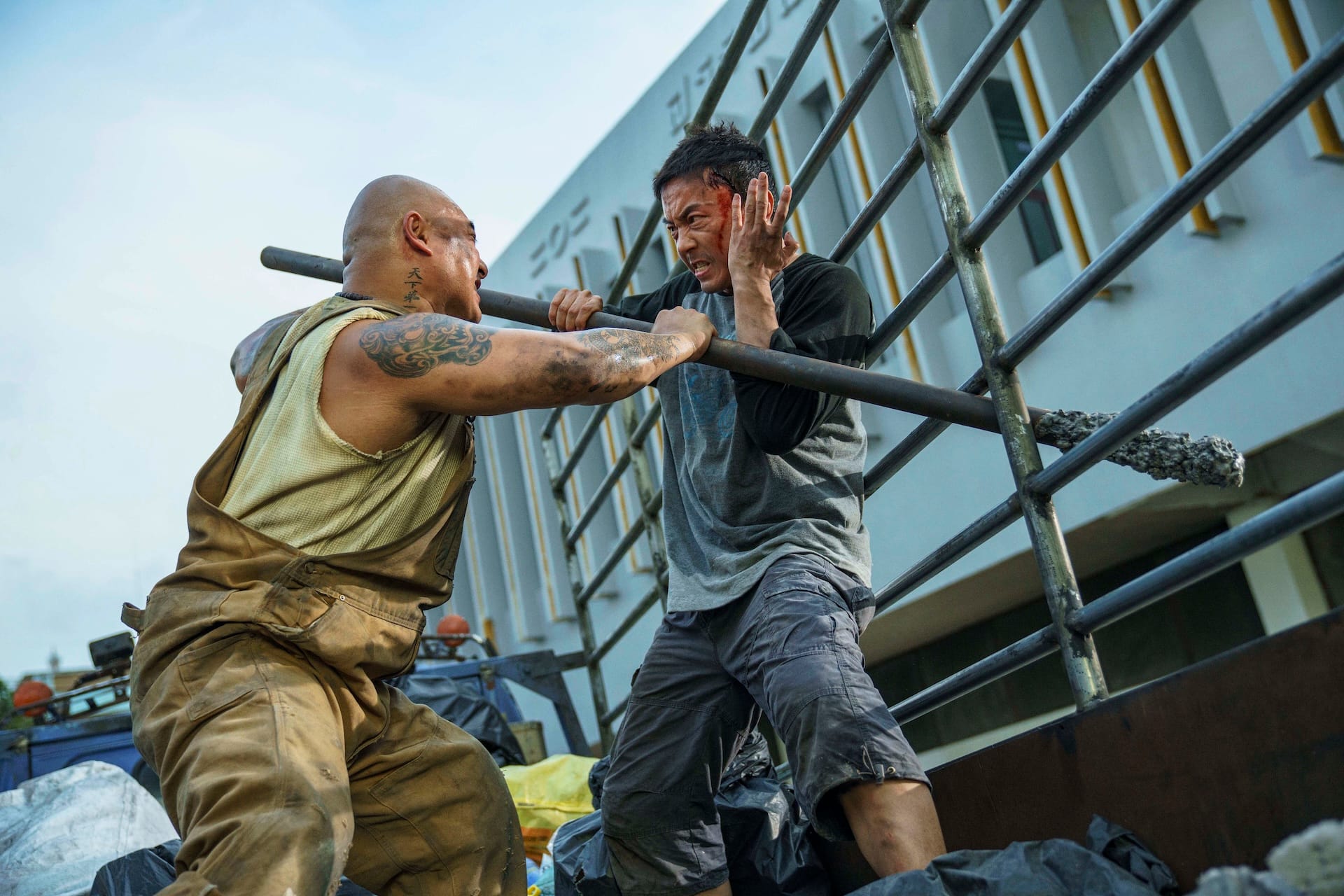
What’s perhaps most surprising is how The Furious remains fun while never shying away from the brutality. I was frequently reminded of The Raid, not just because of Taslim and co-star Yayan Ruhian, but because of how that film managed to be an absolute blast of bloody, unrelenting violence where you couldn’t help but marvel at the way it was performed and captured. These are the kinds of movies that Hollywood can never quite do. The closest they’ve come are the John Wick films, and even those move through glitzy, glamorous trappings. The Furious relishes its down-and-dirty settings, which further highlight the power of the stunt performers brawling within them.
Looking at Taslim in particular, I couldn’t help but think of how utterly wasted he was in the recent Mortal Kombat movies. Simon McQuoid, the director of those films, doesn’t know how to capture action like Tanigaki. Taslim can do the movements, but his Sub-Zero doesn’t get photographed in the same way as Navin. In Mortal Kombat, the camera is always struggling to keep up, keeping the action muddled and bland. When I see Taslim in a movie like The Furious, I think this guy should be one of the biggest stars in the world, not just for his martial arts prowess, but also for his charisma. When you see him in a Hollywood movie like Mortal Kombat or Fast & Furious 6, it’s clear that only some filmmakers are going to understand how to utilize his gifts, and those filmmakers typically don’t work in California.
Perhaps it’s unfair for me to criticize Hollywood for not understanding how to replicate this unique alchemy. The industry invests in digital technology for spectacle, and they’ve never fully appreciated how the martial arts films out of Asia nurture and advance their performers, choreographers, and directors. Moreover, these talents can’t be easily replaced due to their skill sets. A troublesome director or actor can be swapped out, but not everyone has the moves.
The immediacy of The Furious—that everyone on screen is really doing those moves, has trained for years to reach this level of skill, and that this was not something that could be redone in post—makes the film a highlight in our current action landscape, which overwhelms not with proficiency, but with budgets. However, no one shows up to buy a ticket asking, “Excuse me, but how expensive was this movie?” They want to see something that will dazzle them, and if you have the stomach for the ferocious violence on display, then The Furious will give you plenty of bang for your buck.
The Furious opens in theaters on June 12th.
Other writing:
For Letterboxd, I wrote about Steven Spielberg's War of the Worlds and how the director's 9/11 trilogy reevaluates his approach to blockbuster filmmaking.
Over on Decoding Everything, I reviewed Spielberg's new movie, Disclosure Day, which opens this Friday.
Want to support this newsletter, but don't want a paid subscription at this time? Consider making a one-time donation.