‘Train Dreams’: The Transient Solitude of the Rugged Individual
Clint Bentley’s soulful, melancholy drama turns an American myth on its head.

Who is an American? Why do we value “the individual” without taking stock of what such individualism means? The idea of a rugged man taming the frontier is part of the American mythos, but what would that even look like? In Clint Bentley’s lyrical, melancholy adaptation of Denis Johnson’s novella Train Dreams, we see the development of the West through the eyes of a lone man who gains just enough only to lose everything just as quickly. It’s a sad story of that which cannot be controlled and ultimately the transience of all things. The film always captures the natural beauty of its surroundings but keeps returning to the bone-deep loneliness that follows a man at the edge of the frontier.
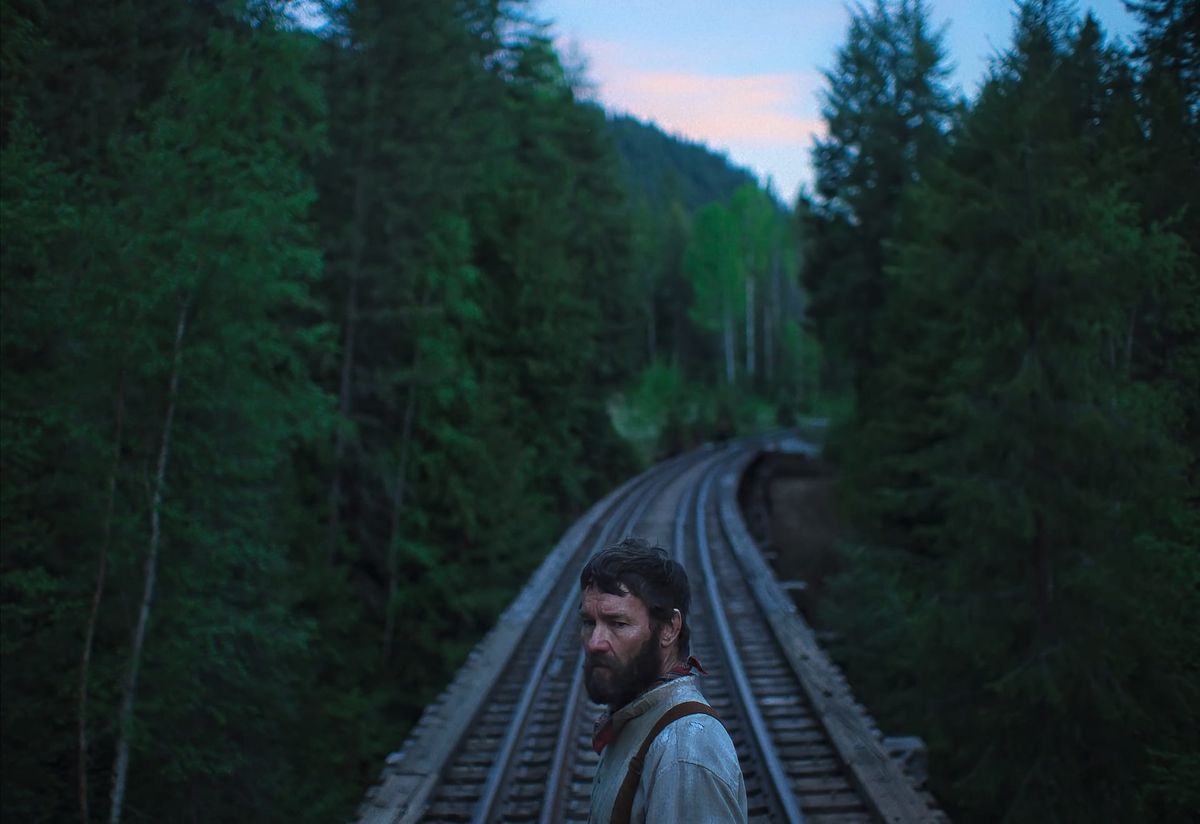
The film follows the life of logger and railway man Robert Grainier (Joel Edgerton) as he works primarily in the Pacific Northwest, cutting down trees to make way for the railroad. In this time, he meets Gladys (Felicity Jones) and they have a daughter. He builds their family a house outside of civilization in a tranquil spot by a river, but to earn a living, he must frequently leave for long stretches to work on logging jobs. An orphan sent to this region as a child, the quiet, amiable Robert is haunted by the thought that he’s about to suffer some kind of divine punishment after witnessing the murder of an immigrant laborer by racist thugs. While Robert does forge friendships on the frontier, these working acquaintances only further serve to illustrate his sense of isolation beyond his family and his smallness in the face of the natural world.
Bentley and co-writer Greg Kwedar don’t try to capture a total, detailed history of the American west or even tell it through the eyes of one man. Instead, they keep returning to how both history and the surrounding world dwarf Robert, and if his actions reverberate, it’s that he made his personal world smaller by design. There’s no meanness in Robert, and he doesn’t openly reject civilization. However, the romanticism of his life comes not from doing “manly work,” but from universal qualities like loving his family and appreciating his surroundings. One of the film’s more potent symbols is when a logger is killed on the job, they nail his boots to a tree and then go right back to work. Meanwhile, the tree starts to grow around the boots, swallowing them up as time and nature do with all things. Robert, through his work, is changing the landscape, but as a man, he’s fated as we all are—brief existence and then returning to the Earth.
The film leans heavily into the bittersweet aspect of existence thanks to Will Patton’s rich narration coupled with a gorgeous score from Byrce Dessner and stunning landscapes from cinematographer Adolpho Veloso. Train Dreams lives in the tension of how there’s so much natural beauty around us, but we’re not only tearing it down to make way for more people, but that we also need those people to enrich our lives as much as the air we breathe. And even if we think we don’t, our lives are fleeting while we’re surrounded by great permanence. These are far from new ideas, but they take on fresh life in the context of the American myth that Bentley seeks to explore.
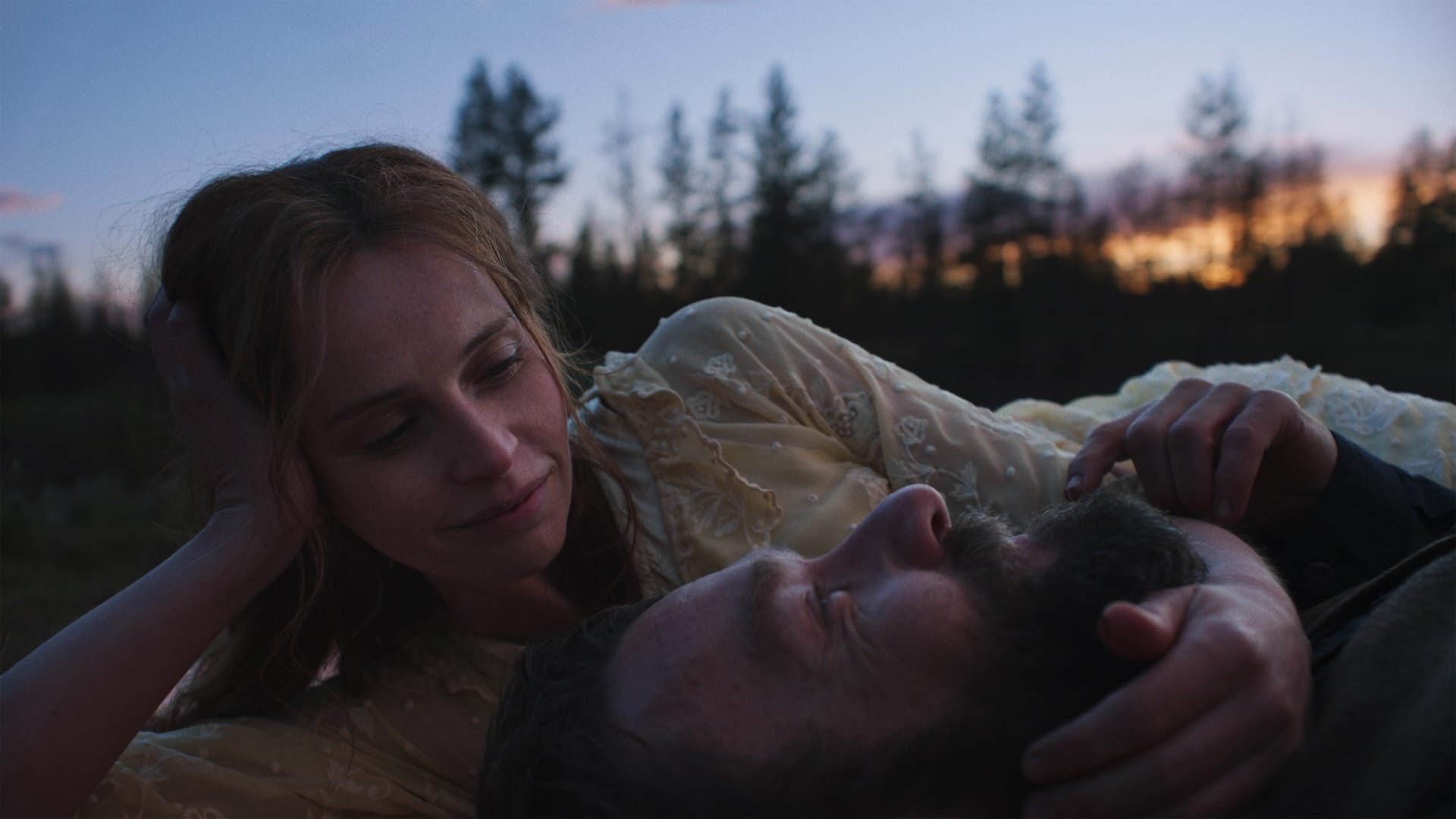
On the surface, Robert should be the textbook American, the kind of man (always a man and always white in the myth), who built this country. He does so without complaint, with silent acquiescence, and confined to the frontier. But through Train Dreams and Edgerton’s taciturn, stirring performance do we cut to the loneliness of such an existence. The movie doesn’t advocate against Robert’s life but instead seeks to reintroduce the texture and sacrifices that become lost in mythologizing such a figure of the American frontier. Everything Robert witnesses and experiences feels honest to the experience of someone whose life could be transformed as easily by the introduction of a gas-powered chainsaw as an entire wildfire. He’s a secluded soul whose life is marked by the erosion of the few connections he makes during his time on Earth.
Some may find that Train Dreams is tearing down one mythology only to build up a new one through its romantic touches, but because the focus is always on the textures and nuances of Robert’s life, the movie always plays more like deconstruction in service of a personal story. We’re meant to feel not like proud conquerors of the frontier or that our individualism makes us special because we’re Americans, but rather that life is a series of trade-offs and chaos. You go logging to earn money for your family and while you’re on the job a branch crushes your pal. There’s randomness and there’s beauty and moments of sadness punctuated by moments of joy. The men who cleared a path for railways and the arrival of more people were not demigods or mythic figures, but people whose existence is as transient as the rest of us.
Train Dreams lives in the paradox of its central figure—someone who collectively changes the face of mountainsides and becomes mythologized in American culture, but as an individual passes as seamlessly as the seasons. There will be viewers who find the movie too introspective and somber, but those who connect with its lyricism and sentimental view of a reclusive existence will become enraptured seeing a slice of American history through Robert’s eyes and the ongoing turmoil inside this lone American.
Train Dreams opens in theaters on November 7th before arriving on Netflix on November 21st.