‘The Death of Robin Hood’ Review: Truth, Lies and Reconciliation
Michael Sarnoski’s drama ponders a way forward outside of retribution or atonement.

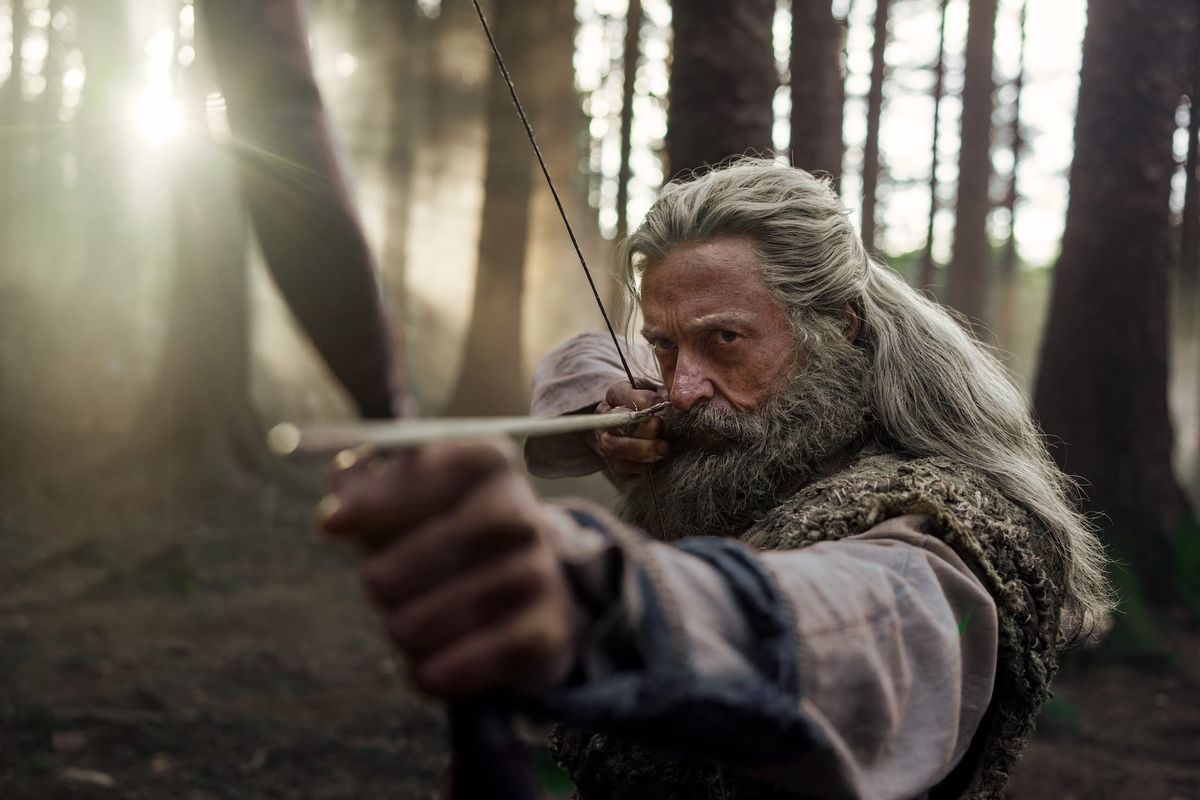
In its prologue, The Death of Robin Hood is quick to tell us that the character of popular imagination is a myth, and the real “Robin” is nothing but a murderous brigand. His world is harsh, unforgiving, and only traffics in violent survival. Despite taking place in 1247, the questions raised in Michael Sarnoski’s drama feel woefully eternal, especially with ongoing wars that will only create further yearning for violence. It’s a slow, methodical movie, consciously cutting against the adventurous idea of a heroic Robin Hood. Instead, the characters avoid fanciful stories, but must confront what, if anything, can come after villainy.
Although the legend of Robin Hood has spread throughout England, the real Robin (Hugh Jackman) is a far less romantic figure. He trudges through a cold, dark world, inflicting merciless violence on all, including women and children. When a raid with his former comrade (Bill Skarsgård) leads to Robin being seriously injured, he’s taken to a secluded abbey run by the kindly Sister Brigid (Jodie Comer), who tends to his wounds. Going under the name “Randall,” Robin hopes to remain incognito until his leg heals and he can depart, but his true identity is threatened with the arrival of his friend’s daughter, Margaret (Faith Delaney), as well as Arthur (Noah Jupe), the kin of one of Robin’s victims. As Robin finds peace on the island, he wonders if it’s time to hide behind another lie, or if his truth is to be a remorseless killer.
For its first half, The Death of Robin Hood almost feels like A24’s Logan. You have a grizzled Hugh Jackman as a violent man, rejecting the popular legends of his heroic deeds, and finding the possibility of renewal by becoming a surrogate father to a young girl. But while Wolverine wrestles with a legacy of violence, Sarnoski’s Robin is a far less sympathetic figure. He prays for death, but only through combat. He can’t let himself die, so he’s cursed to be death incarnate. This leads to a difficult film, especially after its horrifically violent first act, where we have to wonder where Saronski seeks to take us. Robin’s acts have been so abominable that the question becomes if he’s seeking atonement or merely to turn the page without addressing his past evil.
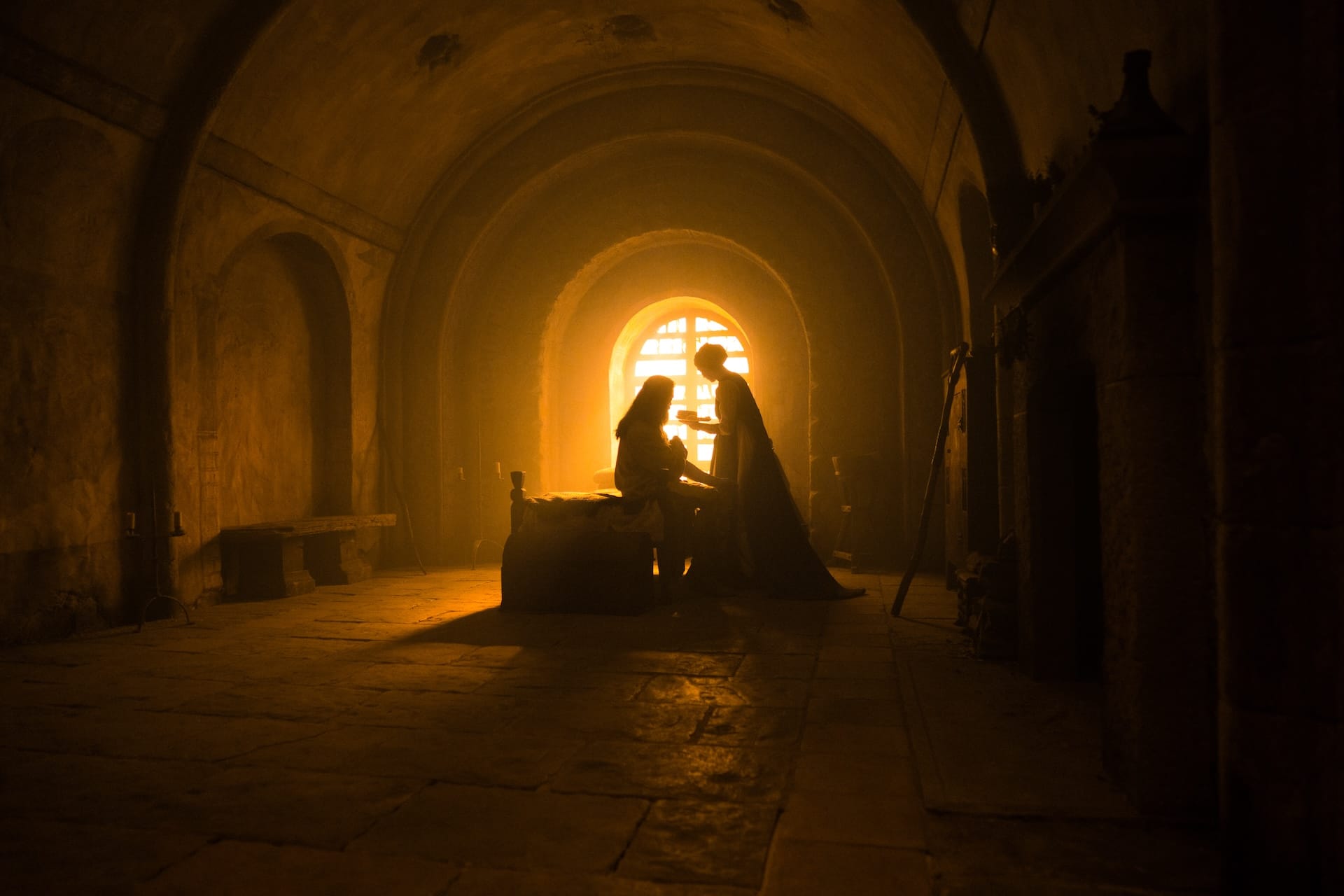
What makes the film pop and stand out from other tales of a violent man seeking peace is how, despite the Christian surroundings, Sarnoski refuses to let Robin atone or wash away his sins. Under the Christian theology that permeates this world, no sin, no matter how grave, is beyond Christ’s forgiveness. However, Robin tells us from the start that he’s never prayed and feels no remorse. This ties into the film’s notions of heroism, and it plays like Sarnoski musing on how we paper over evil deeds. “Heroism” in particular feels like a useful way of historical revisionism that still allows violence to prosper. Robin doesn’t care to embrace his legend; he just wants to stay one step ahead of those who seek vengeance. However, his truth isn’t good enough either, as it only creates more bloodshed. The tension between Robin and Arthur is if the truth is spoken between them, there will be violence.
These thematic underpinnings make the film an enchanting slow burn, as Sarnoski relishes the lush Northern Irish landscapes, and highlights the fine details in the costumes and performances. The whole purpose of the movie, especially after the first act, is to find a path forward for Robin without violence, which is how he understands the world. Is it to change his name and pretend he’s “Randall?” The larger question surrounding the movie is what creates peace when violence feeds on itself? Some may find the film’s conclusions unsatisfying, but I’m grateful that Sarnoski reaches for them, trying to show the purpose of myths and where they can be both creative and destructive.
Those hoping for a thrilling, gritty realistic retelling of Robin Hood will likely be disappointed. Nor is this necessarily a deconstruction, unwinding the familiar tales into a dissection of tropes. Instead, it’s a thornier picture, wisely utilizing an actor best known for playing a notoriously violent superhero, plugging him into a heroic figure, and then digging down into the cycle of violence to seek catharsis outside of killing. The myth of Robin Hood is about taking from the rich and giving to the poor. The Death of Robin Hood thoughtfully grapples with debts that can never be repaid.
The Death of Robin Hood opens in theaters on June 19th.
Want to support this newsletter, but don't want a paid subscription at this time? Consider making a one-time donation.